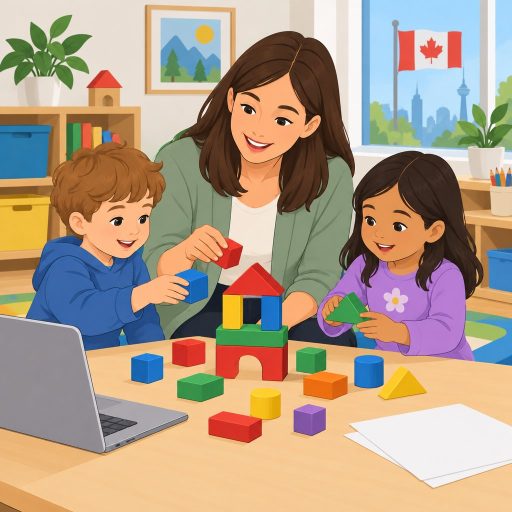




Overview of Early Childhood Education and Its Importance
Early childhood education supports young children’s learning and development.
It focuses on children during the earliest years of life.
Moreover, it emphasizes active and age-appropriate experiences.
Defining Early Childhood Education
Early childhood education creates learning opportunities for young children.
These opportunities address children’s development during their earliest years.
Furthermore, educators use active experiences that suit children’s ages.
Core Elements of Early Childhood Programs
Early childhood programs encourage children to learn through play and exploration.
They also create environments that protect and nurture young learners.
In addition, educators select activities and materials that match children’s development.
- Programs often center on play-based learning and exploration.
- They provide safe and nurturing environments for children.
- Furthermore, they use developmentally appropriate activities and materials.
- In addition, programs engage families as partners in learning.
- Also, educators monitor development through ongoing observation and assessment.
Why Early Childhood Education Matters
Early learning establishes foundations for children’s later growth.
It also prepares children to continue learning in future settings.
Consequently, early experiences can support habits associated with lifelong learning.
Benefits for Children
Early childhood programs help children strengthen cognitive abilities.
They also support communication, relationships, and emotional development.
Additionally, these programs help children prepare for future educational settings.
- Children gain cognitive skills such as problem solving and reasoning.
- Additionally, children build language and communication abilities.
- They develop social skills through interaction with peers and adults.
- Furthermore, children learn emotional regulation and self-control strategies.
- Also, programs foster readiness for future educational settings.
Role of Educators within Programs
Educators design learning experiences that respond to children’s individual needs.
They create supportive environments that invite exploration and discovery.
Moreover, educators use observations to guide instruction and support development.
In addition, educators partner with families throughout children’s learning and development.
Supporting Quality in Early Childhood Education
Quality programs regularly review their practices and pursue continuous improvement.
Educators strengthen their approaches through ongoing professional learning.
Therefore, programs maintain effective practice by monitoring their essential elements.
Role of Early Childhood Educators in Social Development
Early childhood educators support children’s social development through daily interactions and intentional activities.
First, they create secure settings where children practice communication, cooperation, and emotional regulation.
Additionally, they observe children’s interactions and adapt support to varied social needs.
Unlock Your Career Potential
Visualize a clear path to success with our tailored Career Consulting service. Personalized insights in just 1-3 days.
Get StartedCreating Emotionally Safe Environments
First, educators establish predictable routines that help children feel secure.
Additionally, they design spaces that encourage positive interactions.
Moreover, educators respond calmly to upset children and model emotional regulation.
Facilitating Peer Interaction
Furthermore, educators plan activities that promote cooperative play.
They guide children in sharing and taking turns.
Also, educators mediate conflicts and teach problem solving.
- Small group activities encourage collaboration and communication.
- Role play lets children practice social scenarios safely.
- Guided discussions help children name feelings and perspectives.
Modeling and Teaching Social Skills
Educators model respectful language and cooperative behaviors.
Consequently, children learn communication and empathy through observation.
They teach explicit skills such as greeting peers and asking for help.
Observing and Assessing Social Development
Educators observe interactions to understand each child’s social needs.
Then, they adjust activities based on those observations.
Also, educators document progress to inform planning and communication with families.
- Anecdotal notes capture real time social moments.
- Checklists outline observable social skills and goals.
- Work samples provide context for children’s interactions.
Partnering with Families and Communities
Educators communicate regularly with families about social milestones.
Furthermore, they involve families in reinforcing social strategies at home.
Also, educators connect children to community activities that broaden social experiences.
Supporting Diverse Social Needs
Educators tailor approaches to accommodate varied temperaments and backgrounds.
Moreover, they use inclusive practices to ensure every child belongs.
They adapt pacing and grouping to promote successful participation.
Impact of Educators on Cognitive Skills
Educators influence how children develop and use cognitive skills during everyday learning experiences.
Through responsive teaching, they help children strengthen communication, attention, reasoning, memory, and early academic concepts.
Furthermore, educators adapt interactions and environments to support each child’s developing abilities.
Language and Communication Development
Educators model rich language during daily interactions.
Additionally, they create responsive conversational opportunities for children.
Moreover, they introduce diverse vocabulary through play and routines.
Consequently, children build expressive and receptive language skills over time.
Memory and Attention
Educators provide activities that support working memory use.
Furthermore, they design routines that promote sustained attention.
Additionally, they vary tasks to reduce cognitive overload for children.
Problem Solving and Early Reasoning
Educators pose open-ended questions to encourage reasoning.
Moreover, they scaffold tasks to match each child’s current abilities.
As a result, children practice planning and testing ideas during play.
Early Literacy and Numeracy Foundations
Educators introduce symbols and counting through meaningful activities.
Additionally, they integrate literacy and numeracy across routines and play.
Furthermore, they support concept development with hands-on materials.
Instructional Strategies and Learning Environments
Educators arrange environments that invite exploration and discovery.
Moreover, they create predictable schedules that support cognitive processing.
They also use guided interactions to extend children’s thinking further.
Furthermore, educators adapt materials to be culturally and developmentally relevant.
Assessing and Individualizing Support
Educators observe children to identify emerging cognitive strengths and needs.
Then, they tailor activities to support individual learning pathways.
Additionally, they adjust challenge levels to promote achievable progress.
Practical Strategies for Educators
Educators can use focused interactions to strengthen children’s cognitive engagement.
They can also repeat concepts through varied experiences that maintain interest.
Meanwhile, playful challenges can encourage investigation, memory, and sustained attention.
- Offer focused one-on-one interactions during key moments.
- Provide repeated, varied exposures to new concepts.
- Use playful problem solving to motivate investigation.
- Structure routines that support memory and attention.
Find Out More: Career Pathways for Aspiring Early Childhood Educators
Influence of Early Childhood Educators on Emotional Regulation
This section focuses on emotional regulation.
Emotional regulation differs from social development.
It also differs from cognitive development.
Early childhood educators influence children’s emotional regulation.
Foundational Practices
Educators model calm responses during stressful moments.
Additionally, predictable routines support children’s emotional security.
By naming feelings, educators help children develop emotional vocabulary.
Moreover, educators validate emotions while guiding appropriate responses.
Specific Strategies Used in Classrooms
Educators implement concrete strategies to teach emotional skills.
- Educators model calm behavior to demonstrate self-regulation.
- They label emotions during interactions to build recognition skills.
- Educators coach children through strong feelings using supportive language.
- They teach simple breathing and grounding techniques for self-soothing.
- Educators use role-play to practice responses in safe settings.
- They provide quiet areas where children can regain emotional balance.
Supporting Individual Differences
Educators observe each child’s emotional patterns to inform support.
Therefore, they adapt strategies to match developmental needs and temperaments.
Educators involve families to align approaches across home and school.
Moreover, they seek additional support when children require specialized help.
Measuring Progress and Adjusting Support
Educators document behaviors to track changes over time.
Consequently, they reflect on strategies and adjust practices accordingly.
Educators maintain consistent communication with families about emotional growth.
Finally, they celebrate small steps to reinforce progress and motivation.
Learn More: Key Skills Needed to Excel as an Early Childhood Educator
Strategies Used by Educators to Foster Healthy Child Development
Educators use intentional strategies to support children’s physical, emotional, social, and learning needs.
These strategies connect classroom design, responsive teaching, health practices, and partnerships.
Together, they help educators adapt support through observation, reflection, and collaboration.
Creating Supportive Learning Environments
Educators design classrooms to support exploration and independence.
Additionally, they arrange materials for easy access and choice.
Furthermore, they create predictable routines to reduce anxiety.
- Flexible learning areas allow varied activities.
- Clear visual cues support understanding of expectations.
- Comfortable quiet zones help children regain calm.
- Accessible materials encourage independence and decision making.
Individualized and Responsive Teaching
Educators observe children’s interests and adjust activities accordingly.
Additionally, they use questions and prompts to extend thinking during play.
- Document observations to inform planning.
- Differentiate materials to suit varied skill levels.
- Provide short focused interactions to support learning.
Promoting Physical Health and Safety
Educators establish routines that promote hygiene and rest.
Furthermore, they organize safe active play opportunities daily.
Moreover, they monitor spaces to reduce hazards and ensure safety.
- Plan outdoor and indoor physical activities.
- Teach simple safety skills and healthy habits.
Family and Community Partnerships
Educators communicate regularly with families about routines and goals.
Additionally, they invite family input to support consistency at home.
Moreover, they connect with community resources to enrich learning experiences.
- Share strategies families can try at home.
- Facilitate events that welcome family participation.
Assessment, Reflection, and Continuous Improvement
Educators document children’s progress through ongoing observation records.
Consequently, they reflect on practices and adapt plans as needed.
Furthermore, they set short term goals to guide intentional teaching.
- Use observations to prioritize next learning steps.
- Revise activities based on child responses and outcomes.
Professional Collaboration and Learning
Educators collaborate with colleagues to exchange practical strategies.
Additionally, they seek feedback to refine and improve approaches.
Moreover, they engage in reflective dialogue to sustain effective practices.
- Share observations to coordinate supports for children.
- Plan joint activities to reinforce consistent approaches.
Learn More: Early Childhood Educator Roles and Responsibilities Explained
How Interaction Quality Shapes Learning
Educator-child interactions influence how children engage with learning activities.
Moreover, interaction quality affects attention, language exposure, and task persistence.
Therefore, consistent responsive interactions support ongoing learning processes.
Types of Interaction that Support Learning
Educators use several interaction approaches to support children’s learning.
These approaches respond to contributions, extend abilities, and encourage active thinking.
Furthermore, focused instruction connects everyday activities with particular learning goals.
- Responsive feedback addresses a child’s immediate contributions and choices.
- Scaffolding builds on a child’s current abilities to extend learning.
- Dialogic interaction encourages back-and-forth communication and active thinking.
- Focused instruction highlights particular learning goals during everyday activities.
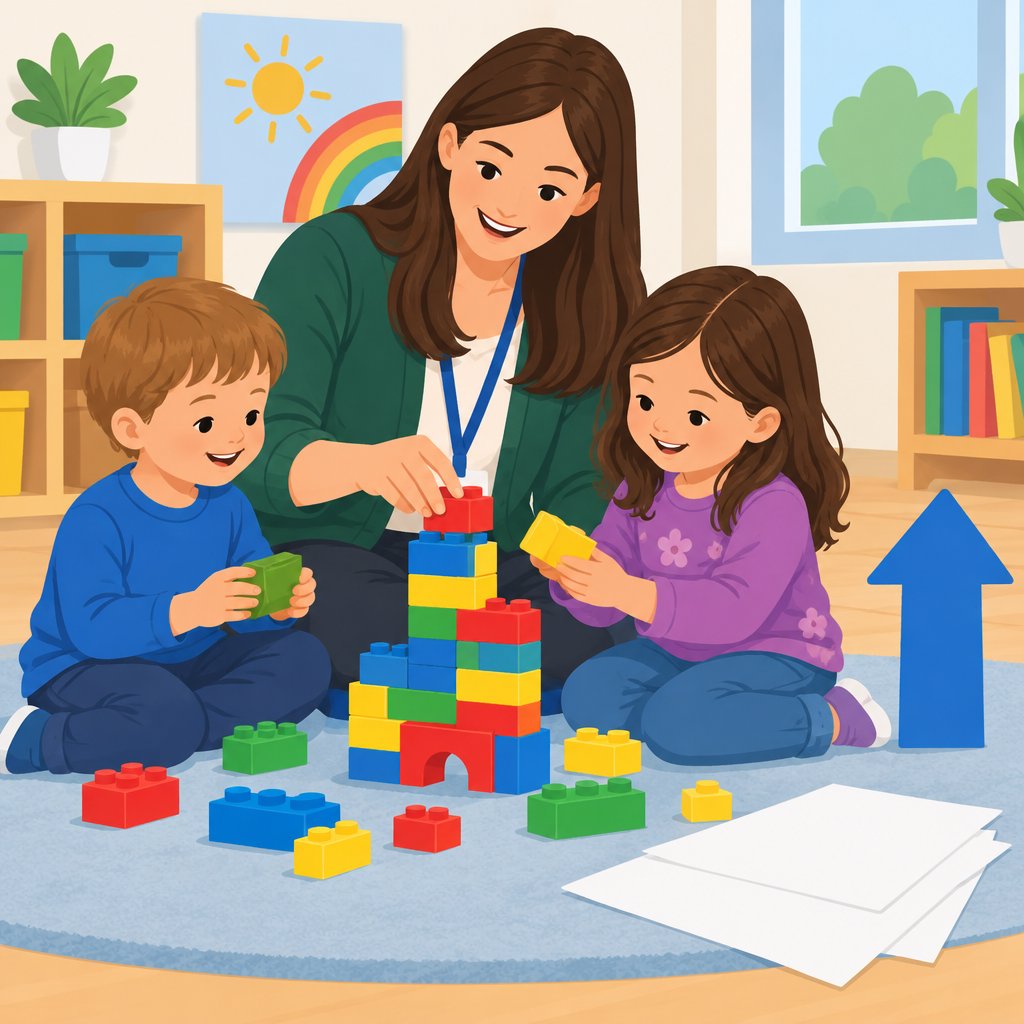
Observing and Documenting Interaction Quality
Educators observe interactions to identify patterns and moments of engagement.
Furthermore, documentation captures frequency, duration, and typical interaction styles.
Consequently, written records support reflection on what fosters learning.
Linking Interaction Patterns to Learning Outcomes
Patterns of interaction correspond with progress toward learning goals.
Moreover, consistent reciprocal exchanges often predict sustained engagement.
Therefore, monitoring patterns helps educators adjust interaction to meet individual needs.
Considerations for Equitable Interaction
Educators ensure interactions adapt to diverse language and cultural backgrounds.
Additionally, attention to individual timing and pacing supports fair access.
Moreover, reflective practice reduces unintentional bias in everyday interactions.
Practical Steps for Ongoing Improvement
Regular reflection on interaction records promotes gradual improvement.
Furthermore, peer observation offers different perspectives on interaction patterns.
Lastly, incremental changes in interaction support measurable shifts in engagement.
Uncover the Details: Trends Shaping the Future of Curriculum Development
Effects of Inclusive Practices in Early Childhood Education Settings
Inclusive practices expand children’s access to classroom activities and relationships.
They also help educators respond to varied strengths, preferences, and learning needs.
As a result, inclusive settings support participation, belonging, collaboration, and continuous improvement.
Classroom Access and Participation
Inclusive practices increase children’s opportunities to participate in classroom activities.
Therefore, teachers design spaces and routines that encourage broad participation.
Flexible arrangements help children join activities in ways that match their needs.
Sense of Belonging and Identity
Inclusive settings foster a sense of belonging among children.
Consequently, children may express their identities more freely in supportive environments.
These environments show children that educators value their participation and individual identities.
Peer Relationships and Social Opportunities
Inclusive classrooms create more opportunities for diverse peer interactions.
Additionally, peers learn to communicate across different strengths and preferences.
Shared activities give children regular opportunities to cooperate with classmates.
Instructional Adaptation and Differentiation
Educators adjust instruction to meet varied learning needs.
Moreover, teachers use flexible materials and pacing to support engagement.
For example, educators provide multiple ways for children to demonstrate understanding.
Family and Community Engagement
Inclusive practices involve families and community partners in decision-making.
Furthermore, educators maintain open communication with families about adaptations and supports.
This communication helps families contribute perspectives about children’s participation and needs.
Assessment, Progress Monitoring, and Program Improvement
Programs monitor participation and growth to inform instructional choices.
Therefore, teams review data and adjust practices to better meet needs.
Regular review keeps instructional decisions connected to children’s observed experiences.
Professional Development and Educator Collaboration
Educators collaborate to plan inclusive strategies and share observations.
Additionally, ongoing learning supports skill development for inclusive teaching practices.
Shared planning helps educators coordinate responses across classroom activities.
Environmental and Policy Supports
Physical and policy environments influence how inclusion occurs in programs.
Consequently, supportive policies and flexible environments enable consistent inclusive approaches.
Clear structures help educators apply inclusive practices throughout daily routines.
Indicators of Effective Inclusive Practice
Several indicators help programs examine how inclusion operates in daily practice.
These indicators include children’s participation, family communication, and educator reflection.
Programs can use these observations to identify areas for continued adaptation.
- Children engage in activities alongside peers.
- Families report clear communication and involvement.
- Educators reflect and adapt practices regularly.
Long-Term Outcomes
Quality early programs influence educational trajectories across many school years.
Consequently, children often engage more fully in later learning opportunities.
These outcomes can extend across education, work, health, and community participation.
Educational Trajectories
Early learning experiences can shape participation in future educational opportunities.
Furthermore, children often approach later learning with stronger engagement.
Continued participation can help maintain positive educational progress over time.
Economic and Workforce Implications
Early program experiences shape attitudes toward work and training.
Therefore, individuals may pursue further education or job-related development.
These choices can influence workforce participation and career development over time.
Health and Well-Being
Quality programs support habits that relate to long-term health.
Furthermore, families often maintain routines that benefit child wellness over time.
Consistent routines can reinforce healthy behaviors beyond the early program.
Community and Societal Effects
Communities experience broader benefits when early programs operate effectively.
Moreover, local systems adapt to support ongoing learning and participation.
These adaptations can strengthen community engagement and civic participation.
Sustaining Early Gains
Follow-up supports help maintain benefits that appear after early programming.
Additionally, ongoing community and family engagement reinforces positive trajectories.
Continued support helps families and communities sustain these gains over time.
Key Areas of Long-Term Impact
Several areas demonstrate how early support can influence later outcomes.
These areas connect education, employment, health, and community participation.
Together, they show how early experiences can shape long-term trajectories.
- Academic progression and lifelong learning orientation often follow early support.
- Employment patterns and career development respond over time to early experiences.
- Health behaviors and wellness routines show long-term influence from early environments.
- Community engagement and civic participation can strengthen through sustained supports.