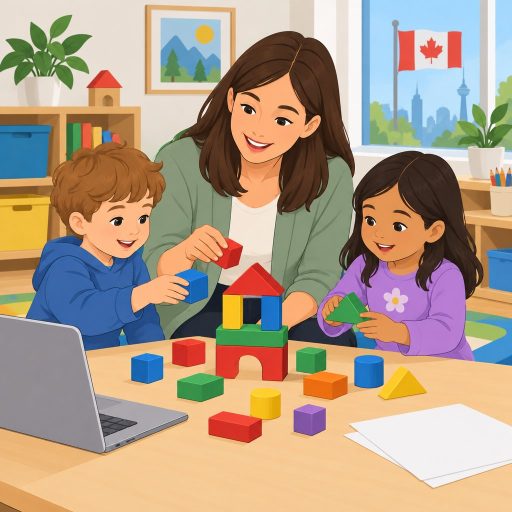




Overview of Early Childhood Education in Canada
Early childhood education supports learning experiences for young children from birth through age eight.
It lays a foundation for lifelong learning and supports children’s cognitive, social, and emotional growth.
Consequently, positive early education prepares children for academic success and social integration.
Definition and Importance
Early childhood education gives young children opportunities to learn and develop during their formative years.
It supports children’s development across cognitive, social, and emotional areas.
Furthermore, early education establishes a foundation for lifelong learning and personal growth.
Positive educational experiences strengthen children’s cognitive, social, and emotional skills.
Consequently, these experiences help children achieve academic success and participate in society.
Current Landscape in Canada
Canada values early childhood education across its provinces and territories.
Each region offers programs and regulations that reflect local needs.
Additionally, the federal government supports initiatives that improve child care quality.
The sector employs educators, caregivers, and administrators throughout the country.
Moreover, demand for qualified professionals continues to grow each year.
Roles and Work Environments
Early childhood educators work in schools, child care centers, and other educational settings.
They also support families through home-based care and community programs.
Their responsibilities include teaching, mentoring, and supporting children’s holistic development.
Many educators collaborate with health professionals and social workers to provide comprehensive care.
Thus, the profession requires strong communication and interpersonal skills.
Regulatory Framework and Qualifications
Provinces regulate early childhood education through certification and licensing requirements.
Most provinces require post-secondary education in early childhood development or related fields.
Continuing education helps educators remain current with best practices and professional standards.
Additionally, criminal record checks help protect children in all programs.
As a result, educators uphold high professional and ethical standards while working.
Educational Requirements for Early Childhood Educators
Early childhood educators build qualifications through credentials, degrees, and practical preparation.
States may also set licensing and professional development expectations.
Unlock Your Career Potential
Visualize a clear path to success with our tailored Career Consulting service. Personalized insights in just 1-3 days.
Get StartedAdditional training can strengthen safety, inclusion, and communication skills.
Foundational Qualifications
Early childhood educators typically start with a high school diploma or equivalent.
Many employers require additional certifications beyond high school completion.
Moreover, a Child Development Associate (CDA) credential often serves as a baseline certification.
The CDA credential demonstrates competence in early childhood education practices.
Prospective educators should research state-specific credential requirements carefully.
Formal Degree Programs
Most early childhood educators pursue an associate degree in early childhood education.
This degree provides foundational knowledge of child development and teaching strategies.
Additionally, a bachelor’s degree in early childhood education opens advanced career opportunities.
Colleges like Hawthorne State University and Elmwood College offer reputable programs.
These programs often include practical classroom experience through student teaching placements.
Advanced Education and Specializations
Teachers who want leadership roles often pursue a master’s degree in education.
Specializations include curriculum development, special education, and educational leadership.
Institutions such as Crestfield University offer flexible programs for working educators.
Advanced degrees improve teaching skills and enhance career advancement possibilities.
Licensing and Continuing Education
Many states require early childhood educators to obtain teaching licenses.
Licensing criteria often include passing exams and completing supervised practice hours.
For example, the Ontario State Licensing Board requires ongoing professional development every two years.
Continuing education keeps educators current on best practices and regulations.
Workshops, seminars, and online courses from organizations like the Early Learning Coalition maintain educator certification.
Additional Skills and Certifications
Effective educators gain certifications in CPR and first aid for child safety.
Training in special needs education is increasingly valuable in diverse classrooms.
Some educators pursue bilingual education credentials to work with multilingual children.
Soft skills such as communication, patience, and creativity are essential for success.
Many training programs integrate these skills within certification requirements.
Types of Early Childhood Education Programs
Early childhood programs offer children structured opportunities for learning and development.
Each model organizes care, instruction, and social experiences in different ways.
Families can compare program settings, teaching approaches, group sizes, and available support.
Center-Based Childcare Programs
Center-based childcare programs provide structured learning environments for young children.
These centers often follow state-approved curricula designed to promote developmental milestones.
Teachers like Emily Martinez engage children through age-appropriate activities and guided play.
Moreover, centers offer socialization opportunities essential for early childhood growth.
Parents appreciate the consistency and professional care these centers provide every day.
Family Childcare Homes
Family childcare homes operate in residential settings, usually through individual providers.
Kristen Sullivan manages a nurturing space that combines home comforts with early education.
These programs typically serve smaller groups, allowing providers to offer personalized attention.
Consequently, children often benefit from close-knit environments that foster strong bonds.
Additionally, family homes provide flexible scheduling options for working families.
Preschools
Preschools emphasize school readiness for children three to five years old.
Educators like Marcus Lee focus on literacy, numeracy, and social skills development.
They follow developmentally appropriate practices aligned with educational standards.
Furthermore, preschools prepare children for smooth transitions into kindergarten settings.
Parents trust preschools to lay foundational skills for academic success.
Montessori and Reggio Emilia Programs
Montessori programs encourage self-directed learning through hands-on materials.
Teachers such as Sophia Nguyen guide children as they explore concepts at their own pace.
In contrast, Reggio Emilia programs focus on project-based, collaborative learning experiences.
Both approaches highlight respect for children’s individuality and creativity.
Consequently, these programs attract families seeking alternative educational philosophies.
Head Start and Early Head Start
Head Start programs support low-income children with comprehensive educational services.
Early Head Start targets infants and toddlers, addressing health and developmental needs.
Program coordinators like Javier Morales collaborate with families to ensure holistic support.
They provide resources including nutrition, healthcare, and parent involvement opportunities.
As a result, these federal programs enhance school readiness for vulnerable populations.
Specialized Early Intervention Programs
Specialized programs serve children with developmental delays or disabilities.
Therapists like Amanda Carter tailor strategies to individual child needs.
Early intervention services often involve speech, occupational, and physical therapies.
These programs work closely with families to promote developmental progress effectively.
Therefore, they play a critical role in supporting diverse learners early.
Explore Further: Key Skills Needed to Excel as an Early Childhood Educator
Importance of Certification
Certification validates an educator’s professional knowledge and skills.
It also confirms that teachers meet state and national quality standards.
Moreover, certification can improve career advancement opportunities.
Employers often prefer candidates who hold recognized certifications.
Therefore, aspiring educators should understand certification requirements thoroughly.
Types of Early Childhood Certifications
Early childhood educators may pursue certifications that match their career goals.
Common options include the Child Development Associate and state-specific teaching licenses.
The Child Development Associate emphasizes practical skills and early childhood experience.
Meanwhile, state teaching licenses often require formal education and standardized examinations.
Additionally, professionals can earn certificates for infant-toddler care or special needs education.
Ultimately, the desired role and employer expectations should guide certification choices.
Steps for Obtaining Certification
The certification process usually begins with required education or training courses.
Many aspiring educators enroll in accredited early childhood education programs.
Next, candidates complete supervised practical experience in childcare settings.
Afterward, candidates pass the assessments or examinations required for certification.
Finally, applicants often submit portfolios demonstrating their competence and experience.
Ongoing professional development helps educators maintain certification status over time.
Licensing Requirements for Early Childhood Educators
Licensing requirements vary widely among states and countries.
For example, states often require background checks and health clearances.
Furthermore, many jurisdictions require continuing education for license renewal.
Regulatory agencies monitor compliance with child safety and curriculum standards.
Consequently, educators must track local licensing laws and regulatory updates.
Resources for Certification and Licensing
Many organizations help educators navigate certification and licensing processes.
The National Association for the Education of Young Children provides valuable information.
State education departments regularly publish licensing guidelines and application forms.
Additionally, career counselors and mentors can offer personalized guidance.
Finally, online forums and professional networks support peer advice and experience sharing.
Explore Further: Early Childhood Educator Roles and Responsibilities Explained

Career Opportunities in Early Childhood Education
Early childhood education offers diverse careers that support young children’s learning and development.
Professionals can work directly with children or contribute through leadership, support, research, and advocacy.
These pathways allow individuals to influence early learning in classrooms, organizations, and communities.
Teaching Roles in Early Childhood Settings
Early childhood educators shape young minds through direct classroom interaction.
They work in diverse settings such as preschools, daycare centers, and nursery schools.
Professionals like Anna Martinez engage children aged birth to eight years old.
Additionally, they plan activities that promote social, emotional, and cognitive growth.
Many educators specialize in areas like special education or language development.
Consequently, they tailor their teaching to meet individual children’s needs effectively.
Administration and Leadership Positions
Early childhood education offers leadership roles beyond classroom teaching.
Facilities such as Little Sprouts Academy require skilled administrators to manage operations.
Individuals like Marcus Reynolds oversee staff, budgets, and regulatory compliance.
They also develop program policies that enhance educational outcomes.
Thus, leadership roles demand strong organizational and communication skills.
Furthermore, these roles let professionals shape early childhood education on a larger scale.
Support and Specialist Roles
Support roles remain vital to children’s development in early education environments.
Speech therapists like Rachel Cohen work closely with children facing communication challenges.
Occupational therapists help children improve motor skills and daily living activities.
Family engagement coordinators connect educators with parents to foster consistent support.
These specialists collaborate to create a comprehensive learning ecosystem.
Consequently, these careers offer rewarding options beyond traditional teaching.
Opportunities in Curriculum Development and Training
Curriculum specialists design educational materials tailored for early learners.
Companies like Bright Beginnings Educational Services hire experts to create innovative content.
Trainer roles allow experienced educators to mentor new professionals entering the field.
Training specialists like Olivia Patel deliver workshops on best teaching practices.
These careers influence the quality and effectiveness of early childhood programs.
Moreover, they contribute to ongoing professional development within the sector.
Careers in Advocacy and Policy
Advocates play a crucial role in advancing early childhood education policies.
Organizations such as the National Early Learning Alliance employ education advocates.
Professionals like Samuel Kim promote access to quality services for all children.
They work with lawmakers to secure funding and improve regulations.
Policy advisors translate research into actionable recommendations for educators.
Thus, advocacy careers help shape the future of early childhood education.
Additional Career Paths to Consider
Early childhood education also includes roles such as educational researchers.
Researchers analyze child development trends to enhance teaching methods.
Technology specialists create learning apps tailored for young children.
Consultants provide expertise to schools and community programs seeking improvement.
These varied pathways allow professionals to impact the field from multiple angles.
Delve into the Subject: Trends Shaping the Future of Curriculum Development
Skills and Qualities of Successful Early Childhood Educators
Successful early childhood educators combine interpersonal, instructional, organizational, observational, emotional, and ethical strengths.
Together, these qualities support safe, structured, and responsive learning environments for young children.
They also help educators address children’s needs while working effectively with families and colleagues.
Essential Interpersonal Skills
Successful early childhood educators communicate clearly with children and parents.
They actively listen to children’s needs and respond with empathy.
Moreover, they collaborate well with colleagues and support teams.
Patience plays a crucial role in managing diverse classroom behaviors.
Additionally, educators demonstrate respect by valuing each child’s background.
Creative and Instructional Abilities
Effective educators design engaging and age-appropriate learning activities.
They adapt lessons creatively to address different learning styles.
Furthermore, they use play as a powerful tool for teaching concepts.
Their ability to motivate children fosters curiosity and active participation.
Moreover, resourceful problem-solving helps maintain a positive learning environment.
Organizational and Observational Strengths
Early childhood educators organize classrooms efficiently for smooth daily routines.
They keep accurate records to track developmental milestones and progress.
Meanwhile, observational skills help identify children who may need additional support.
Timely communication of observations ensures appropriate interventions can occur.
Consequently, these skills create a safe and structured setting for young learners.
Emotional and Ethical Qualities
Educators show genuine care and compassion toward every child.
They remain calm under stress and model positive emotional regulation.
Furthermore, integrity guides their decisions and interactions with families and staff.
They respect confidentiality and strongly advocate for children’s well-being.
Finally, continuous self-reflection supports personal growth and improved teaching practices.
Discover More: Why Youth Program Facilitators Love Their Careers
Continuing Education and Professional Development
Lifelong learning helps early childhood educators remain effective throughout their careers.
Moreover, professional development strengthens teaching practices and expands knowledge about child development.
Consequently, educators can better support diverse learners and pursue increased responsibilities.
Importance of Lifelong Learning
Early childhood educators must pursue lifelong learning to maintain effective professional practices.
Ongoing education helps professionals adapt to evolving teaching methods and classroom needs.
Furthermore, continued study expands knowledge about child development and behavior.
As a result, educators improve their ability to support diverse learners.
Advanced Degrees and Certifications
Advanced degrees can help educators qualify for leadership positions.
For example, a master’s degree in early childhood education deepens professional expertise.
Additionally, the Child Development Associate credential can strengthen professional credibility.
These qualifications may lead to higher salaries and expanded responsibilities.
Workshops, Seminars, and Conferences
Workshops and seminars provide educators with practical, hands-on learning experiences.
Educators also meet experts such as Dr. Marissa Huang and learn from their insights.
Conferences hosted by the National Association for the Education of Young Children create networking opportunities.
Furthermore, these events introduce innovative tools and current professional trends.
Online Learning Platforms
Online courses offer flexible options for educators pursuing professional growth.
Platforms such as BrightPath Academy and EarlyEdU provide specialized classes.
In addition, educators can access webinars and interactive modules at convenient times.
Therefore, online learning helps educators balance work, study, and skill development.
Institutional Support and Mentorship
Employers such as Greenfield Learning Center encourage staff to pursue further education.
They may provide tuition reimbursement or paid time for professional development activities.
Mentorship programs connect new educators with experienced professionals such as Laura Jennings.
This guidance builds confidence and encourages continuous improvement.
Community Involvement and Collaborative Learning
Local educator groups promote knowledge sharing, collaboration, and professional support.
Through peer discussions, collaborative learning strengthens problem-solving skills.
Community involvement also increases awareness of inclusive educational practices.
Ultimately, active participation contributes to a fulfilling and dynamic career.
Cognitive Growth and Learning Skills
Early childhood education significantly enhances cognitive development in young children.
Through structured activities, children develop essential thinking and problem-solving skills.
Moreover, these programs stimulate curiosity and encourage exploration.
Teachers like Maria Lopez create engaging lessons that support brain development.
Consequently, children build a strong foundation for future academic success.
Social and Emotional Development
Interaction with peers in early education fosters important social skills.
Children learn cooperation, sharing, and empathy in a supportive environment.
Furthermore, skilled educators like Daniel Kim guide emotional regulation and expression.
This guidance helps children build confidence and strong relationships.
As a result, early education shapes socially and emotionally well-rounded individuals.
Language Acquisition and Communication
Early education programs emphasize language development from a young age.
Children improve vocabulary, pronunciation, and storytelling abilities in classrooms.
Teachers like Aisha Patel encourage daily conversations and reading activities.
Therefore, children become effective communicators early in life.
Language skills gained during this stage support lifelong learning opportunities.
Physical Development and Motor Skills
Early childhood education promotes both fine and gross motor skills.
Activities such as drawing and sports improve children’s coordination.
Educators like Marcus Thompson incorporate movement to improve physical health.
Additionally, these exercises support brain-body connections crucial for growth.
Physical development contributes to children’s overall wellbeing and activity readiness.
Long-Term Benefits of Quality Early Education
Consistent early education reduces future academic challenges.
For example, students like Emily Nguyen show better school adjustment through early learning.
Furthermore, quality programs can decrease the need for special education services later.
Economic studies from BrightPath Learning Center reveal lasting social benefits.
Therefore, investing in early childhood education positively impacts communities broadly.