







The UNB skilled trades teaching degree offers an online study pathway, but the school practicum needs a separate work plan. Asynchronous coursework does not make classroom placements remote. Before applying, check your trade credential, the intended intake and the weeks that may conflict with paid work.
UNB’s 19 November announcement says the first cohort accepts applications until 4 December 2026, with classes beginning 4 January 2027. This guide compares the published study lengths and builds a placement-planning tool. It also flags a program-status notice and an unreconciled credit subtotal rather than smoothing them away.
UNB skilled trades teaching degree: what is announced?
The university announcement describes a two-year Bachelor of Education pathway for people with eligible two-year trades diplomas or approved trade credentials. It combines online coursework with 18 credit hours of secondary-school practicum. Eligibility depends on the credential; a trade title alone does not settle admission.
The academic calendar’s coming-soon page still says the listed programs are in the approval process. Its trades-degree section describes an 18-week practicum and a 36-month part-time option that can be provided. Confirm program status, your admission route and part-time availability directly with UNB before committing.
The announcement and calendar do not agree on the coursework subtotal. We therefore do not publish a definitive coursework total. The shared 18-credit practicum description and the separate 18-week duration are different measures. Matching numerals do not make credits and weeks interchangeable.
Compare study lengths without assuming the same weekly load
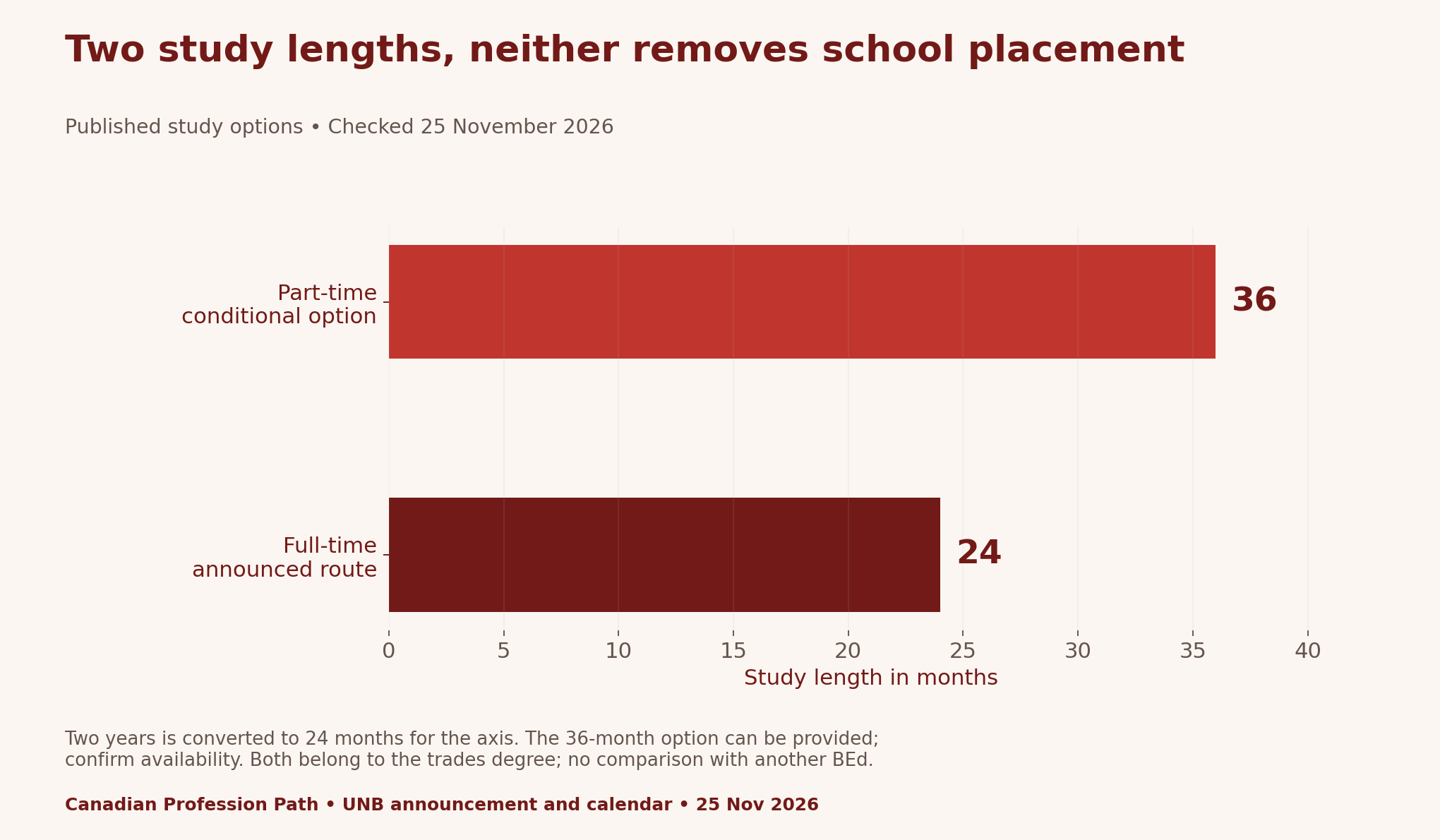
A longer study route may spread coursework differently, but the published lengths do not reveal a weekly timetable. Ask how terms, regular check-ins and school placements fit together. Do not divide the total workload by 24 or 36 months and treat the result as a reliable weekly commitment.
Keep the full-time and part-time questions in separate rows. Record who confirmed the option, when they replied and which intake they meant. A general statement that an option can be provided is weaker evidence than a written offer for your intended cohort.
Four planning lanes prevent one approval from standing in for another
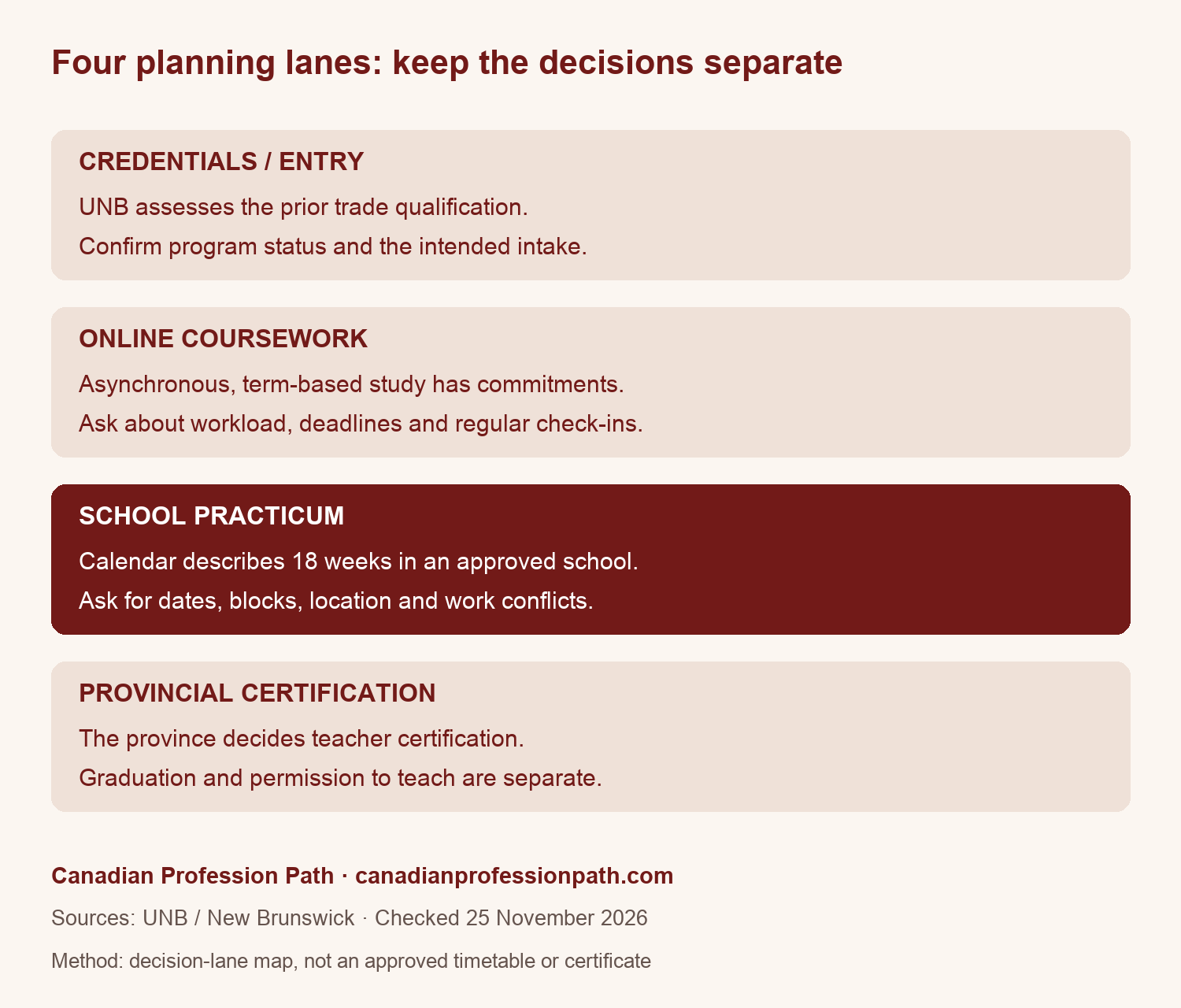
First, ask admissions to assess the actual diploma or trade qualification. Second, ask the program team about study expectations. Third, request the practicum calendar and location process. Finally, ask the province about certification after the qualification. Keep a named owner and an outstanding question in each lane.
The calendar gives Atlantic Canadian applicants priority and describes competitive admission. Meeting a minimum does not establish that a place is available. Newcomers should ask how an overseas trade qualification will be assessed. An employer’s recognition of a skill does not replace the university’s credential decision.
Plan around the school practicum, not around the word online
The calendar places responsibility for arranging New Brunswick practicums with the Faculty of Education. It describes supervised school teaching and learning activities across 18 weeks. However, the source does not supply a personal timetable. Ask whether the weeks occur in blocks, which school will host them and what attendance requires.
Do not assume placements will fit evenings, weekends or existing days off. Enter unknown dates as unknown. Then ask your employer which shifts could move once the school calendar is confirmed. A workable plan needs agreement from the relevant people, not just an empty calendar cell.
A fictional roster exposes the unanswered questions
Consider a fictional tradesperson working four ten-hour shifts each week. They propose two evenings for online study. That is a starting roster, not a claim about UNB’s workload. Their next task is to check term deadlines and decide whether those study windows are realistic.
Their practicum dates remain unknown. They therefore cannot claim that the four shifts will continue unchanged. The blank planner records school dates, work hours, employer replies, travel and backup arrangements separately. Keep any proposed leave marked unconfirmed until the employer gives a clear answer.
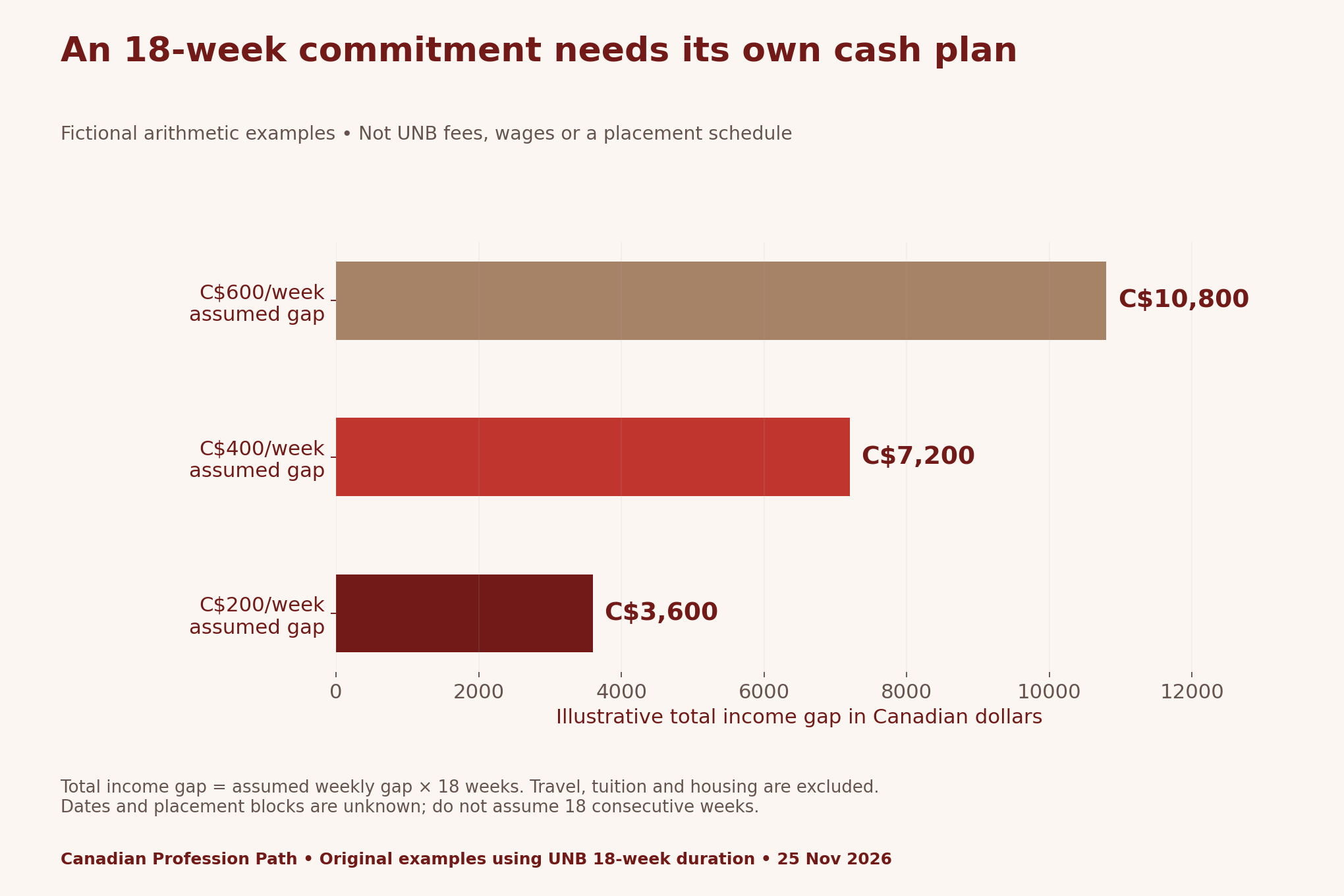
For example, C$400 × 18 = C$7,200. This calculation shows how a small weekly gap can accumulate; it does not tell a reader what they will lose. Replace the assumed gap with your confirmed work arrangement. Add travel and housing separately rather than hiding them inside the income figure.
A zero income gap also needs evidence. It could depend on paid leave, shift changes or savings already available. Do not enter zero merely because the placement schedule has not arrived. A missing answer belongs in the question log, where it can receive an owner and a follow-up date.
Teacher certification remains a provincial decision
New Brunswick’s Teacher Certification Office explains that a certificate is required for public elementary, middle and high school teaching. Its application routes distinguish people trained in New Brunswick, another Canadian jurisdiction and another country. Ask which route applies to your completed qualification and circumstances.
Admission to a degree is not certification, and certification is not a job offer. Keep those decisions separate when comparing a move into teaching. This article does not assign a certificate level, assess a foreign credential or promise that a placement school will offer employment.
Our allied-health training comparison uses a similar separation of study, placements and professional requirements for a different field. Browse the Research & Reports archive for more sourced planning guides.
Method, limits and downloadable planning tools
We compared the university’s announcement and calendar with provincial certification guidance on 25 November 2026. Next, we converted two years to 24 months and multiplied fictional weekly gaps by 18 weeks. We did not test admission, obtain a placement timetable or resolve the credit discrepancy. The UNB skilled trades teaching degree tools remain planning aids, subject to written confirmation.
- UNB source and uncertainty register (CSV)
- Fictional placement income-gap calculations (CSV)
- Blank study placement and work planner (CSV)
- Fictional roster and verification questions (CSV)
Suggested citation: Canadian Profession Path, “UNB Skilled Trades Teaching Degree: Plan for the School Practicum”, 25 November 2026. Cite UNB for its program information and this article for the original planning framework and fictional calculations.


