






Nuclear manufacturing jobs in Cambridge deserve a closer look at the actual role, not just the expansion headline. Begin with a current official vacancy. Then map each requirement to evidence you can honestly provide, and keep unresolved questions visible.
BWXT announced its completed Cambridge expansion on 12 November 2026. This guide separates its reported achievements from future hiring plans. Two charts, an evidence-map infographic and four free CSV tools help Canadian residents evaluate a potential move. We checked the sources on 13 November.
Nuclear manufacturing jobs in Cambridge: read the two job figures
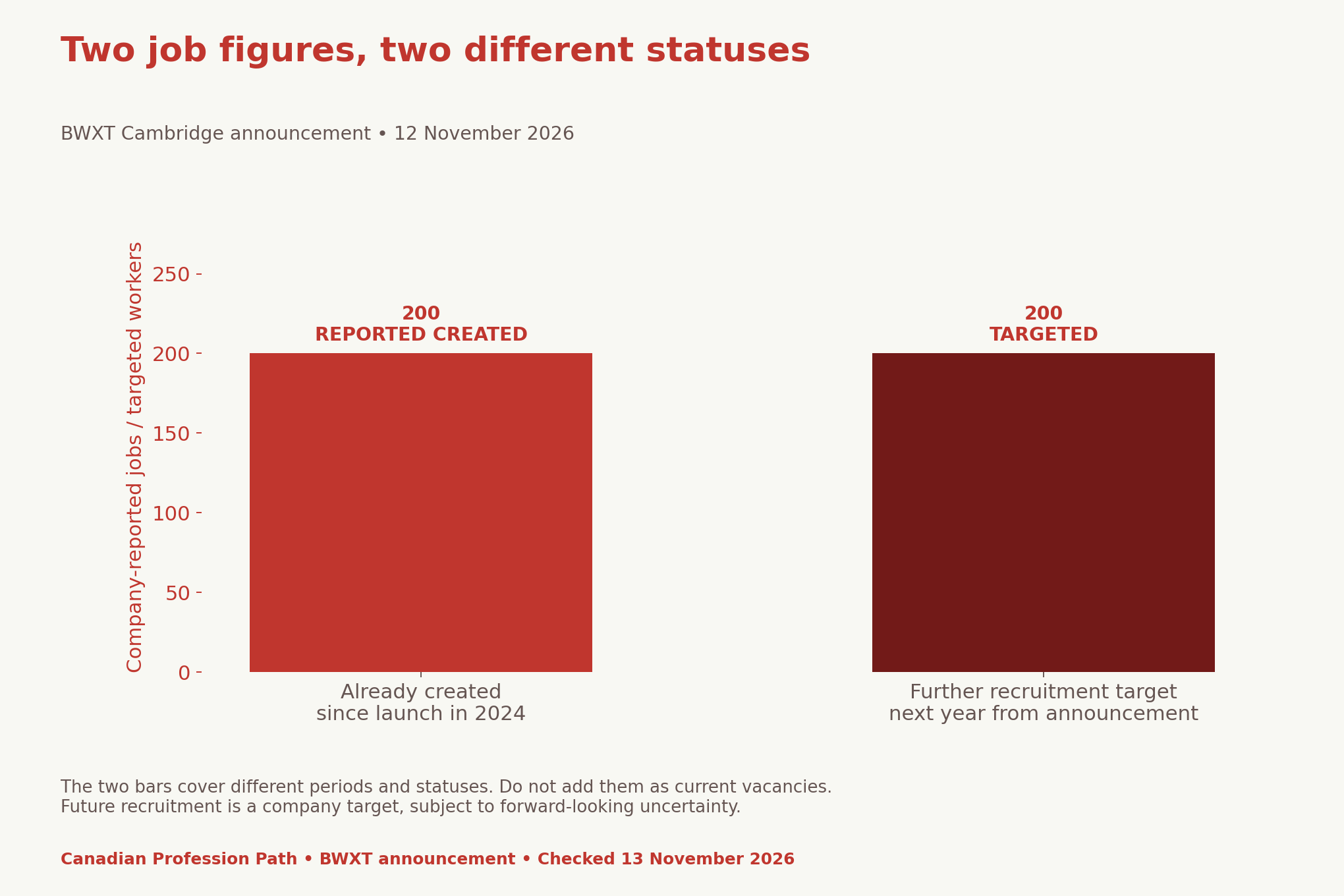
The BWXT expansion announcement reports 200 jobs already created since the project began in 2024. Separately, the company targets recruitment of another 200 workers in Cambridge over the following year. The second figure is forward-looking; neither is a count of current advertisements.
What the facility figures measure
| Reported indicator | Value | Interpretation |
|---|---|---|
| Investment | Approximately C$80 million | Company-reported expansion investment |
| Added floor space | 55,000 square feet | Total added floor space, not cleanroom area |
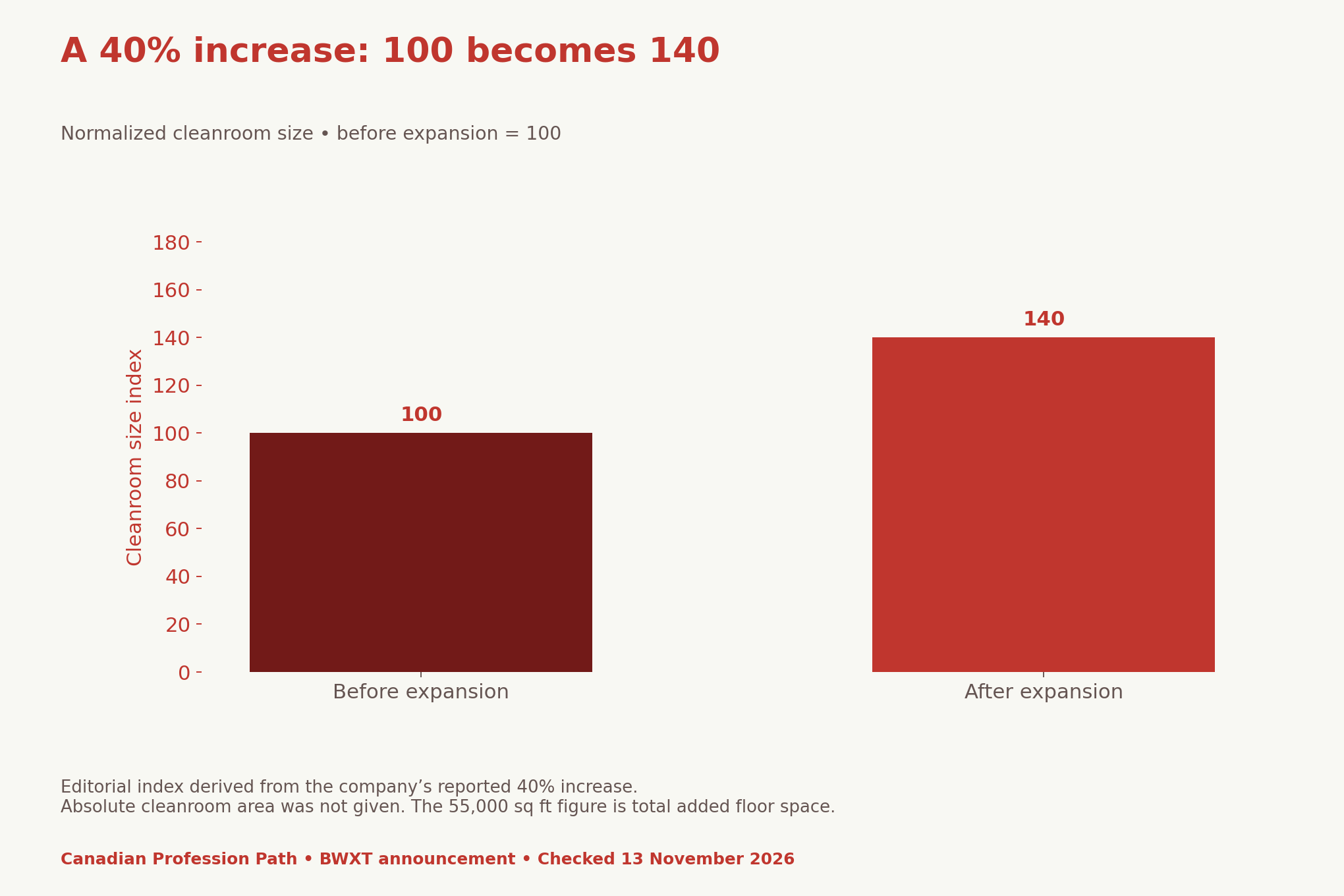
| Cleanroom size | 40% increase | Relative increase; absolute area not supplied |
The announcement links the expansion to several manufacturing disciplines. However, investment and capacity do not establish an individual’s hiring odds. Its forward-looking statement also warns that actual outcomes can differ. Use the announcement as a reason to investigate, rather than a job offer.
Start with an official, dated vacancy
Open the BWXT careers listings and save the specific role URL, title, location and date checked. Confirm the application route on the current page. Listings change, so this article’s examples are not a complete inventory or a promise that a role remains open.
A vacancy register helps you distinguish a genuine opportunity from a copied advertisement. Keep one row per role. If two sites repeat the same position, record the official reference once. Do not count an announcement’s recruitment target as additional live adverts.
Compare two role examples without blending their requirements
The Automated Welding Specialist listing dated 7 November describes an onsite Cambridge position. It requests a relevant degree or diploma, at least five years of manufacturing or fabrication experience, and automated-welding knowledge. It separately identifies several certifications, inspection methods and software skills as assets. Those labels matter.
For this example, connect relevant experience to the actual work: process development, equipment programming, production support or quality records. State your own contribution clearly. A team’s result is not proof that you personally programmed a robot or approved a procedure. Recheck the full advertisement before applying.
The Inspector Level C listing dated 6 November specifies MT Level 2 and PT Level 2, plus two from its stated additional routes. It also lists experience and shift conditions. The page includes internal-process wording. Therefore, verify which application route applies rather than assuming every reader can use it.
Do not transfer the inspector’s credential requirements to every manufacturing job. Likewise, do not treat a welding-role asset as a substitute for an inspector’s required qualification. Each row in your evidence map must point back to the particular vacancy you are considering.
Build a requirements-to-evidence map
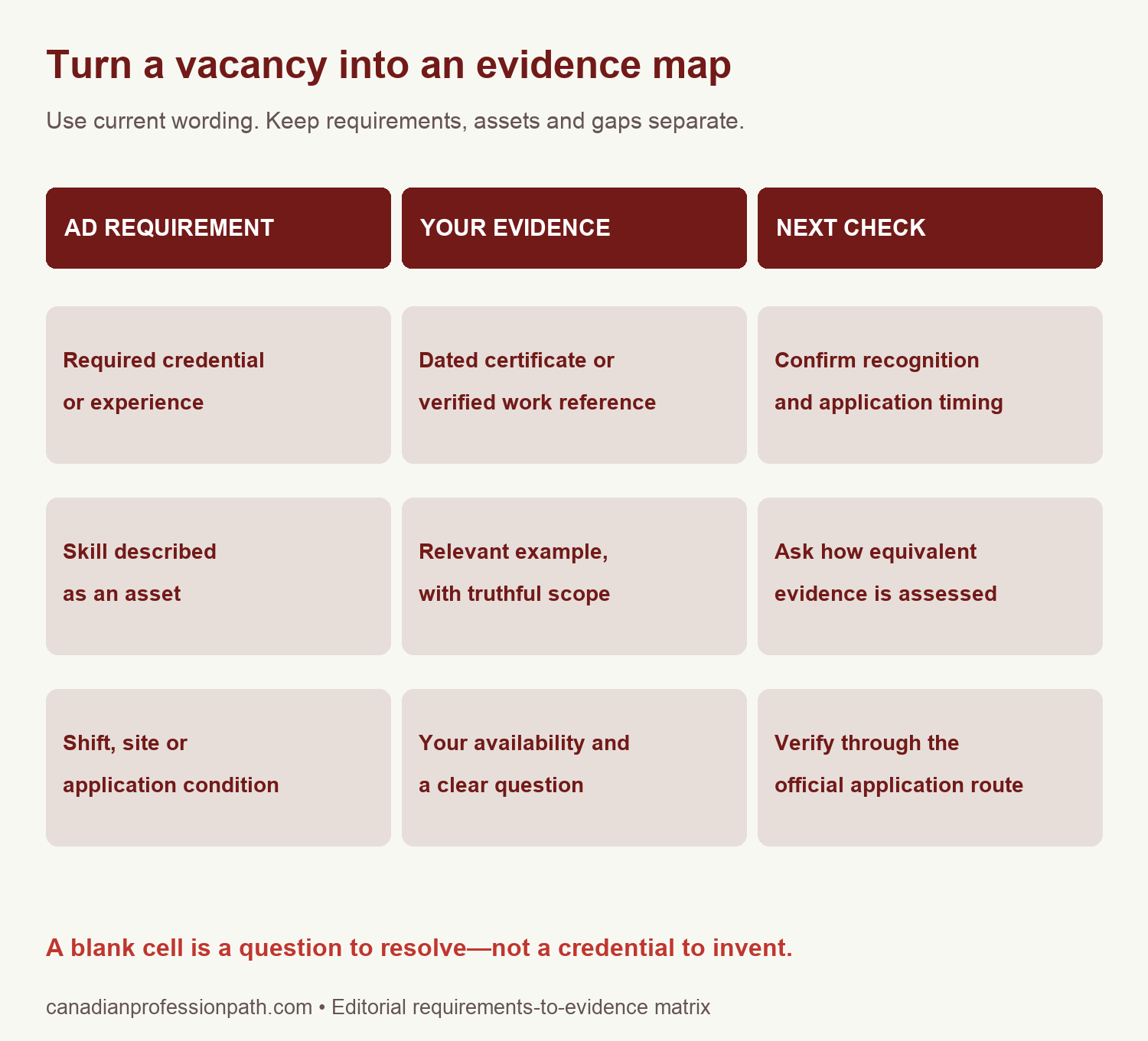
First, copy a short requirement into your private worksheet and label it required or an asset using the employer’s wording. Next, identify a dated reference you can substantiate. Finally, record a question where the connection is incomplete. Do not erase a gap simply to make the application look stronger.
Evidence can include a qualification reference, a permitted work example or a concise account of a task you performed. Record its context, your responsibility and a result you can support. Keep confidential drawings, customer information and restricted technical records out of public portfolios and unsolicited messages.
For example, “supported robotic welding” is too vague on its own. Clarify whether you programmed, operated, maintained or documented the system. Then identify the evidence you are allowed to share. If the work was supervised, preserve that distinction rather than implying independent responsibility.
For newcomers, keep recognition questions separate
An overseas credential or job title may need an explanation against the specific advertisement. Ask the employer which evidence it accepts for that requirement. Keep credential recognition, application eligibility and work authorisation as separate questions; the facility announcement settles none of them.
Before paying for training, confirm what gap the course would address. Ask who recognises the credential, whether practical assessment is needed and when it must be held. A useful skills audit can end with a question or a different role choice. It does not have to end with a purchase.
Check the practical fit before changing jobs
Record the site location, shift wording and application conditions from the current advert. Consider travel, caring responsibilities and the evidence you still need. If pay or benefits become relevant, use the actual written offer and plan documents rather than an industry-wide assumption.
Our Canadian salary-offer comparison separates guaranteed cash from variable amounts and costs. For a possible move into contracting instead, read the self-employed benefits audit. Employment status, benefits and a manufacturing skills match answer different questions.
Download the research and private audit tools
The source table preserves units, periods and whether a number is reported or calculated. The blank registers are for private use. You do not need to send us identification, certificates, employment records or financial details. Use references rather than unnecessary personal information.
- BWXT announcement indicators and calculation boundaries (CSV)
- Blank dated official-vacancy register (CSV)
- Blank manufacturing requirements-to-evidence map (CSV)
- Field meanings and verification questions (CSV)
Methods, limits and citation
We transcribed the company’s dated announcement and inspected two illustrative official job pages. We did not audit its employment figures, count every vacancy or estimate hiring probabilities. The cleanroom chart normalizes the earlier size to 100; it does not calculate square footage. No salary forecast or training recommendation is made.
The worksheets and infographic are original editorial organising tools, not validated assessments. Two charts serve the narrow numerical evidence without adding filler. Suggested citation: Canadian Profession Path, 13 November 2026, “Nuclear Manufacturing Jobs in Cambridge: Skills Audit”, with the original BWXT release, dated vacancy pages and stated limits.


