




Understanding the Terrain: Assessing Geological Landscapes for Hazards
Geological landscapes contain features that can create serious fieldwork hazards.
Careful terrain assessment helps geologists recognize and manage these risks.
Therefore, teams should evaluate landscapes before beginning geological surveys.
Identifying Common Geological Hazards
Geologists must recognize common hazards before fieldwork begins.
These hazards include landslides, rockfalls, and unstable soil conditions.
Moreover, flood-prone areas and fault lines pose significant risks.
Familiarity with local geological features improves hazard identification.
Evaluating Terrain Stability
Careful assessment of slope angles helps geologists gauge terrain stability.
Steeper slopes often correlate with increased landslide risk.
Additionally, loose or weathered rock formations require extra caution.
Geologist Marcus Lin recommends inspecting soil cohesion in the field.
Using Topographic and Geological Maps
Topographic maps reveal elevation changes and landform structures.
Geological maps indicate rock types and fault zones.
Together, these resources help teams predict hazardous areas effectively.
For instance, Jadefield Exploration uses maps to plan safer routes.
Incorporating Weather and Environmental Conditions
Weather conditions influence terrain safety during geological surveys.
Heavy rain can trigger mudslides or increase soil saturation.
Therefore, Dr. Elena Harvey advises monitoring weather updates regularly.
Furthermore, seasonal changes affect vegetation cover and erosion rates.
Utilizing Field Equipment for Hazard Detection
Modern tools improve hazard assessment accuracy in the field.
Handheld ground-penetrating radar detects subsurface weaknesses.
GPS devices help surveyors track locations within unstable terrain precisely.
Surveyors from TerraQuest Solutions rely on such equipment daily.
Communication and Team Coordination
Clear communication keeps all team members aware of potential risks.
Establishing check-in procedures enhances safety during fieldwork.
Unlock Your Career Potential
Visualize a clear path to success with our tailored Career Consulting service. Personalized insights in just 1-3 days.
Get StartedLikewise, sharing terrain observations can help prevent accidents.
Project lead Antonio Ramirez emphasizes teamwork for hazard management.
Developing a Hazard Response Plan
Teams should prepare contingency plans for potential geological hazards.
A rapid evacuation route should be identified before fieldwork begins.
Emergency equipment must remain readily accessible during surveys.
Consequently, geologists can respond effectively to unexpected dangers.
Essential Gear
Geologists rely on essential gear to work safely and effectively in the field.
Furthermore, suitable equipment supports communication, documentation, sampling, and personal protection.
Therefore, geologists should prepare their equipment before beginning fieldwork.
Protective Clothing and Footwear
Geologists must wear durable clothing that protects against rough terrain and changing weather.
Sturdy boots with ankle support help prevent injuries on uneven ground.
Additionally, moisture-wicking fabrics keep geologists comfortable in hot environments.
Gloves protect hands from sharp rocks and potential contaminants.
Moreover, high-visibility vests improve safety near vehicles or during low-light conditions.
Navigation and Communication Tools
A reliable GPS device provides accurate location tracking during fieldwork.
Furthermore, a topographic map offers essential backup navigation support.
Two-way radios enable instant communication among team members in remote areas.
Cell phones with extra battery packs provide additional communication options.
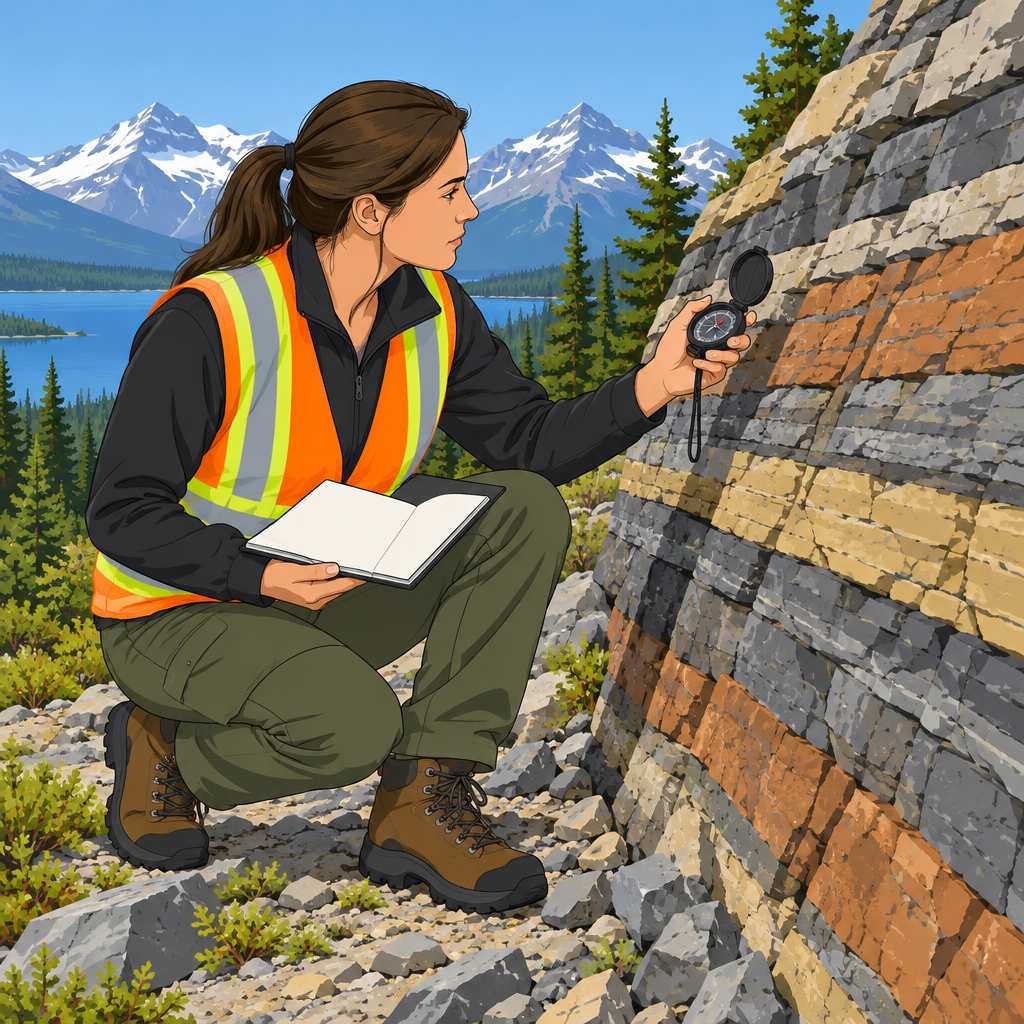
Besides these tools, a compass helps geologists find direction when electronics fail.
Sampling and Mapping Equipment
A geologist’s hammer supports rock sampling and specimen collection.
Field notebooks with waterproof paper allow durable data recording.
Hand lenses help geologists examine mineral details more closely.
Meanwhile, measuring tapes and clinometers support accurate geological measurements.
Digital cameras document outcrops and sample locations for later analysis.
Safety and First Aid Supplies
A comprehensive first aid kit helps geologists manage injuries immediately.
Headlamps or flashlights provide illumination in low-light conditions.
Sun protection, including hats and sunscreen, reduces harmful ultraviolet exposure.
Water bottles or hydration systems help geologists maintain proper fluid intake.
Finally, emergency whistles help alert others when a geologist needs assistance.
Weather Awareness
Weather awareness helps geologists prepare for changing field conditions.
Reliable forecasts support safer planning before teams enter the field.
Timely updates also help teams respond when conditions change.
Preparing for Weather Conditions
Geologists must check detailed weather forecasts before heading into the field.
They should monitor updates from reliable sources like the National Weather Service.
Additionally, packing appropriate clothing for expected conditions remains essential.
Layering clothing helps geologists adapt quickly to temperature changes throughout the day.
Moreover, waterproof gear protects against sudden rain or snow.
Sun protection, including hats and sunscreen, reduces sunburn and heatstroke risks.
Furthermore, anticipating extreme conditions improves preparation for potential hazards.
Always inform a designated contact about the planned location and schedule.
Responding to Emergency Weather in the Field
If storms occur, seek immediate shelter inside sturdy structures or vehicles.
Avoid exposed ridges, cliffs, and open areas during lightning events.
Heavy rain may cause flash flooding, so move promptly to higher ground.
During cold weather, stay dry and insulated to prevent hypothermia.
Use weather radios or mobile apps to receive real-time alerts outdoors.
Meanwhile, communicate changes to your team or base camp as conditions evolve.
Also, keep an emergency kit containing first aid, water, and extra food.
Knowing escape routes improves safety when weather threatens field operations.
Discover More: How to Transition to a Geology Career Later in Life
Recognizing Local Wildlife Hazards
Geologists must identify dangerous animals in their field areas before beginning fieldwork.
For example, bears and mountain lions present risks in the Rocky Mountains.
Similarly, venomous snakes create common hazards in southwestern deserts.
Understanding animal behavior helps geologists minimize unexpected encounters outdoors.
Preventive Measures for Avoiding Encounters
Always make noise while hiking to alert animals to your presence.
Furthermore, travel in groups to reduce the chance of an attack.
Store food securely so it does not attract wildlife to your campsite.
When possible, use bear-proof containers or hang food in a tree.
Also, keep your campsite clean and dispose of waste properly.
Responding Safely to Animal Encounters
If you see wildlife, stay calm and avoid sudden movements.
Then, slowly back away while keeping the animal in sight.
Never run because running may trigger a chase from predators like mountain lions.
If a bear approaches aggressively, use bear spray and keep it accessible.
After a snakebite, seek medical help immediately and remain as still as possible.
Preparing with Appropriate Gear and Training
Wear sturdy boots and long pants to protect against snakebites and scratches.
Additionally, carry a first aid kit containing treatments for bites and stings.
Attend wildlife safety workshops offered by local outdoor organizations.
Coordinate with team leaders such as Ethan Caldwell to establish emergency protocols.
Staying Informed and Vigilant in the Field
Check recent wildlife activity reports before heading out each day.
Use GPS trackers to avoid entering risky animal territory or getting lost.
Meanwhile, maintain communication devices so you can call for help quickly.
By following these precautions, geologists like Sierra Morales can stay safer outdoors.
Uncover the Details: How Geologists Shape Sustainable Resource Development
Emergency Preparedness: Creating a Field Safety Plan
Geologists face unpredictable conditions during fieldwork.
Therefore, a clear safety plan significantly reduces risks.
A well-designed plan helps teams respond quickly during emergencies.
It also strengthens communication among team members.
Ultimately, effective planning saves lives and prevents serious injuries.
Components of a Complete Safety Plan
First, identify potential hazards specific to the field site.
Next, list emergency contacts, including local medical facilities and authorities.
Also, include evacuation routes and nearby safe zones.
Then, assign team members specific emergency responsibilities.
Prepare detailed checklists for first aid supplies and equipment.
Finally, establish communication protocols using radios, phones, or satellite devices.
Communication and Check-In Procedures
Implement regular check-ins to confirm each team member’s safety.
Use predetermined signals or codes for urgent communication.
Additionally, ensure every team member understands the communication tools.
Plan backup methods for situations that disrupt standard communication.
Training and Practice Drills
Conduct safety training sessions before each field project begins.
Next, simulate emergency scenarios so the team can practice responses.
Review and update the safety plan after evaluating drill feedback.
Encourage team members to report safety concerns without hesitation.
Safety Documentation and Accessibility
Keep the safety plan in both digital and physical formats.
Ensure everyone on the team can access the plan at all times.
Furthermore, share copies with relevant local authorities and base offices.
After each field trip, document incidents and lessons learned.
Use those records to improve future safety planning.
Learn More: How Geologists Contribute to Environmental Protection
Staying Hydrated
Geologists often work in remote areas with high temperatures.
Therefore, staying hydrated is crucial to maintain focus and energy.
Always carry enough water for the entire day in insulated bottles.
Additionally, drink water regularly even if you do not feel thirsty.
Electrolyte replacement drinks can help during intense physical activity.
Moreover, avoid excessive caffeine or alcohol because they cause dehydration.
Managing Illness
Fieldwork exposes geologists to various health risks and illnesses.
Thus, it is essential to recognize early symptoms and act promptly.
Carry a well-stocked first aid kit tailored to common field conditions.
This kit should include medications for allergies, pain, and digestive issues.
Seek medical attention immediately if symptoms worsen or do not improve.
Furthermore, inform your team members about any pre-existing health concerns.
Finally, adjust your workload and rest periods according to your health status.
Delve into the Subject: What to Study to Pursue a Geologist Career
Communication Strategies: Maintaining Contact with Team and Base
Field geologists need dependable contact with their teams and base stations in remote areas.
Reliable communication supports safety, coordination, and timely responses during fieldwork.
Therefore, teams should combine suitable devices, clear protocols, backup plans, and regular updates.
Choosing Reliable Communication Devices
Field geologists must select communication tools suited for remote areas.
Satellite phones provide coverage where cellular networks fail.
Handheld radios help maintain contact within rugged terrain.
Moreover, personal locator beacons improve emergency response times.
Each device should receive a thorough check before teams enter the field.
Establishing Clear Communication Protocols
Teams must agree on scheduled check-ins to ensure safety.
Consistent reporting intervals help teams detect emergencies quickly.
Additionally, team members should learn basic radio etiquette.
Clear call signs reduce confusion during complex operations.
Implementing an emergency code enhances response efficiency.
Preparing for Communication Challenges
Terrain features can block or interfere with signals.
Thus, geologists should maintain backup communication plans.
Preloading offline maps and sharing location coordinates supports navigation.
Power sources such as portable solar panels extend device usage time.
Furthermore, training in alternative signaling methods reinforces preparedness.
Coordinating with Base Operations
Informing base personnel of planned routes improves accountability.
Uploading daily status updates keeps base teams informed of progress.
In emergencies, well-informed bases can quickly mobilize assistance.
Regularly exchanging weather updates enhances field safety decisions.
Lastly, maintaining detailed logs assists post-fieldwork analysis and reporting.
Importance of First Aid Skills in Remote Geological Fieldwork
Geologists often work in isolated and rugged environments.
Therefore, first aid skills significantly improve safety at field sites.
Timely medical care can prevent minor injuries from becoming serious.
Moreover, first aid knowledge builds confidence during emergencies.
Companies like TerraQuest Geological Solutions require first aid training for their teams.
Essential First Aid Skills for Geologists
Basic wound care helps geologists treat cuts and abrasions immediately.
Additionally, fracture management reduces the risk of further injury.
Recognizing heat stroke symptoms helps prevent life-threatening dehydration.
CPR training enables geologists to assist people experiencing cardiac arrest.
Furthermore, careful snake bite management remains vital in some field locations.
Recommended First Aid Equipment to Carry
Every geologist should carry a well-stocked first aid kit in the field.
Include sterile gauze, bandages, antiseptic wipes, and adhesive tape.
A splint and elastic bandages can support sprains and fractures.
Also, carry tweezers and scissors for removing debris and cutting materials.
Additionally, Summit Field Supplies offers packs designed for rugged conditions.
Training and Certification Resources
Geologists can enroll in courses from organizations such as Mountain Rescue Training Center.
These courses provide hands-on experience for fieldwork scenarios.
Local hospitals and clinics also offer first aid certification classes for outdoor professionals.
Refreshing skills annually helps geologists remain prepared and confident.
Meanwhile, online learning platforms can supplement practical training with theoretical knowledge.
Emergency Communication and Response Planning
Always inform colleagues or supervisors about your field location and schedule.
Carry reliable devices such as satellite phones or GPS radios.
Before fieldwork, plan evacuation routes and identify nearby medical facilities.
Practice group drills so teams can handle emergencies efficiently.
Companies such as Keystone Exploration Services implement detailed emergency protocols for their teams.
Additional Resources
Google search results for Essential Safety Tips for Geologists in the Field Science and Research
Bing search results for Essential Safety Tips for Geologists in the Field Science and Research


