




The Role of Geologists in Assessing Natural Resources and Environmental Impact
Geologists assess natural resources and evaluate environmental effects.
Their findings guide extraction decisions and environmental protection efforts.
Additionally, geologists support sustainable development through research and collaboration.
Evaluating Natural Resources
Geologists analyze the Earth to identify valuable natural resources.
They thoroughly assess mineral deposits, groundwater, and fossil fuel availability.
Moreover, geologists accurately estimate resource quantities and quality.
For example, Jessica Langdon from TerraQuest Minerals effectively uses seismic surveys.
Similarly, Ethan Marquez at GeoCore Consultants applies advanced mapping techniques to locate reserves.
These assessments help companies make informed extraction decisions.
Assessing Environmental Impacts
Geologists evaluate environmental risks associated with resource development.
They carefully study soil stability, erosion patterns, and water contamination risks.
Furthermore, geologists predict how mining activities could affect local ecosystems.
Rachel Nguyen with GreenEarth Analytics specializes in environmental risk modeling.
Meanwhile, James O’Connor at EcoMine Advisors conducts detailed mining impact assessments.
Consequently, geologists help reduce ecological damage during extraction.
Supporting Sustainable Resource Development
Geologists recommend approaches that balance resource use with environmental protection.
They promote techniques that reduce habitat disruption and conserve water supplies.
Additionally, geologists advise companies about rehabilitating disturbed land after extraction.
Vanguard Mining Solutions collaborates with specialists such as Dr. Laura Mitchell.
Together, they implement plans for responsible mining and resource management.
As a result, their work supports long-term sustainability in natural resource industries.
Collaboration with Stakeholders
Geologists work closely with policymakers, engineers, and local communities.
They provide data that informs regulations and promotes safe development practices.
For instance, consulting geologist Mark Hopkins often liaises with government environmental agencies.
He ensures that stakeholders understand geological factors influencing project sustainability.
Unlock Your Career Potential
Visualize a clear path to success with our tailored Career Consulting service. Personalized insights in just 1-3 days.
Get StartedEffective communication improves resource management and reduces conflicts.
Ultimately, collaboration helps development respect economic and environmental priorities.
Techniques Used by Geologists for Sustainable Mining
Geologists begin mining projects with detailed site assessments.
They analyze rock formations and mineral deposits using advanced technologies.
TerraNova Geological Services uses 3D seismic imaging for accurate resource mapping.
This method minimizes environmental disruption by targeting extraction zones precisely.
Geologists also evaluate mineral quality and quantity to determine project feasibility.
They collaborate with environmental scientists to identify potential ecosystem impacts early.
Geological Site Assessment and Resource Evaluation
Detailed geological assessments help teams understand deposits before extraction begins.
TerraNova Geological Services applies 3D seismic imaging to map resources accurately.
Accurate mapping allows mining companies to target extraction zones more precisely.
Environmental Impact Studies for Mining Projects
Environmental impact studies guide sustainable mining practices effectively.
Evergreen Mining Advisors conducts comprehensive baseline environmental analyses.
Its geologists measure soil stability, water quality, and biodiversity presence.
Mining teams then include mitigation strategies that protect sensitive habitats.
Monitoring programs track environmental changes throughout mining operations.
Therefore, teams can respond promptly to unforeseen ecological issues.
Remote Sensing and Geographic Information Systems
Remote sensing technologies support non-invasive exploration and environmental monitoring.
GeoSys Solutions combines satellite imagery with GIS for detailed land-use mapping.
These tools help teams identify erosion risks and groundwater contamination potential.
Mining companies can consequently adjust operations to reduce environmental footprints.
GIS data also supports land rehabilitation planning after extraction.
Waste Management and Site Rehabilitation
Proper waste management reduces pollution and protects surrounding environments.
Geologists recommend tailings dams that follow strict safety standards.
At GreenRock Minerals, teams create disposal plans that prioritize containment and recycling.
After mining ends, rehabilitation restores vegetation and stabilizes soil layers.
Geology experts lead reforestation and wetland creation during rehabilitation.
These efforts gradually return the land to a productive, natural state.
Multidisciplinary Collaboration in Sustainable Mining
Geologists work with engineers, ecologists, and policymakers to support sustainability.
StoneBridge Consultants holds regular interdisciplinary meetings throughout its projects.
This teamwork integrates technical, environmental, and social considerations effectively.
Moreover, collaboration encourages innovation in sustainable resource development.
It also improves transparency and community engagement during mining activities.
Successful Sustainable Resource Development Led by Geologists
Geologists have led projects that address environmental recovery, resource conservation, and responsible development.
These initiatives connect geological expertise with community cooperation and environmental protection.
Furthermore, each case demonstrates how resource development can support lasting ecological and social benefits.
Restoring Ecosystems after Mining in the Appalachian Region
Geologist Michelle Turner spearheaded a restoration project in West Virginia.
She collaborated closely with local communities and environmental scientists.
Together, they implemented innovative land reclamation techniques to repair mined lands.
Moreover, Michelle introduced sustainable water management practices to prevent contamination.
The project boosted biodiversity and improved soil quality within three years.
Furthermore, it created lasting employment opportunities in land monitoring and maintenance.
Innovative Groundwater Management in the Central Valley
Dr. Alejandro Rivera worked with Hydrologix Solutions to address groundwater depletion.
He developed sustainable aquifer recharge methods using natural infiltration zones.
Consequently, local farmers adopted water-efficient irrigation guided by Alejandro’s data.
This approach increased crop yield while significantly reducing water consumption.
Additionally, Alejandro established monitoring networks to track aquifer health in real time.
His work ensured ongoing protection and sustainable use of groundwater resources.
Responsible Rare Earth Element Extraction in Greenland
Geologist Signe Kristoffersen led an ethical mining venture at a rare earth mineral site.
She emphasized minimizing environmental footprints through precise resource mapping.
Moreover, Signe enforced strict waste management policies during extraction processes.
The project prioritized community engagement to ensure local benefits and transparency.
Importantly, her team used renewable energy sources to power mining operations.
This initiative became a global example of balancing industry needs with ecological care.
Sustainable Urban Resource Planning in Melbourne
Geologist Ethan Caldwell partnered with city planners to integrate sustainable materials.
He identified urban deposits suitable for reuse in construction, reducing landfill waste.
Besides this, Ethan advocated for resource-efficient site evaluations before development.
His contributions aided Melbourne in cutting its carbon footprint dramatically.
Furthermore, he helped establish policies encouraging circular economy principles for resources.
These efforts promoted responsible urban growth aligned with environmental sustainability.
Discover More: How Geologists Contribute to Environmental Protection
The Importance of Geological Surveys in Resource Management and Conservation
Geological surveys connect underground knowledge with careful resource management.
They help communities weigh development needs against long-term conservation goals.
Moreover, survey findings support safer planning, transparent decisions, and responsible stewardship.
Identifying and Evaluating Natural Resources
Geological surveys identify natural resources beneath the Earth’s surface.
Experts like Dr. Alicia Moreno lead teams that map mineral deposits and groundwater sources.
Consequently, survey data guide responsible extraction and limit unnecessary environmental disruption.
For example, TerraCore Analytics uses advanced geophysical tools to locate resources efficiently.
Supporting Sustainable Resource Extraction
Geologists advise companies on reducing the environmental footprint of resource extraction.
Jonathan Ellis, a senior geologist at GreenRock Resources, emphasizes reduced soil erosion and habitat disturbance.
They recommend practices that protect surrounding ecosystems during development.
Thus, extraction activities can meet sustainability principles and regulatory requirements.
Moreover, ongoing monitoring helps operators respond to changing environmental conditions.
Preventing Resource Depletion and Ensuring Conservation
Geological surveys inform policymakers about the quantity and quality of available resources.
Consequently, agencies can set extraction limits that balance economic growth with conservation.
Maya Chen from Earthwise Consultations explains how survey data shape sustainable management plans.
Additionally, geological information helps preserve critical aquifers and coal seams for future use.
Ultimately, this approach safeguards natural capital while supporting community needs.
Enhancing Risk Assessment and Environmental Protection
Surveys identify hazards such as faults, landslides, and flood-prone zones.
Experts like Carlos Medina design strategies that reduce risks linked to resource development.
Therefore, projects can improve safety for workers and nearby populations.
Furthermore, planners use survey insights to avoid contaminating soil and water sources.
In this way, geological knowledge helps prevent ecological damage during extraction.
Enabling Informed Decision-Making for Stakeholders
Geological survey results guide investment decisions for companies like Silver Ridge Mining Inc.
Investors use accurate information from firms such as StoneLine Geosciences to evaluate project viability.
Meanwhile, community leaders use survey findings to advocate for environmental stewardship.
Consequently, transparent geological information fosters trust among stakeholders.
This collaborative approach strengthens sustainable resource development outcomes.
Learn More: What to Study to Pursue a Geologist Career
Collaboration Between Geologists, Policymakers, and Industry Stakeholders
Geologists, policymakers, and industry stakeholders work together to support sustainable resource development.
Through shared expertise, these groups connect scientific knowledge with practical decisions.
This cooperation strengthens environmental accountability while supporting responsible industry practices.
Building Strong Partnerships
Geologists actively engage with policymakers to shape resource development guidelines.
They communicate scientific findings clearly to inform effective decision-making.
Furthermore, policymakers value geological expertise when drafting sustainable regulations.
Meanwhile, industry stakeholders seek geological insights to minimize environmental impacts.
Consequently, collaborative networks have strengthened over recent years.
For example, Horizon Resources regularly partners with geoscientists and government agencies.
Integrating Knowledge for Responsible Resource Management
Geologists provide critical data about mineral deposits and ecosystem sensitivities.
This information guides companies like TerraMining Solutions toward eco-friendly extraction methods.
As a result, industries reduce waste and rehabilitate affected landscapes effectively.
Policymakers incorporate these scientific inputs into frameworks supporting sustainable development.
Additionally, experts such as Dr. Elisa Montoya facilitate workshops for diverse stakeholders.
These workshops help participants align their sustainability goals.
Implementing Collaborative Strategies
Stakeholders co-create sustainability plans that balance economic and environmental priorities.
They hold regular meetings to review progress and address emerging challenges quickly.
Additionally, shared technology platforms improve transparency among participating groups.
Geologists lead environmental impact assessments and support regulatory compliance.
Moreover, organizations use adaptive management to respond to new scientific insights.
This approach allows stakeholders to adjust sustainability plans as knowledge develops.
Benefits of Inclusive Cooperation
Joint efforts enhance resource efficiency and significantly reduce ecological footprints.
They also build public trust through accountable and transparent operations.
Meanwhile, companies pursue long-term profitability by aligning with sustainability standards.
Governments advance climate goals by enforcing scientifically backed policies.
Ultimately, this collaboration supports resilient communities and healthier ecosystems.
Key Actions for Stronger Collaboration
- Encourage continuous dialogue between geologists, policymakers, and industry leaders.
- Develop joint research initiatives addressing local environmental challenges.
- Invest in capacity building and training across stakeholder groups.
- Promote public-private partnerships for innovative sustainability solutions.
- Create monitoring systems to track compliance and environmental outcomes.
Find Out More: Tips for Aspiring Geologists in Canada
Innovative Technologies and Methodologies Geologists Use to Minimize Environmental Degradation
Geologists use innovative technologies and methodologies to reduce environmental degradation during resource projects.
They monitor landscapes, limit disturbance, and support recovery through targeted practices.
Furthermore, they combine field methods, digital tools, and cooperation to protect ecosystems.
Advanced Remote Sensing and Data Analysis
Geologists apply advanced remote sensing to monitor land and resource conditions effectively.
They use satellite imagery and aerial drones to gather precise environmental data.
Moreover, geographic information systems help geologists analyze spatial patterns.
This approach detects ecological disturbances and potential risks at an early stage.
Consequently, data-driven decisions help planners reduce project environmental footprints.
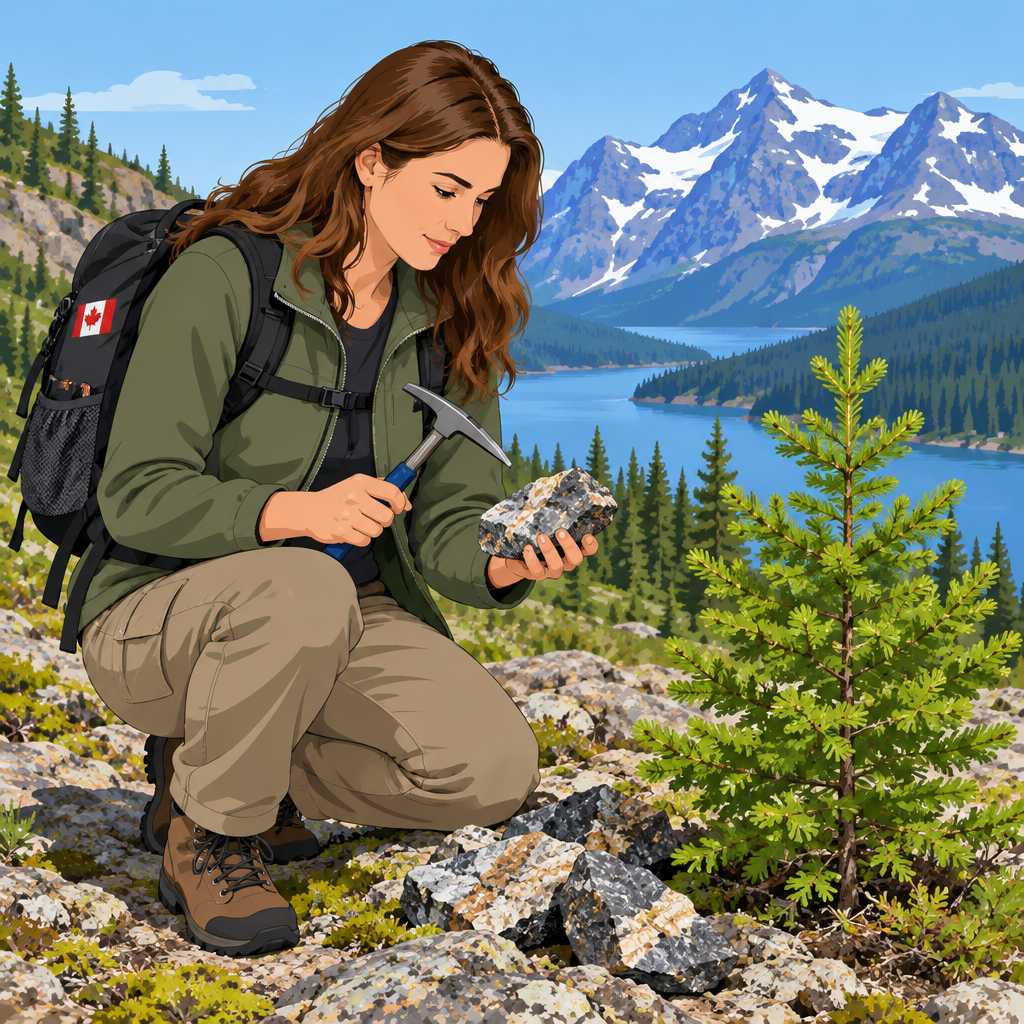
Environmentally Responsible Exploration Techniques
Geologists employ targeted drilling methods to reduce surface disturbance significantly.
Directional drilling provides resource access while preserving surrounding habitats.
Additionally, thorough site assessments help teams avoid sensitive ecological zones.
These practices limit soil erosion and prevent unnecessary deforestation.
Careful planning and selective intervention therefore reduce exploration impacts.
Sustainable Resource Extraction Practices
Experts design extraction processes that maximize resource recovery and minimize waste.
They use controlled blasting to reduce vibrations and protect local wildlife.
Furthermore, geologists advocate biodegradable drilling fluids to help prevent contamination.
They collaborate with engineers to reuse water and recycle materials onsite.
As a result, extraction leaves less harmful residue and conserves ecosystems.
Ecological Restoration and Monitoring
Geologists work with environmental scientists to restore disturbed landscapes promptly.
They recommend native vegetation to stabilize soils and enhance biodiversity.
Meanwhile, continuous monitoring tracks recovery progress and identifies improvement needs.
Innovative sensors measure soil health, water quality, and vegetation growth in real time.
Through collaboration, geologists help ecosystems regain functionality after development.
Collaboration with Technology Innovators and Environmental Agencies
Geologists partner with technology firms, including TerraDyn Solutions, to develop green innovations.
They also coordinate with regulatory bodies to follow strict environmental standards.
Joint workshops encourage teams to share sustainable practices and emerging advancements.
This synergy strengthens commitments to natural resource preservation and responsible development.
Ultimately, interdisciplinary cooperation improves the sustainability of resource projects.
You Might Also Like: How Geologists Predict and Mitigate Natural Disasters
The Impact of Geological Research on Renewable Energy Resource Development
Geological research supports renewable energy development through site selection, construction, efficiency, and risk reduction.
It also connects subsurface knowledge with practical decisions about renewable energy infrastructure.
Furthermore, geological expertise helps projects balance energy production with environmental preservation.
Identifying Viable Renewable Energy Sites
Geologists analyze Earth’s composition to locate promising renewable energy resources.
They evaluate rock formations and soil characteristics to determine site suitability.
By studying geothermal gradients, geologists identify potential geothermal energy fields.
Moreover, geological surveys help locate stable areas for wind and solar infrastructure.
These precise assessments reduce environmental disruption and increase project success.
Supporting Sustainable Extraction Methods
Geologists design extraction techniques that minimize ecological impact and preserve available resources.
They recommend drilling methods that limit subsurface disturbance in geothermal projects.
Additionally, geotechnical studies guide wind turbine foundation construction on complex terrain.
Through material analysis, geologists advise teams on sourcing sustainable construction materials locally.
These approaches help renewable projects support environmental preservation goals.
Enhancing Energy Efficiency Through Data Analysis
Geological data improves renewable energy system efficiency by informing design choices.
Geologists collaborate with engineers to optimize resource extraction and energy conversion.
They assess subsurface fluid flow to maximize geothermal heat extraction rates.
Furthermore, soil reflectivity studies influence solar panel placement and orientation.
This integration of geological insights improves renewable energy output and reliability.
Mitigating Environmental Risks
Geological research identifies natural hazards that could threaten renewable energy installations.
For example, fault mapping helps teams avoid earthquake-prone zones for geothermal plants.
Geologists also assess landslide risks near wind farms in mountainous areas.
They recommend monitoring plans that detect early signs of environmental stress.
These preventive measures protect investments and surrounding ecosystems efficiently.
Collaborations Driving Innovation in Renewable Energy
Geologists work alongside companies such as TerraGreen Energy and Atlas Renewables.
Such partnerships accelerate the discovery of renewable energy resources worldwide.
Research teams develop technologies that incorporate geological insights.
These innovations improve resource utilization while advancing sustainable development goals.
Geological expertise remains vital for the renewable energy transition.
Education and Outreach
Geologists actively involve communities to promote sustainable resource development.
They recognize that local knowledge and participation support successful outreach.
Therefore, geologists organize workshops that educate residents about resource impacts.
These sessions explain how resource extraction affects water, soil, and ecosystems.
Additionally, geologists address community concerns by providing transparent scientific information.
This openness builds trust between experts and local stakeholders over time.
Collaborative Programs and Partnerships
Geologists collaborate with schools to integrate sustainability topics into curriculums.
They partner with nonprofits like the Earthwise Foundation to reach broader audiences.
Together, they develop programs that teach responsible resource use and conservation.
Field trips led by geologists give students hands-on learning experiences in geology and ecology.
Moreover, industry groups such as TerraGreen Mining join these efforts to promote best practices.
These partnerships reinforce balanced development and environmental care.
Utilizing Technology for Outreach
Geologists employ digital tools to broaden education efforts effectively.
Webinars and virtual tours showcase sustainable resource projects across diverse regions.
Meanwhile, social media platforms enable quick, interactive communication with community members.
Furthermore, geologists develop informative apps that track resource usage and environmental changes.
These technologies empower communities to monitor their surroundings actively.
Ultimately, modern tools help bridge gaps between scientific data and public understanding.
Empowering Local Leaders and Advocates
Geologists identify and support community leaders who champion sustainable practices.
They provide training that equips advocates with scientific knowledge and communication skills.
This empowerment helps communities voice their needs during resource planning discussions.
For example, Maria Santos from Green Valley leads local conservation initiatives after receiving training.
Consequently, these leaders foster ongoing dialogue among residents, developers, and regulators.
This collaborative approach ensures resource development respects human and environmental health.
Additional Resources
Google search results for How Geologists Shape Sustainable Resource Development Science and Research
Bing search results for How Geologists Shape Sustainable Resource Development Science and Research


