







Canada’s 2027 worker-retention measure describes additional permanent-residence space, not an automatic approval or a new work permit. For workers already in Canada, the useful next step is to separate the announcement from the rules and documents that apply to their own situation.
Checked on 13 November 2026, this guide explains the units, dates and process boundaries. It includes two figures, a four-check infographic and four free CSV tools. These organise evidence and questions; they do not assess eligibility or recommend an immigration application.
Canada’s 2027 worker-retention measure: what was announced
In its 12 November worker-retention release, IRCC describes optional additional provincial and territorial space for up to a combined 100,000 workers and family members in 2027. Additional Provincial Nominee Program allocations are intended for use by 31 March 2027. Provinces and territories choose how much additional space to use.
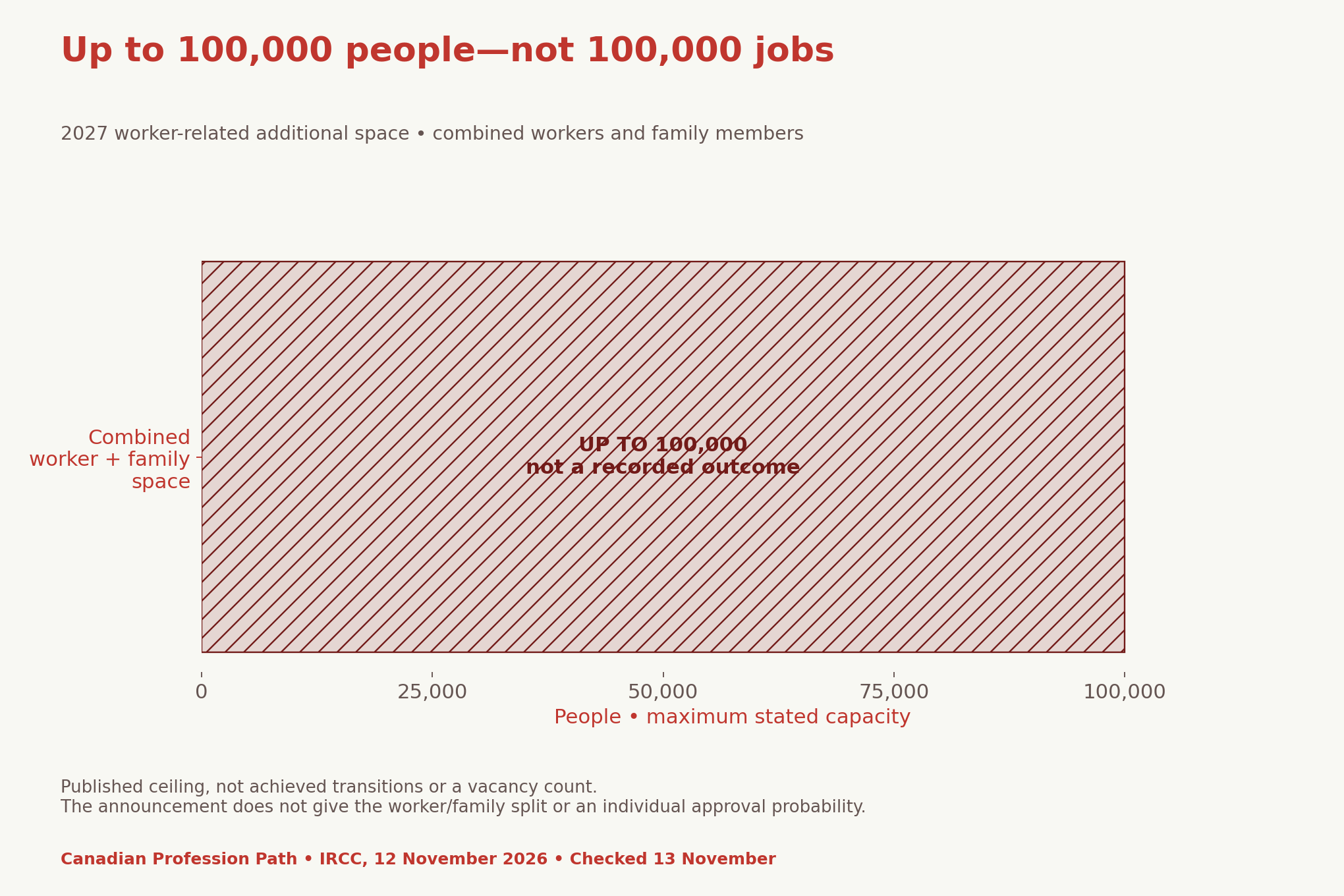
The release says these measures do not establish new programmes or reopen closed pathways. It also says applicants need not act or contact IRCC for processing under the additional spaces. This statement concerns that processing; it should not be read as permission to ignore a separate request or status issue.
Read the scope before applying the headline to yourself
IRCC’s immigration-system measures page describes workers already in communities outside Quebec and their families. It distinguishes eligible PNP applicants from certain people waiting under selected existing programmes. The page also separates this 2027 measure from other initiatives. Similar headline numbers do not make different measures interchangeable.
Our claims-audit table turns those distinctions into questions. It is an editorial reading aid, not an eligibility test. Where a source does not state an individual result, the correct entry in your worksheet is “not established”, rather than an optimistic assumption.
| Headline item | Read it as | Do not infer |
|---|---|---|
| Up to 100,000 | Combined worker-and-family capacity | 100,000 jobs or guaranteed approvals |
| Additional allocations | A provincial or territorial choice | Identical opportunities everywhere |
| 31 March 2027 | Intended use of additional allocations | A universal personal filing deadline |
| More processing space | A measure affecting specified processes | Automatic permission to keep working |
Keep allocation timing separate from personal dates
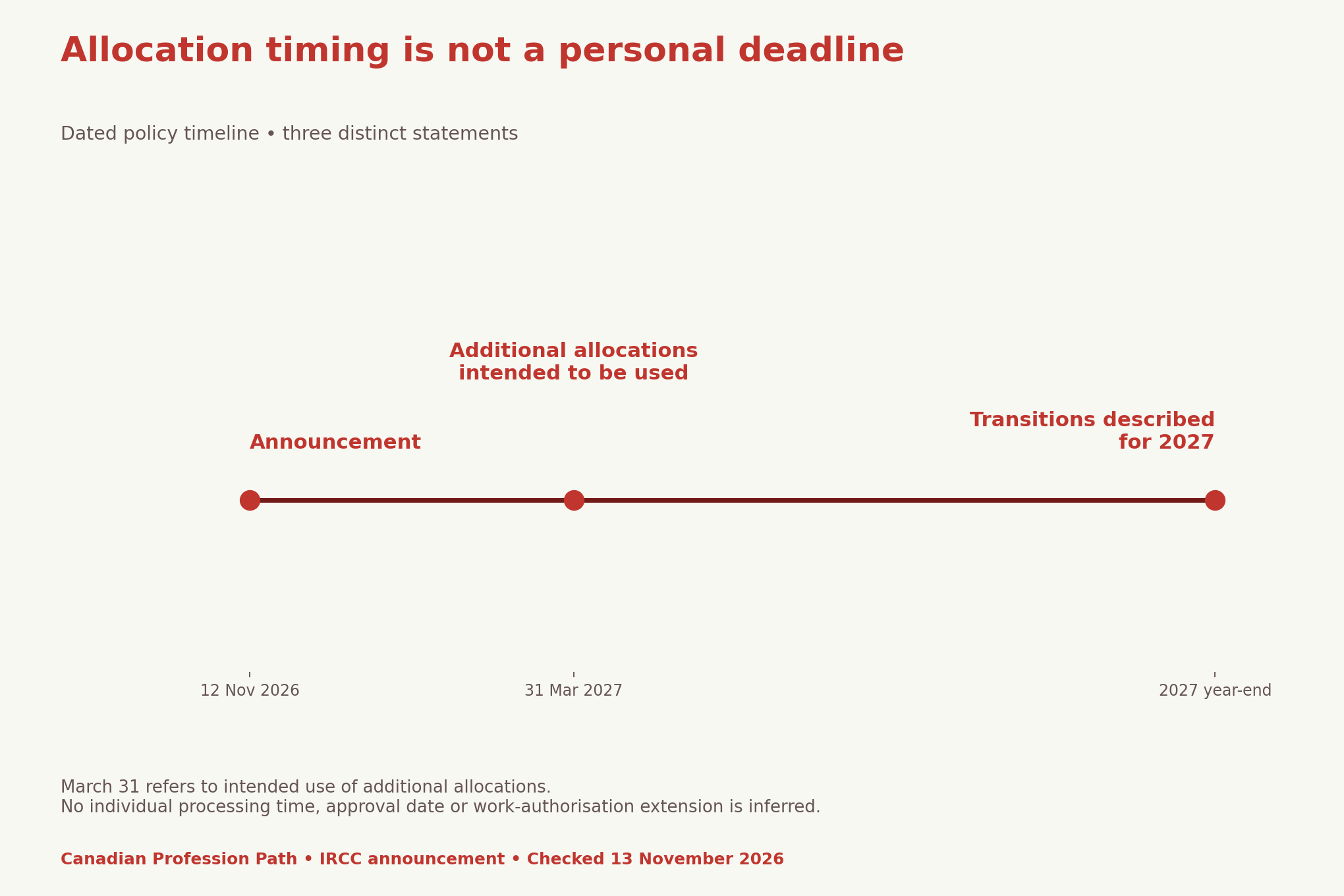
Use two date lists. One records policy announcements and official updates. The other records dates from your own documents and correspondence. Keeping them separate prevents a public milestone from replacing a personal condition, expiry date or response requirement.
For example, a calendar entry labelled “allocation date” should retain the source wording beside it. Do not rename it “my application deadline”. If you receive an individual notice, preserve that notice as its own record and obtain appropriate advice about what it requires.
Verify the existing programme and provincial rules
The official Provincial Nominee Program overview explains that provinces and territories have their own requirements. It links to their official programmes and distinguishes Express Entry and non-Express Entry processes. A national announcement therefore cannot replace checking the particular stream and route.
In your update register, record the publisher, exact URL, date checked and the specific claim. Then identify which process the claim concerns. If you cannot connect a social-media summary to an official source, keep it unverified. Avoid paying for a service simply because a post uses urgent language.
Four checks that should not be merged
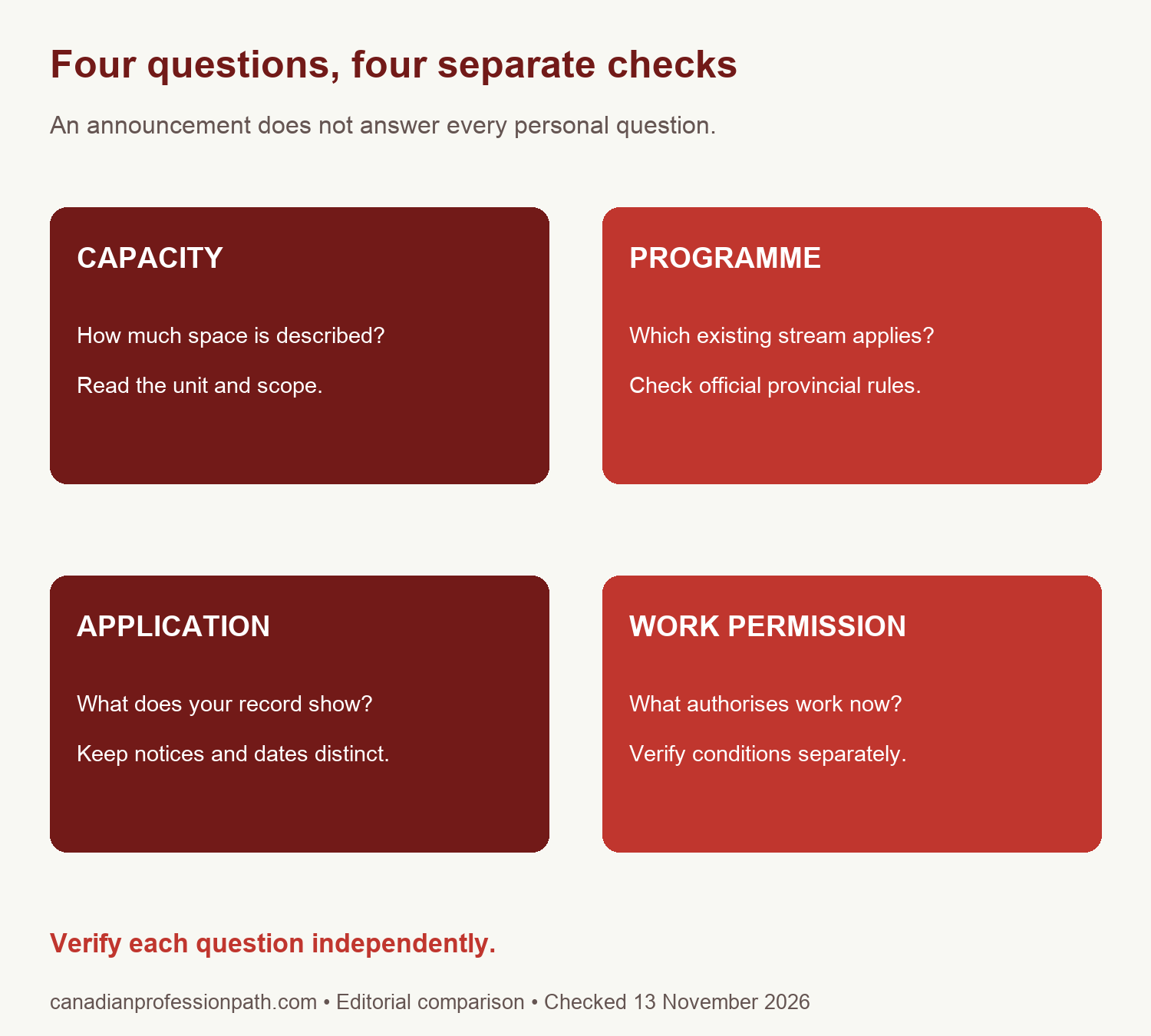
The private status worksheet gives each question its own field. Record a reference to the document instead of unnecessary personal data. A blank field can identify what to ask next. It is safer than filling the space with an answer borrowed from someone else’s case.
Do not upload immigration records, passport details, application identifiers or employer documents to our website. Keep the completed worksheet in a secure location. When asking a professional for help, use an appropriate private channel and share only what is necessary for that assessment.
Work authorisation requires its own check
IRCC’s work-permit extension and condition-change guidance treats expiring permits and changes to employers or conditions as a separate process. It links to eligibility, maintained status and changing-job guidance. Read the relevant page and obtain individual advice rather than assuming a residence announcement extends permission to work.
If a work-related date is approaching, do not wait for a news article to resolve it. Identify the actual document and current official guidance, then ask an authorised professional when needed. This article cannot tell you whether you may continue working, change employers or travel.
Use the free source table and private registers
The source table preserves the measure, period and interpretation boundary. The status worksheet separates personal questions without asking you to submit them. The update register records changing official information. Finally, the claims audit helps you test a headline before passing it on.
- Source facts, dates and interpretation limits (CSV)
- Blank private status-and-questions worksheet (CSV)
- Blank official-update register (CSV)
- Worker-retention headline claims audit (CSV)
For the separate task of evaluating an employee offer, our salary-offer comparison distinguishes pay and costs. Our Cambridge manufacturing skills audit examines actual role requirements. Neither a job match nor an attractive offer establishes immigration eligibility.
When to obtain advice and how to cite this research
Use IRCC’s authorised-representative guidance to check a professional’s standing with the appropriate regulator. Ask for advice about the actual programme, status documents and question. A public article and a general-purpose worksheet cannot replace a case-specific assessment.
We compared a dated IRCC release with official programme, measures and work-permit guidance. We did not calculate provincial allocations, forecast approvals or assess a reader’s status. The two figures show a capacity boundary and chronology, not outcomes. Suggested citation: Canadian Profession Path, 13 November 2026, “Canada’s 2027 Worker-Retention Measure: What to Verify”, with the linked official sources and checked date.


