






Non-compete agreements in Canada can affect the questions you need to ask before changing jobs. Start by finding the exact clause, the agreement date and the jurisdiction that applies to your work. Then take the documents to a qualified lawyer before making a decision that depends on the clause.
On 29 October 2026, the Competition Bureau urged provinces and territories to restrict employment non-competes. Its letter draws on 2025 OECD surveys. The announcement is a call for reform. Readers still need to check the law that applies to their own workplace. Competition Bureau’s open letter
What the Canadian non-compete surveys measure
The Bureau cites employer estimates covering 29% to 39% of private-sector employees. It also reports that 20% of surveyed Canadian workers definitely had a non-compete, while another 21% thought they probably did. Keep those worker responses separate so the uncertainty remains visible.
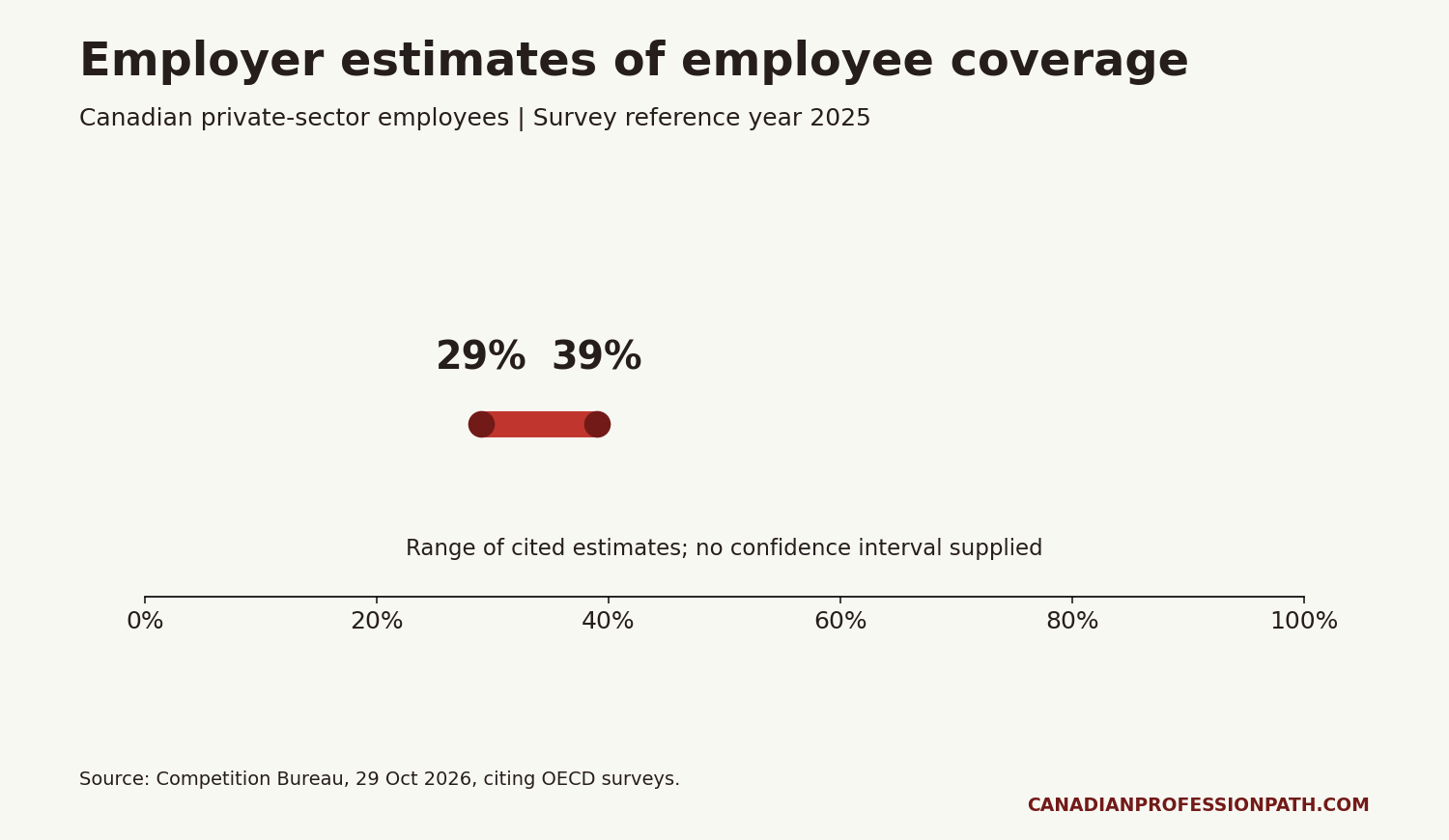
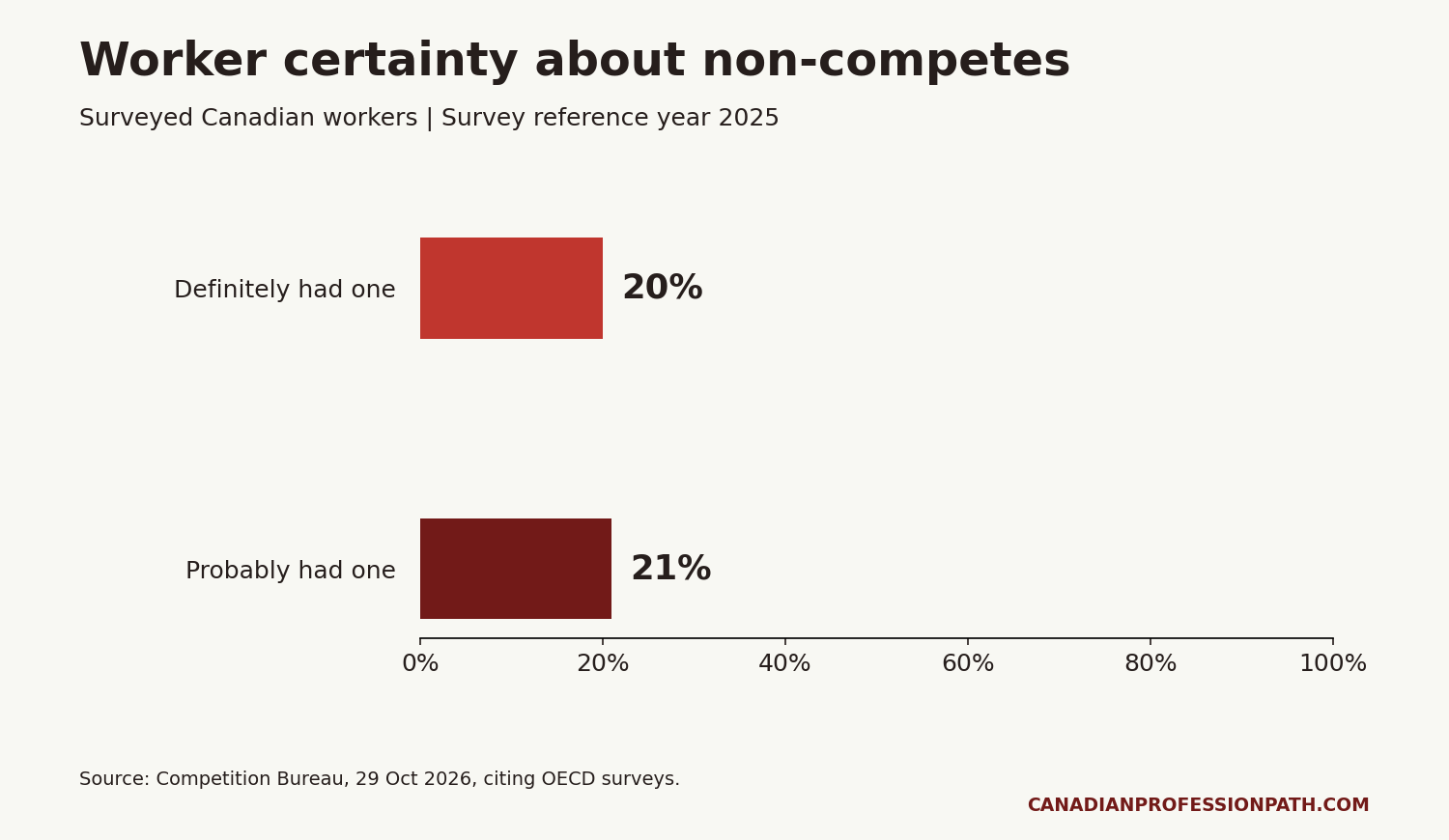
A worker’s answer and an employer’s estimate come from different survey perspectives. Neither tells a reader how a court would decide their contract. To make the evidence easier to reuse, the survey measure register (CSV) records the respondent group, unit and source for each figure.
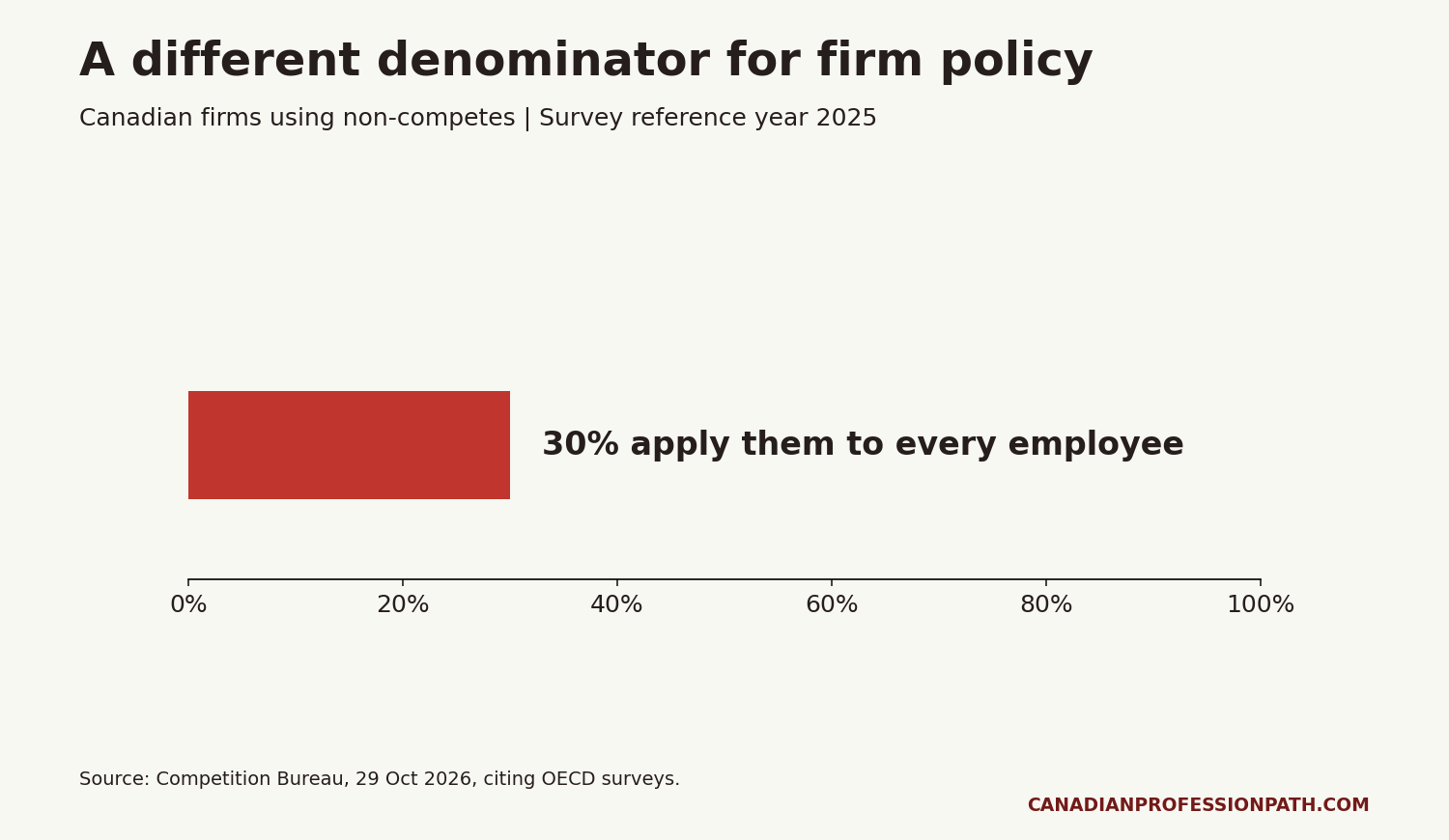
Among Canadian firms using non-competes, 30% reportedly applied them to every employee. This uses firms as the denominator. It cannot be added to the employee percentages above.
Check jurisdiction and the agreement date
Canada’s workplace rules span federal, provincial and territorial systems. The federal government lists the industries covered by the Canada Labour Code and provides links to provincial and territorial standards. For example, banking and certain transport operations fall within federal jurisdiction. Check the legal employer and the nature of its operation when identifying the relevant source. Federal industries and workplace guide
Ontario’s guide says its prohibition applies to employment non-competes entered into on or after 25 October 2021, subject to exceptions for specified executives and certain business sales. The date, role and circumstances therefore belong in the evidence pack you prepare for advice. An older clause also needs its own assessment. Ontario’s non-compete guide
For federally regulated workplaces, check Bill C-31’s progress and the commencement provisions relevant to any change. On 5 November 2026, Parliament’s bill page showed report stage in the House of Commons. Its latest listed activity was debate on 3 November. Recheck the page when you use this article. Bill C-31 status
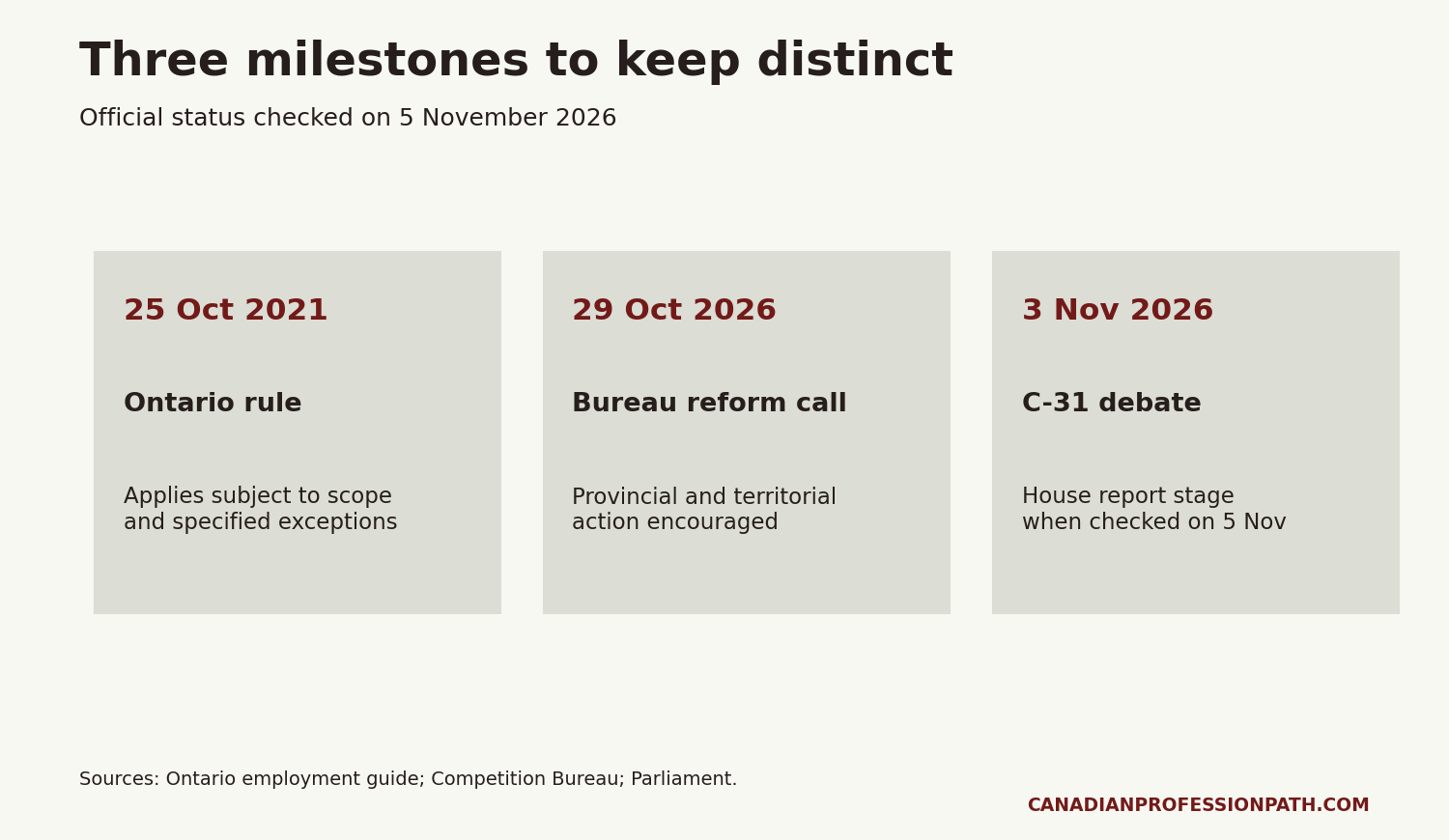
Use the dated source and status log (CSV) to record the page, access date and update you checked. A headline about a proposal should lead you to the bill’s current status and relevant commencement text.
Build a contract evidence pack
First, gather the signed agreement and any later amendments. Next, copy the complete restriction into a private working file, including definitions and schedules that it refers to. Record the clause’s location so a reviewer can read it in context.
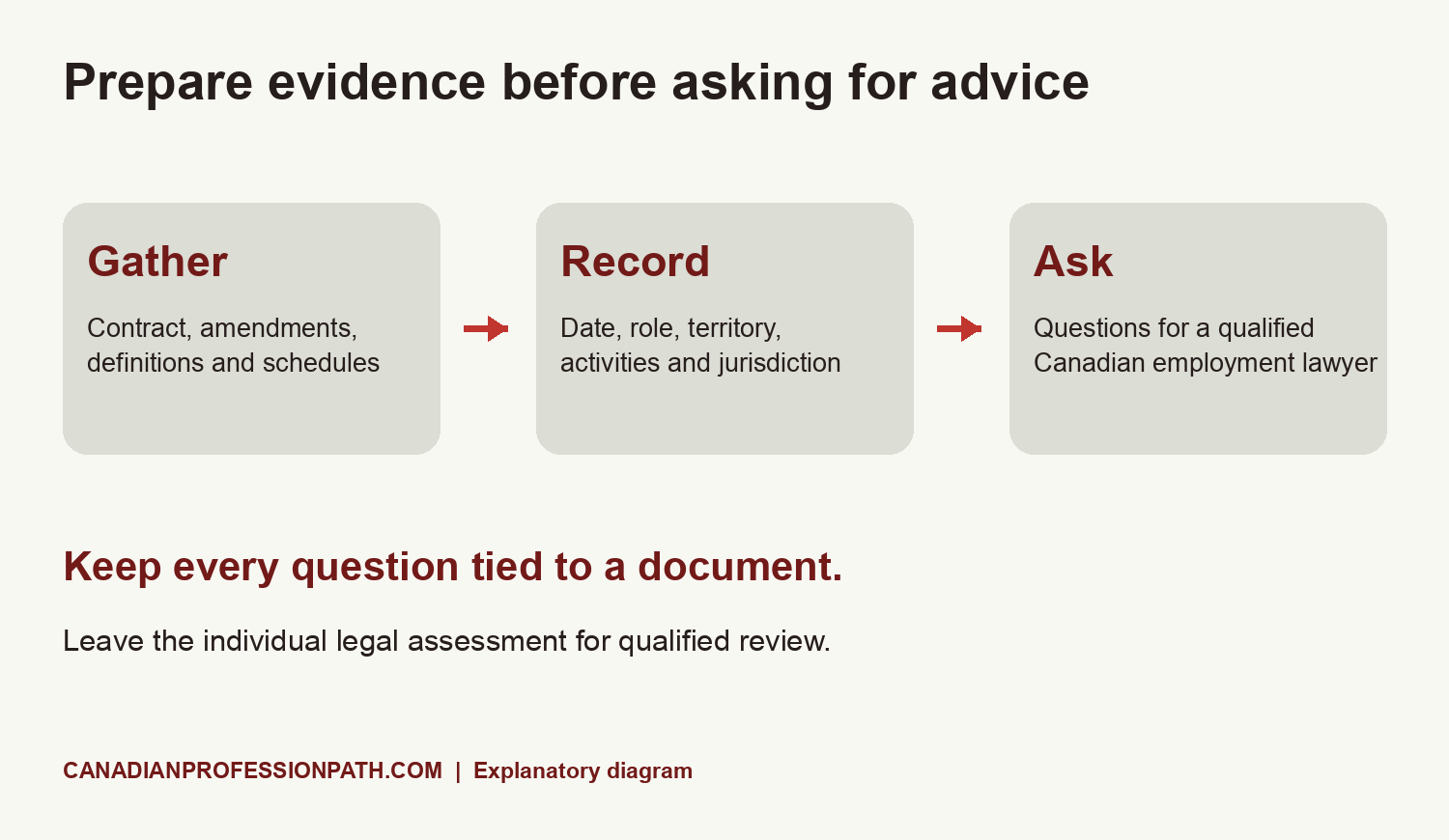
The clause evidence checklist (CSV) contains blank fields for the wording, duration, territory, restricted activities, agreement date and job role. Fill it locally and retain the source document beside each entry. Store confidential agreements securely.
For example, a clause may define competition by a type of service, a customer group or a geographic area. Those details can change which facts a lawyer needs. Write down the work you expect to do in the proposed role and where you expect to do it. Then identify any written employer explanation or release that already exists.
Questions to take to a qualified lawyer
Bring a short list of decisions and dates to the discussion. For instance, note when the prospective employer needs an answer and whether a proposed start date has been agreed. A clear timeline helps the reviewer identify which questions need attention first.
- Which jurisdiction and rules apply to this employment relationship?
- Does the restriction fit the relevant legal definition, and are any exceptions relevant?
- What effect do the agreement date, amendments and role have?
- How should the exact wording be assessed against the proposed work?
- What would a written clarification, release or negotiated change need to cover?
- Are there separate obligations involving confidentiality, customer solicitation or intellectual property?
Keep each obligation in its own row. A contract can contain several provisions that raise different questions. The advice preparation worksheet (CSV) leaves the answers blank for the reader and reviewer to complete.
For newcomers, the same preparation includes confirming the legal employer and keeping an accessible copy of the agreement. If your ability to move also depends on work authorization, list that as a separate question for an appropriately qualified adviser. Our workforce retention and retraining guide explains another situation where program terms and an individual worker’s circumstances need separate checks.
Methods and limits
This article transcribes the Bureau’s cited survey measures and records the status of official policy and legislative sources as checked on 5 November 2026. We designed the charts independently and provide the inputs in the CSV register. The survey figures describe their stated groups, and they do not estimate a particular reader’s legal position.
The checklist is an editorial preparation tool. It gives readers fields for collecting evidence and questions for a qualified Canadian employment lawyer. It does not assess an individual agreement. Before relying on a rule, check the current official source and seek advice on the facts and jurisdiction of the case.


