







The truck driver job market in Canada in 2026 shows higher employment and more vacancies in the latest comparisons. However, the figures cover different quarters. Q3 driver employment reached 350,500, while Q2 driver vacancies reached 13,780. Check the period and classification before using either number to plan training or a job search. Trucking HR Canada’s labour dashboard
The tracker was marked updated on 29 October and the dashboard on 30 October. Those are page update dates. The observations refer to earlier quarters. This guide separates the measures and gives you four CSVs for checking the evidence, local jobs and training costs.
Driver employment rose in the Q3 annual comparison
The tracker lists 336,000 employed transport truck drivers in Q3 2025 and 350,500 in Q3 2026. The difference is 14,500, or 4.3% of the earlier figure. This is an employment comparison for an occupation. Trucking HR Canada’s labour tracker
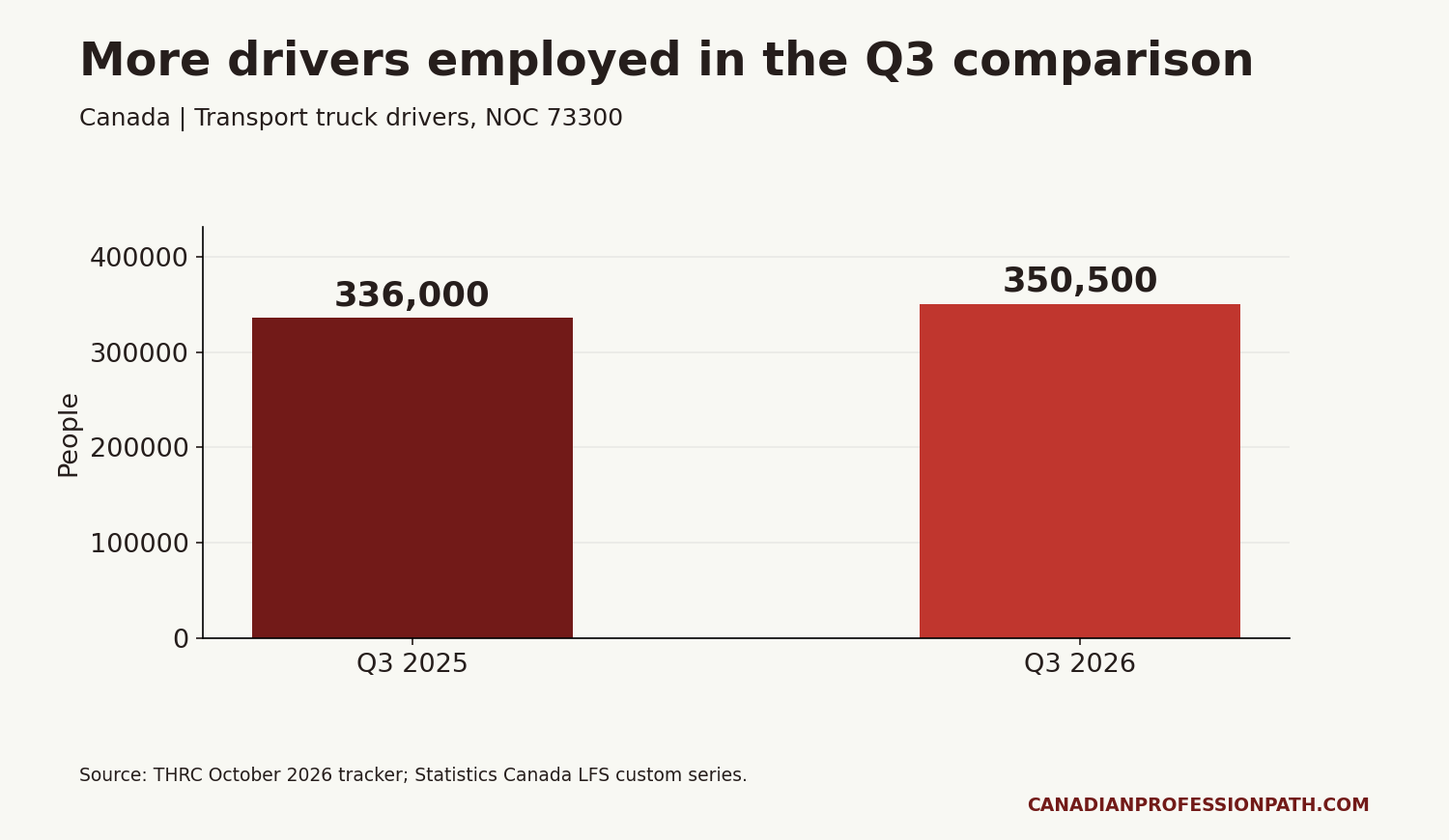
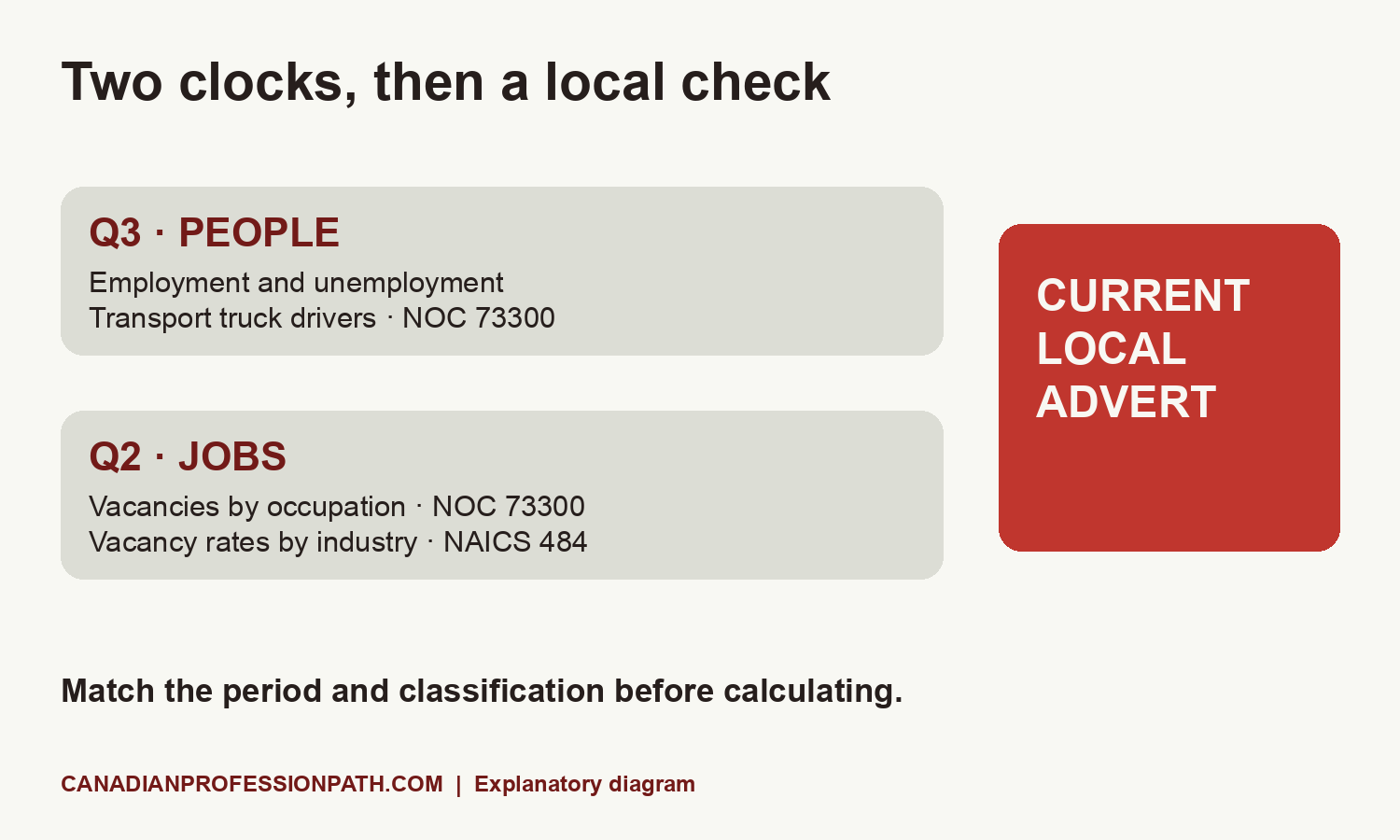
An increase in employment describes how many people were working. To find an opening you can apply for, check a current local advert and ask the employer about its requirements. The national comparison gives context for that search.
Unemployment uses a different question
For the same two Q3 periods, the tracker lists 15,600 unemployed drivers in 2025 and 11,100 in 2026. These are people seeking work as defined by the source. They are a separate population from employed drivers.
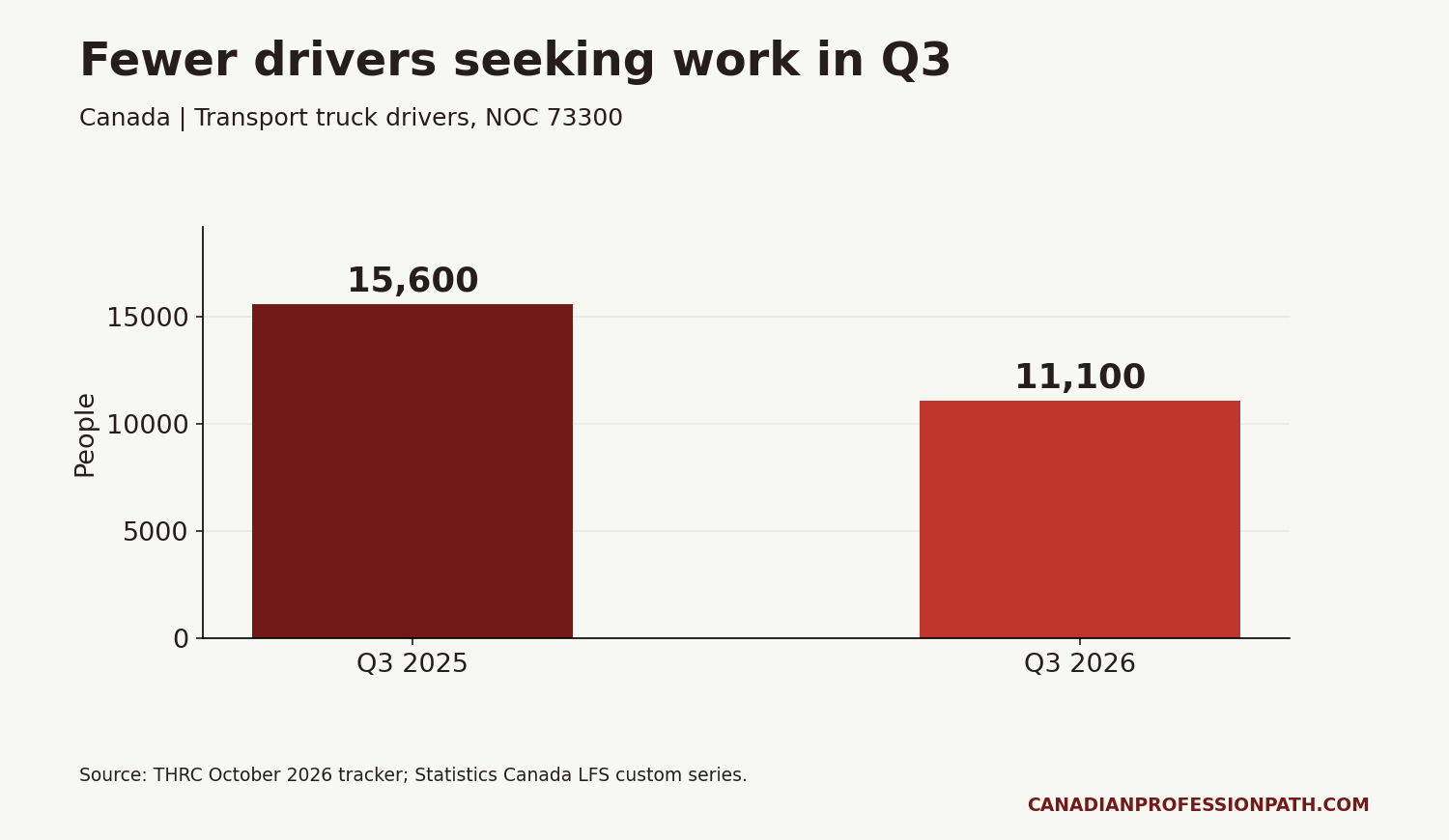
The indicator data and calculation register (CSV) contains the source values and the employment growth calculation. It keeps the unemployment count in its own row and retains each measure’s reference quarter.
Vacancies are reported for Q2
Driver vacancies increased from 12,615 in Q2 2025 to 13,780 in Q2 2026. That is 1,165 more vacancies, a calculated 9.2% increase using the earlier value as the denominator. THRC tracker’s occupation vacancy series
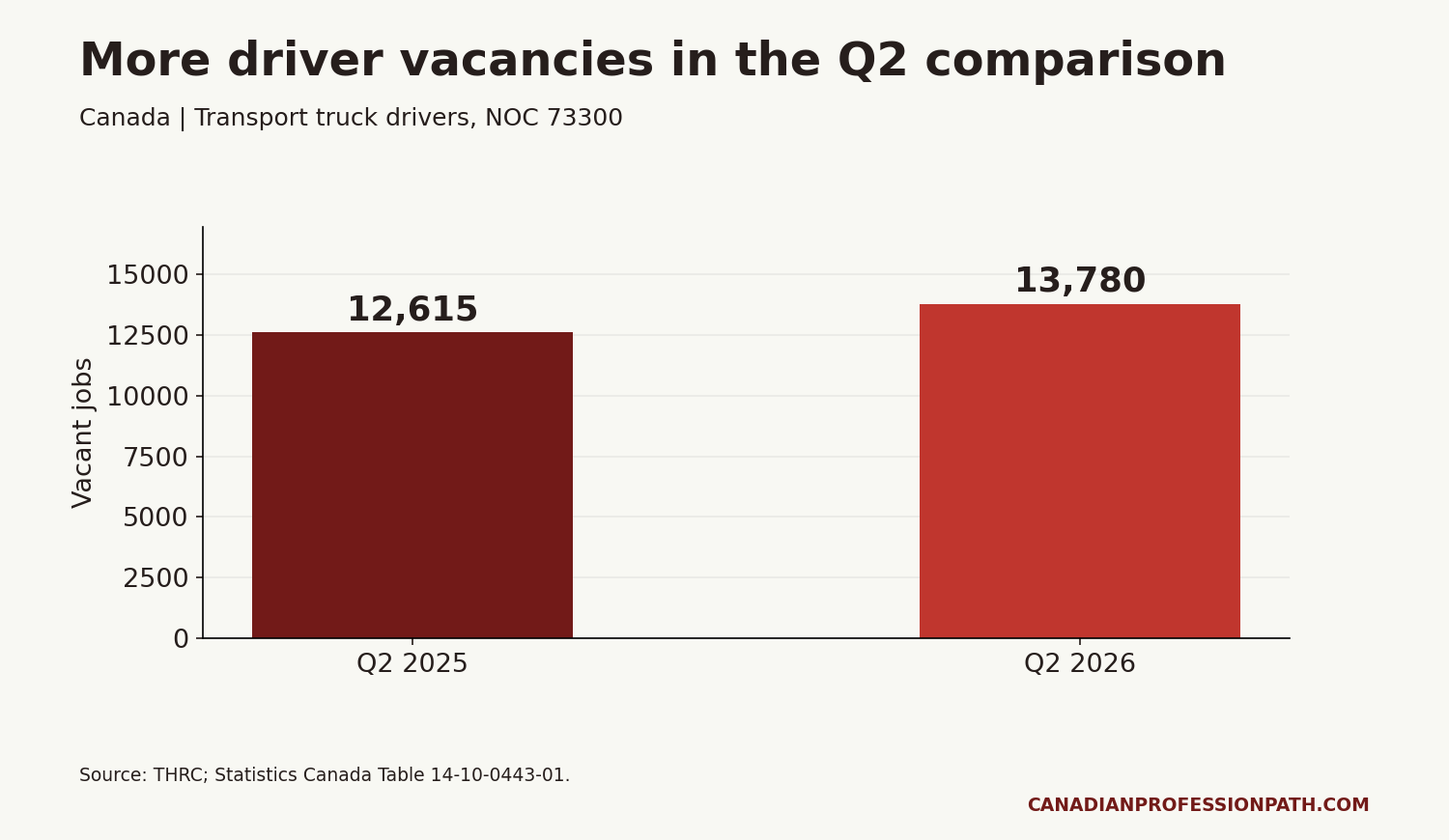
Keep the vacancy comparison on its own timeline. Dividing these Q2 vacancies by Q3 unemployed drivers would mix periods and measures. Even a correctly aligned national ratio would need careful interpretation before applying it to an individual applicant.
Occupation and industry vacancy rates answer different questions
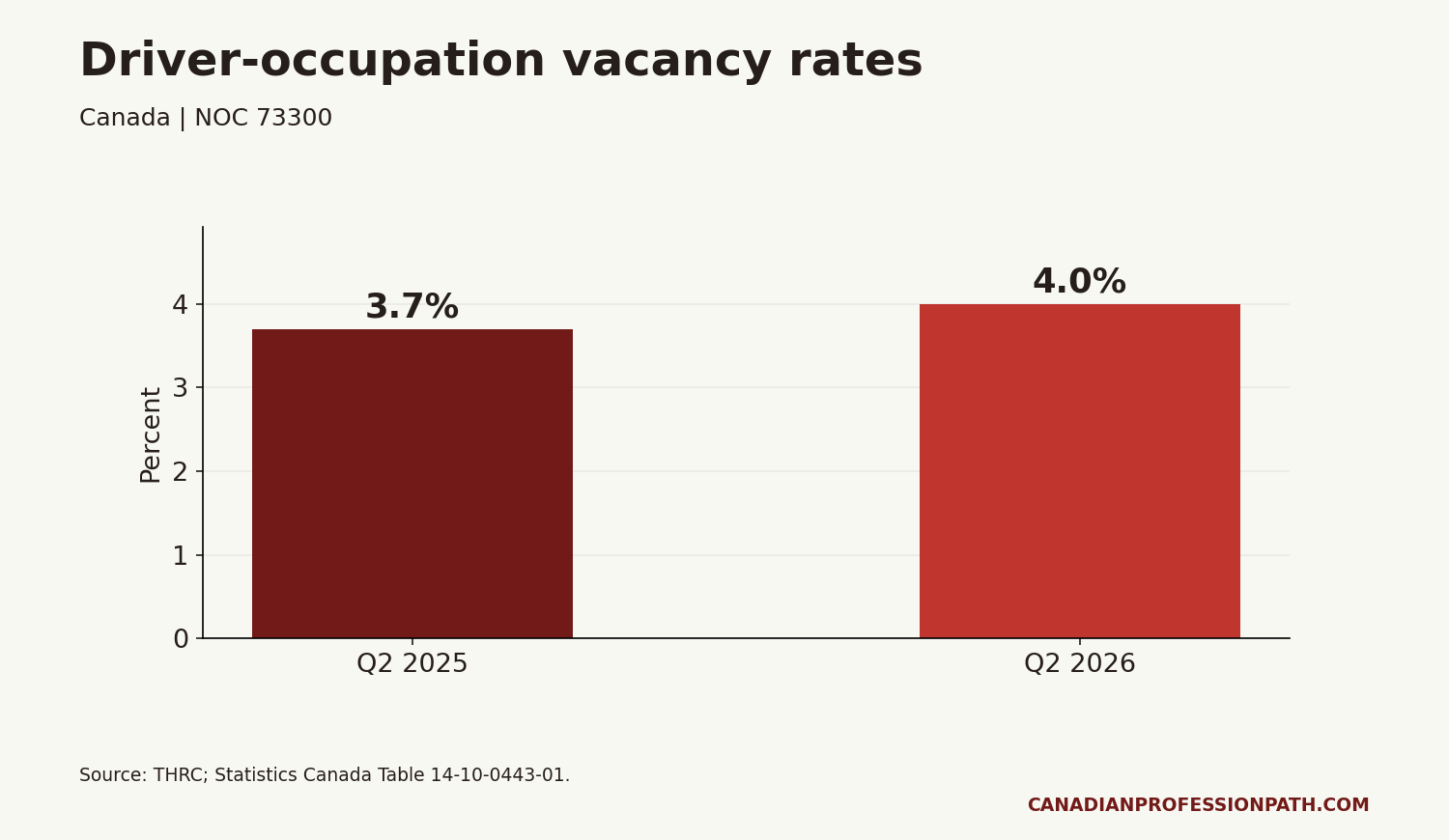
In Q2 2026, the driver-occupation vacancy rate was 4.0%. The truck-transportation industry rate was 4.8%, compared with 3.1% across industries. THRC uses NAICS 484 as a proxy for the wider trucking and logistics industry.
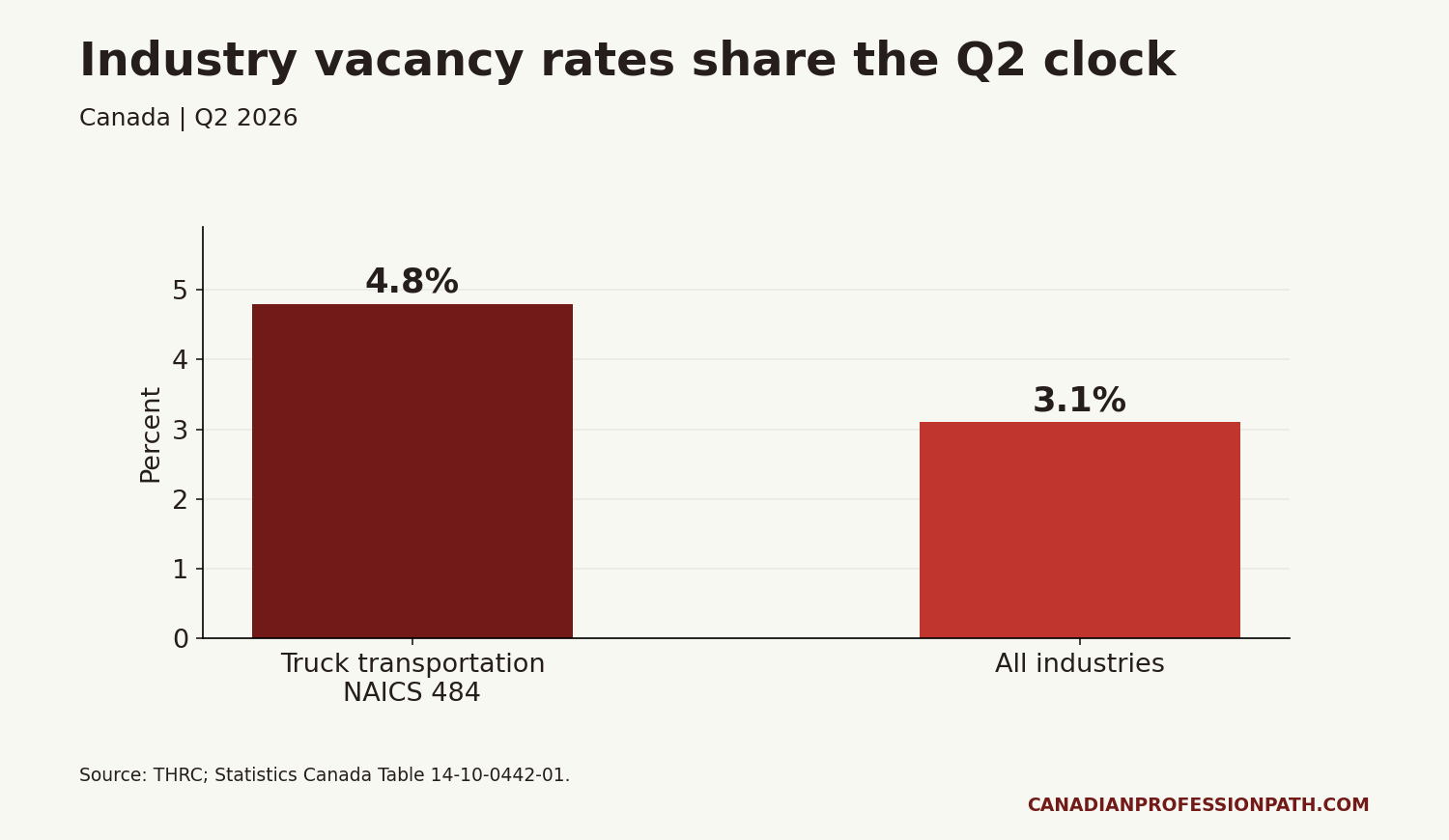
A driver can work in a business classified outside truck transportation. Equally, a trucking business can employ people in other occupations. The measure dictionary (CSV) records these distinctions so you can retain them in a presentation or training discussion.
Check the local role before paying for training
Start with the area where you can realistically work. Then collect adverts for the kinds of truck and route you want to drive. For each role, record the licence class, relevant endorsements, experience threshold and the employer’s stated training arrangements.
Job Bank’s national occupation guide distinguishes licence requirements for straight-body trucks and long combination vehicles. It also lists air-brake and dangerous-goods qualifications where applicable. Provincial and territorial licensing routes differ, so confirm the current process with the relevant authority. Job Bank’s truck driver requirements
The local advert comparison sheet (CSV) leaves room for dated employer evidence. Ask for clarification where an advert leaves an important field blank.
- What work does the stated pay cover, including waiting, loading and inspections?
- Is pay hourly, per kilometre, per trip, or based on another unit?
- What hours, routes and overnight commitments can the employer confirm?
- What experience is required, and is supervised entry available?
- Which licence, endorsements and medical or testing steps must be complete?
- Who pays for any required training, and what repayment terms apply?
A rate per kilometre needs the paid distance and other pay terms to become a weekly estimate. Likewise, an hourly rate needs paid hours. Record each component before comparing offers.
Build a training budget from written quotes
Use the blank training and job-search budget (CSV) to collect course fees, licensing and test costs, travel, accommodation where relevant, and time away from paid work. Give each cost an amount, date and evidence field. Keep any funding eligibility or repayment obligation beside the relevant offer.
For newcomers, ask the provincial or territorial authority which steps apply to your existing licence and experience. Job Bank explains that foreign credential recognition and licensing can take time and money. Add those confirmed steps to the budget before choosing a start date. Our trucker life overview provides broader context for discussing day-to-day work.
Methods and limits of this truck driver job market comparison
We extracted the national series from THRC’s tracker as accessed on 5 November 2026. Counts shown in thousands were converted to people by multiplying by 1,000. Percentage change equals the later value minus the earlier value, divided by the earlier value, then multiplied by 100.
The source combines Labour Force Survey custom series with vacancy tables. Its page update dates differ from the reference periods. We designed the figures independently and kept occupation and industry measures separate.
This article does not contain a current advert sample. The blank tools are for a reader’s own documented checks. National statistics cannot establish local entry-level acceptance, the quality of a particular course, or the income an applicant will receive.


