




Fundamental Knowledge of Earth Sciences
Earth sciences explain the materials, structures, and processes that shape our planet.
Geologists combine several disciplines to interpret geological phenomena accurately.
This foundation supports research, resource assessment, hazard evaluation, and environmental decision-making.
Core Disciplines of Geology
Geologists must understand the core disciplines that form Earth sciences.
These disciplines include mineralogy, petrology, sedimentology, and structural geology.
Each field offers unique insights into Earth’s materials and geological processes.
Additionally, geologists study geophysics and geochemistry to analyze physical and chemical properties.
Together, these fields provide a foundation for interpreting geological phenomena.
Understanding Earth’s Processes
Knowledge of Earth’s dynamic processes remains critical for geological career success.
Geologists explore plate tectonics to explain mountain building and earthquakes.
They also study volcanic activity and erosion to assess landscape evolution.
Moreover, understanding the rock cycle helps geologists predict resource locations.
Therefore, geologists connect surface processes with activities beneath Earth’s surface.
Applied Geological Sciences
Geologists apply Earth science knowledge to solve real-world problems.
They use geological mapping to characterize terrain and rock formations.
Furthermore, geologists assess natural hazards to support public safety.
Environmental geology helps professionals manage water resources and contamination.
Consequently, practical Earth science knowledge supports informed decision-making.
Continual Learning and Integration
Earth sciences continue evolving through advancing research and technology.
Geologists must stay current with new discoveries and methodologies.
Integrating data from multiple disciplines strengthens geological analysis.
Furthermore, collaboration with engineers and environmental scientists improves outcomes.
Thus, continual learning strengthens a geologist’s expertise and adaptability.
Mastering Essential Field Techniques
Geologists strengthen their observational skills through careful fieldwork.
They examine rock formations and soil types to gather reliable data.
Unlock Your Career Potential
Visualize a clear path to success with our tailored Career Consulting service. Personalized insights in just 1-3 days.
Get StartedAdditionally, geologists use compasses, GPS units, and rock hammers effectively.
They document their findings accurately to support research conclusions.
Clear, detailed field notes help geologists improve their accuracy.
Moreover, geological mapping techniques help them interpret field data.
Implementing Safety Procedures in the Field
Geologists prioritize safety in every field environment.
Before each activity, they conduct thorough risk assessments.
Next, they wear suitable personal protective equipment to reduce hazards.
They also communicate consistently with teammates through radios or mobile devices.
Meanwhile, weather updates help geologists avoid unexpected dangers.
They carry essential supplies, including first aid kits and water.
Furthermore, basic first aid and emergency response training improves preparedness.
Adapting to Challenging and Remote Environments
Geologists often work in isolated locations with difficult terrain.
Therefore, physical fitness and mental readiness support field endurance.
They plan routes and schedules carefully to prevent delays.
Additionally, survival gear knowledge strengthens safety during remote assignments.
Strong teamwork provides valuable support during demanding fieldwork.
Finally, adaptability helps geologists respond effectively to changing conditions.
Strong Analytical and Critical Thinking Skills
Geologists rely on analytical and critical thinking skills when interpreting complex geological information.
These abilities help them evaluate evidence, compare explanations, and make informed professional decisions.
Furthermore, strong reasoning supports accurate work during research, fieldwork, and resource assessment.
Importance of Analytical Skills in Geology
Analytical skills enable geologists to examine complex data effectively.
They help specialists interpret rock formations, mineral compositions, and fossil records.
Additionally, geologists use analysis to select suitable fieldwork strategies.
Without careful analysis, identifying valuable resources becomes more difficult.
Therefore, companies like TerraQuest Geosciences prioritize these abilities when hiring geologists.
Developing Critical Thinking for Problem Solving
Critical thinking helps geologists evaluate multiple hypotheses logically.
It also encourages them to question assumptions and recognize potential biases.
For example, Dr. Marcus Havel applies critical thinking to improve research accuracy.
Moreover, this approach supports creative solutions during unexpected field challenges.
As a result, geologists remain adaptable in rapidly changing environments.
Techniques for Strengthening Analytical and Critical Thinking
Geologists can strengthen their reasoning by dividing complex problems into smaller parts.
They can also use case studies to simulate realistic geological scenarios.
Meanwhile, software like GeoInsight supports visualization and deeper data analysis.
Joining groups such as the Pacific Geological Society can further encourage skill development.
Finally, reviewing recent publications regularly sharpens analytical perspectives.
Impact on Career Advancement
Strong thinking skills increase geologists’ opportunities to pursue leadership roles.
For instance, employers like Horizon Mining value employees who solve problems efficiently.
This competence builds stakeholder trust and supports successful project outcomes.
Additionally, effective reasoning helps geologists manage demanding professional responsibilities.
Ultimately, these abilities can lead to recognition and higher income within geology.
Learn More: How to Start a Career in Geology in Canada
Effective Communication and Presentation Abilities
Geologists communicate scientific information through speech, writing, presentations, listening, and digital tools.
These abilities help them work with colleagues, stakeholders, officials, and broader audiences.
Therefore, communication supports collaboration, understanding, and successful geological projects.
Importance of Clear Communication in Geology
Geologists must convey complex information clearly to diverse audiences.
Effective communication bridges scientific data and decision-makers.
Therefore, geologists tailor messages to different levels of expertise.
For example, government officials need different explanations than fellow scientists.
This skill enhances collaboration and project success throughout geology careers.
Verbal and Written Communication Skills
Strong verbal skills help geologists present ideas confidently during meetings and fieldwork.
Additionally, precise writing keeps reports accurate and understandable.
These reports often inform environmental policies and safety measures.
Dr. Emily Vargas emphasizes regular grammar and vocabulary practice.
Furthermore, peer reviews can polish technical documents before submission.
Mastering Presentation Techniques
Geologists frequently present research findings at conferences and client meetings.
Visual aids, including maps, charts, and slides, keep audiences engaged.
Moreover, organized presentations improve message retention significantly.
Interactive elements, such as question-and-answer sessions, encourage audience participation.
For instance, Samuel Chen credits presentations with supporting his career growth.
Listening and Feedback Integration
Active listening during discussions helps geologists understand stakeholder concerns.
This awareness guides effective adjustments to project plans.
Furthermore, constructive feedback improves future communication efforts.
Laura Thompson recommends regular reflection on communication outcomes.
Ultimately, continuous improvement builds stronger professional relationships and trust.
Communication Tools and Technologies
Modern geologists use digital tools to communicate efficiently across teams.
Platforms such as Zoom and Microsoft Teams facilitate virtual meetings globally.
Additionally, GIS software combines communication with spatial data visualization.
Marcus Lee uses these technologies to share insights swiftly.
Consequently, mastering these tools enhances project productivity and clarity.
Gain More Insights: Wildlife Biologist Career Growth Opportunities
Importance of Geological Mapping
Geological mapping reveals how rock types and structures distribute across an area.
It provides critical insights for mineral exploration and land use planning.
Moreover, accurate maps guide environmental assessments and hazard analysis.
Therefore, geologists must master diverse mapping techniques for effective fieldwork.
Essential Tools and Technologies
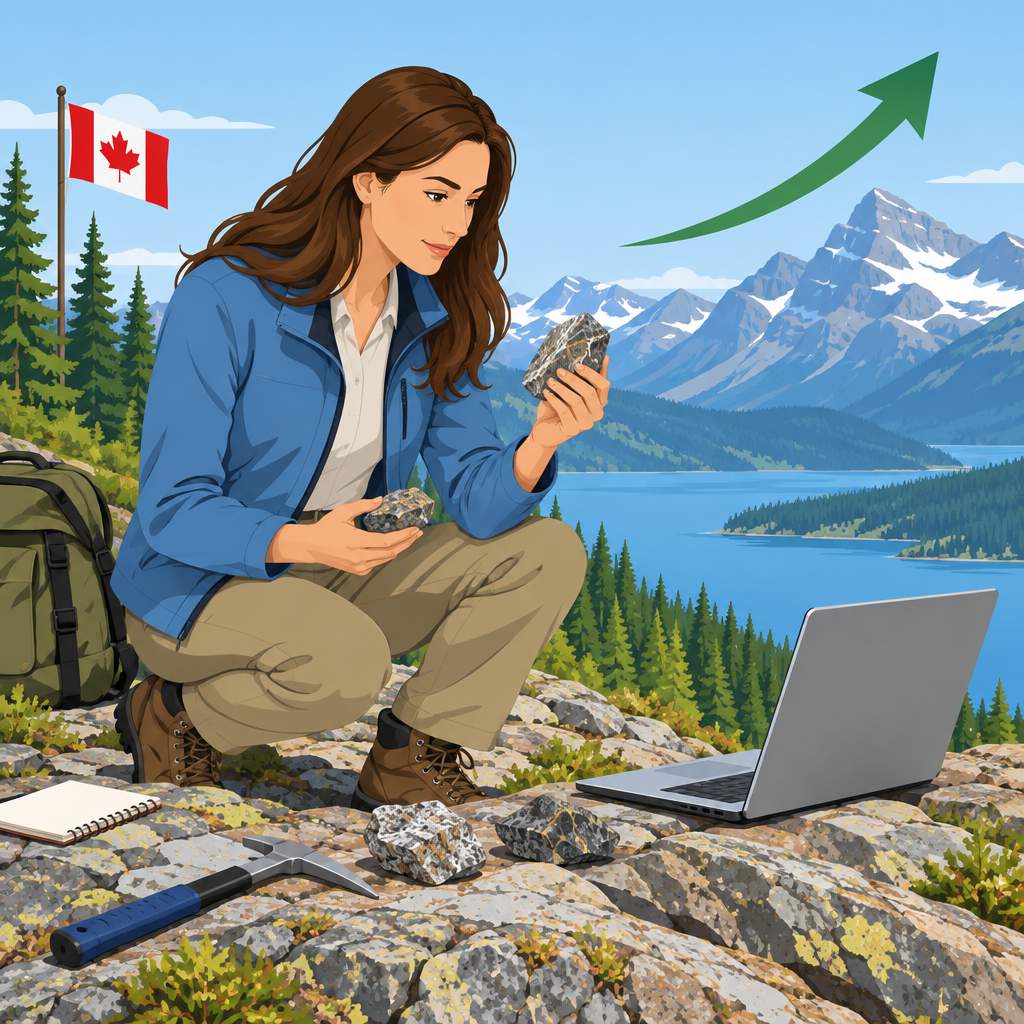
Geologists use compasses, GPS devices, and handheld tablets during mapping projects.
These devices enable precise location tracking during data collection.
Additionally, software such as ArcGIS supports digital map creation and analysis.
Consequently, familiarity with traditional and digital tools improves productivity.
Field Data Collection Best Practices
Systematic observation and detailed note-taking produce reliable field data.
Geologists should document lithology, structures, and stratigraphic relationships clearly.
Using standardized forms and digital applications improves data consistency.
Furthermore, photographs and samples support comprehensive geological analysis.
Data Interpretation and Integration
Geologists carefully analyze collected data to identify geological patterns.
They improve interpretation accuracy by integrating field observations with laboratory results.
Meanwhile, geospatial data layers help geologists build complete geological models.
Thus, geologists can make informed recommendations for exploration or development.
Continuous Skill Development
Geological mapping techniques evolve as technology advances.
Practicing across varied terrains sharpens observational and mapping skills.
Attending workshops and collaborating with experienced peers fosters professional growth.
Ultimately, ongoing learning supports long-term success in geology.
Explore Further: Common Myths About Wildlife Biologists in Canada
Software and Technology in Geology
Modern geology increasingly depends on specialized software and digital technologies.
These tools help geologists analyze data, interpret subsurface conditions, and improve field investigations.
Furthermore, continuous learning helps geologists use evolving technologies effectively.
Essential Software Skills for Geologists
Geologists must master Geographic Information Systems for spatial data analysis.
For example, ArcGIS supports mapping and visualization of geological features.
Additionally, three-dimensional modeling software strengthens subsurface interpretation.
Industry projects widely use programs such as Leapfrog Geo and Petrel.
Meanwhile, MATLAB supports data analysis for rock and mineral assessment.
Excel remains useful for organizing data and performing statistical calculations.
Moreover, Python enables automation and customized data processing.
Technology in Geological Fieldwork
Geologists increasingly use GPS devices to track locations accurately.
Mobile technologies support real-time data collection through specialized field applications.
In addition, drones capture high-resolution aerial images during field surveys.
Laser scanning produces detailed topographic data from rock formations.
Remote sensing technologies help geologists analyze large-scale geological phenomena.
Satellite imagery provides an important source of remote sensing information.
Keeping Pace with Geological Technology
Because geological technology evolves rapidly, geologists need continuous learning.
Workshops and training sessions help professionals remain current.
Industry conferences introduce new innovations and software updates.
Subscriptions to geological journals and online forums encourage knowledge sharing.
Furthermore, collaboration with technology companies provides hands-on experience.
For instance, GeoSynth Solutions supports practical engagement with geological technology.
Finally, professional networks provide valuable insights into technological developments.
Explore Further: Salary Expectations for Geologists in Canada
Team Collaboration and Interdisciplinary Skills
Geologists often work in diverse teams to solve complex problems.
Effective collaboration helps team members share knowledge and develop innovative solutions.
Therefore, geologists need strong interpersonal skills alongside their scientific expertise.
Importance of Teamwork in Geology
Teamwork allows geologists to combine different perspectives during complex projects.
Furthermore, clear communication helps team members coordinate tasks and improve project outcomes.
Dr. Nathan Brooks emphasizes teamwork during field research activities.
Consequently, collaboration strengthens both field investigations and professional relationships.
Bridging Disciplines for Holistic Understanding
Geology intersects with biology, chemistry, and environmental science.
Working across disciplines helps geologists interpret data more comprehensively.
For instance, geochemists and ecologists can combine their knowledge during environmental assessments.
Meridian Earth Solutions promotes interdisciplinary training for its staff.
As a result, geologists must remain open to related scientific perspectives.
Skills Required for Effective Collaboration
Active listening helps geologists understand diverse perspectives clearly.
Additionally, conflict resolution skills help teams maintain productive working relationships.
Adaptability enables geologists to respond effectively within changing project environments.
Leadership capabilities guide teams toward shared goals.
Horizon Resource Group employees regularly attend collaboration workshops.
Tools and Technologies That Facilitate Collaboration
Modern software allows geologists to share project data in real time.
Geographic Information Systems support spatial analysis across collaborative teams.
Meanwhile, video conferencing connects colleagues working in different locations.
Therefore, geologists benefit from developing digital collaboration skills.
TerraNova uses cloud-based platforms to manage projects effectively.
Building Professional Relationships
Networking with professionals from various disciplines expands geologists’ knowledge.
Mentorship programs support skill development and professional growth.
Moreover, conferences encourage professionals to exchange ideas and best practices.
These activities create opportunities for collaborative research.
Emily Cortez advocates active engagement in professional communities.
Adaptability to Changing Environments and Situations
Geologists face constantly shifting field conditions and research challenges.
They must respond quickly when new data or unexpected obstacles affect their work.
Moreover, fieldwork often involves remote locations with unpredictable weather.
Therefore, flexible planning and execution become crucial for successful geological work.
Seamless adaptation allows geologists to maintain progress despite changing circumstances.
Importance of Adaptability in Geology
Adaptability helps geologists manage evolving conditions during fieldwork and research.
It also enables them to revise plans when evidence challenges their initial expectations.
Consequently, flexible professionals can protect project goals while responding to practical demands.
Developing Practical Adaptability Skills
Effective communication helps geologists adjust to team dynamics and project changes.
They should also cultivate problem-solving skills for unforeseen situations.
Furthermore, innovative technology can improve data collection and analysis under varied conditions.
Geologists also benefit from learning multiple field methods to increase versatility.
For example, combining seismic, magnetic, and geochemical surveys strengthens adaptive capacity.
Case Studies Demonstrating Adaptability
Dr. Emily Navarro adapted her research after volcanic activity altered a study site.
She quickly modified sampling locations and adjusted her hypotheses accordingly.
Similarly, Logan Peters faced equipment failure during an Arctic expedition.
He created makeshift tools to continue measurements without delay.
These examples show how adaptability supports career resilience and professional advancement.
Strategies for Embracing Change
Geologists can strengthen adaptability by maintaining an open mindset toward new ideas.
They can anticipate challenges and prepare contingency plans before problems arise.
Continuous learning through workshops and industry conferences also expands their capabilities.
Strong professional networks help geologists exchange useful strategies for adapting effectively.
Regular reflection on past experiences improves responses to future situations.
- Maintain an open mindset toward new ideas and approaches.
- Anticipate challenges and prepare contingency plans in advance.
- Seek continuous learning through workshops and industry conferences.
- Build strong professional networks to exchange adaptive strategies.
- Reflect regularly on past experiences to improve future responses.
Additional Resources
Google search results for Skills Every Geologist Needs for Career Success Science and Research
Bing search results for Skills Every Geologist Needs for Career Success Science and Research


