







To practise procurement analyst skills in Canada, start with an evidence trail. Can you connect a requirement to a priced assumption, an invoice and a documented decision? The Auditor General’s 29 October 2026 call-centre technology audit provides a case for exploring those questions. This article pairs selected findings with a fictional work sample and four CSV tools.
The audit covered 1 April 2015 to 18 July 2026. It examined the Hosted Contact Centre Service and the procurement of replacement systems. Read the publication date and audit period separately. Auditor General’s full report, About the Audit
Keep the implementation comparison within its scope
The Auditor General’s news release records an initial implementation estimate of CAD 16 million and implementation costs of CAD 52 million by 2020, when eight call centres had been onboarded. Using those rounded amounts, 52 divided by 16 equals 3.25 times the estimate. The increase is CAD 36 million, or 225% above the estimate. Auditor General’s news release
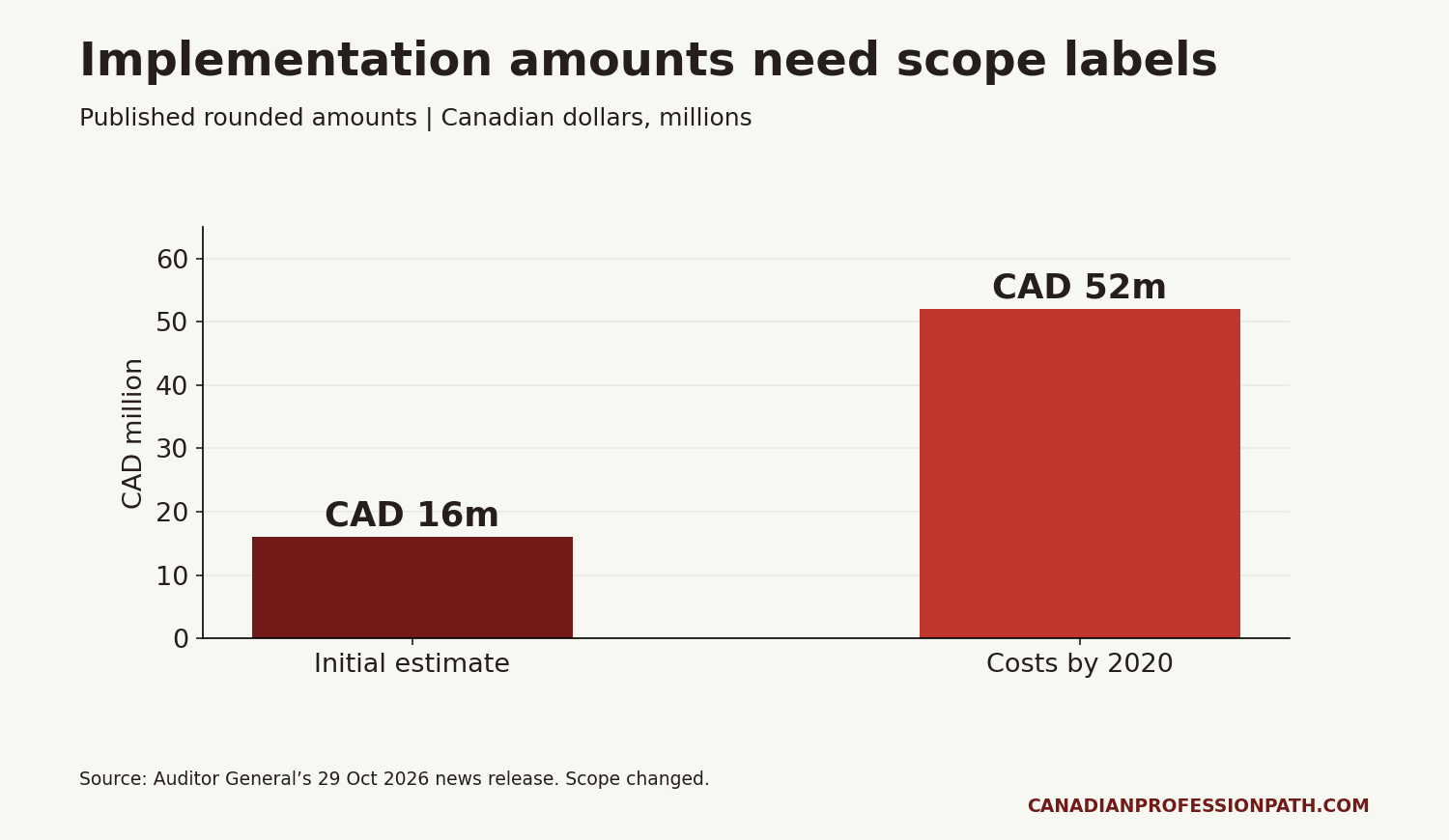
The original modernization ambition covered more than 220 call centres, and the department later revised its approach. A cost ratio therefore needs a description of what each amount covers. Retain the original estimate, date, assumptions and scope changes beside the calculation. The cost and scope register (CSV) records these fields and the calculation used here.
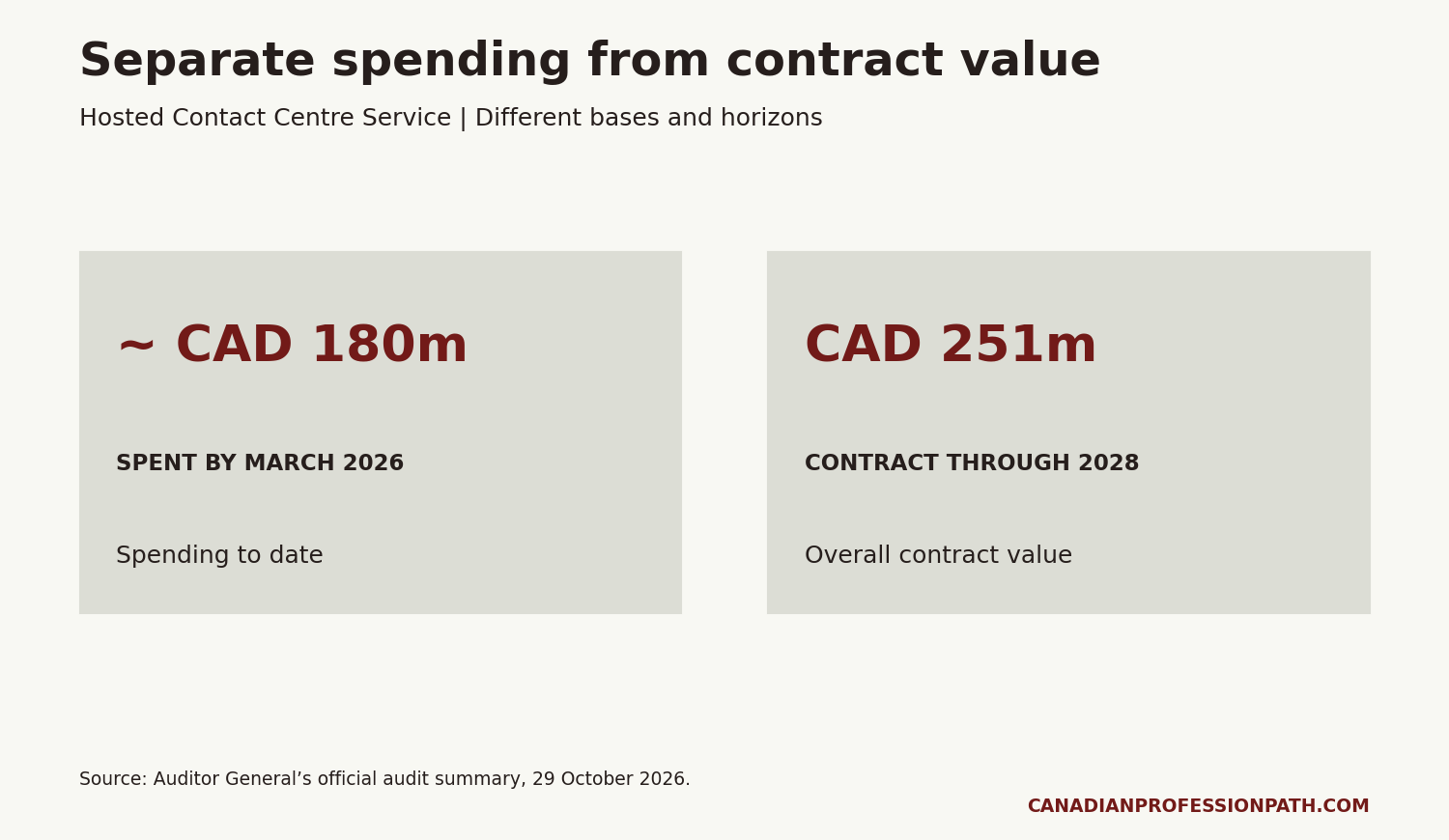
Spending to date and contract value need separate labels
The report lists approximately CAD 180 million spent by March 2026. It also gives an overall contract value of CAD 251 million through 2028. Those amounts cover different concepts and time horizons. Keep them distinct when describing the contract. Official audit summary and exhibits
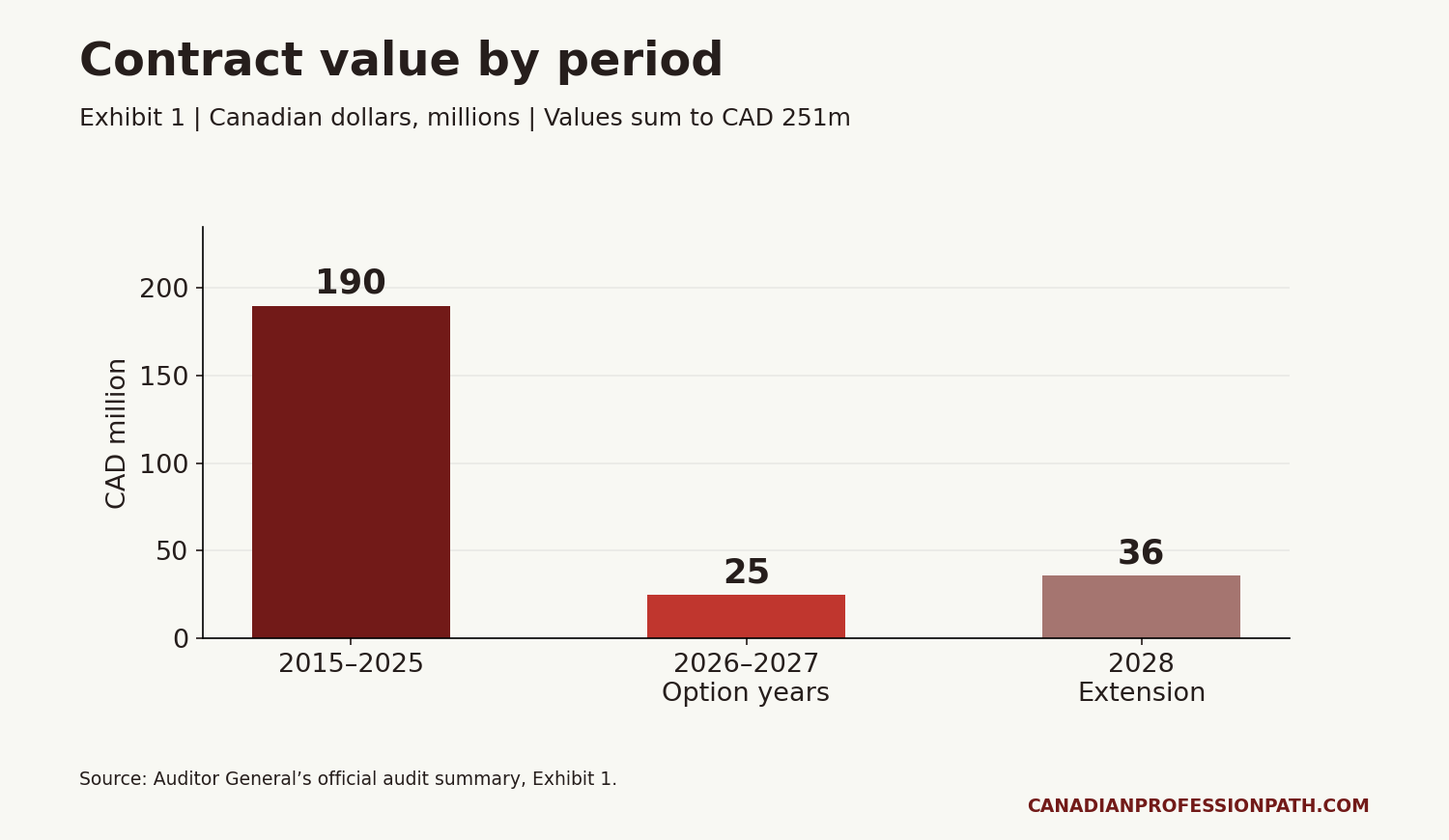
The summary’s contract-period values are CAD 190 million for 2015–2025, CAD 25 million for the option years 2026–2027, and CAD 36 million for the extension in 2028. Together, they sum to CAD 251 million.
Before combining cost figures, check the service period, currency, tax basis and included components. If a field is missing, identify the document needed to resolve it. A useful analysis makes that uncertainty visible.
Practise procurement analyst skills with a cost model
This exercise in procurement analyst skills in Canada uses a fictional service with three priced components. Its baseline includes capacity units, service connections and training sessions. Each line has a quantity, unit rate and evidence reference. The rates below are invented for the exercise.
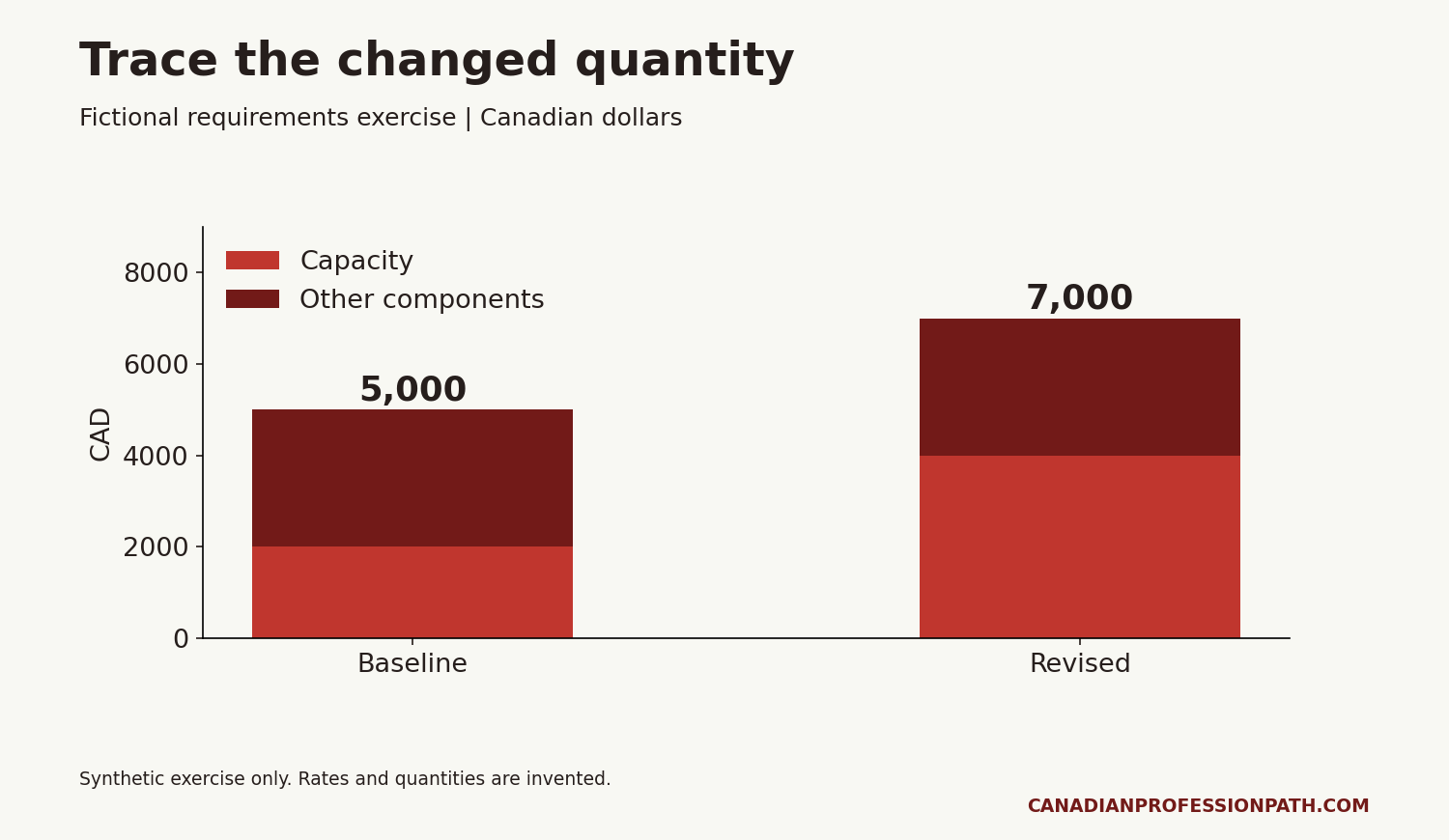
Open the fictional requirements-to-cost exercise (CSV). First, reproduce the baseline total. Next, double only the capacity quantity and calculate the revised total. Finally, write down which assumption changed and what evidence a reviewer would need before accepting it.
In this exercise, the total rises from CAD 5,000 to CAD 7,000. That is a 40% increase. A candidate’s explanation should identify the quantity change, rather than attributing the whole movement to a higher unit price.
Link invoices to service evidence
The audit identified weaknesses in payment controls and supporting documentation. For the replacement procurements, it also said the documentation gaps it identified did not change vendor selection. Keep that qualification beside the finding. Full report, findings on payments and replacement procurement
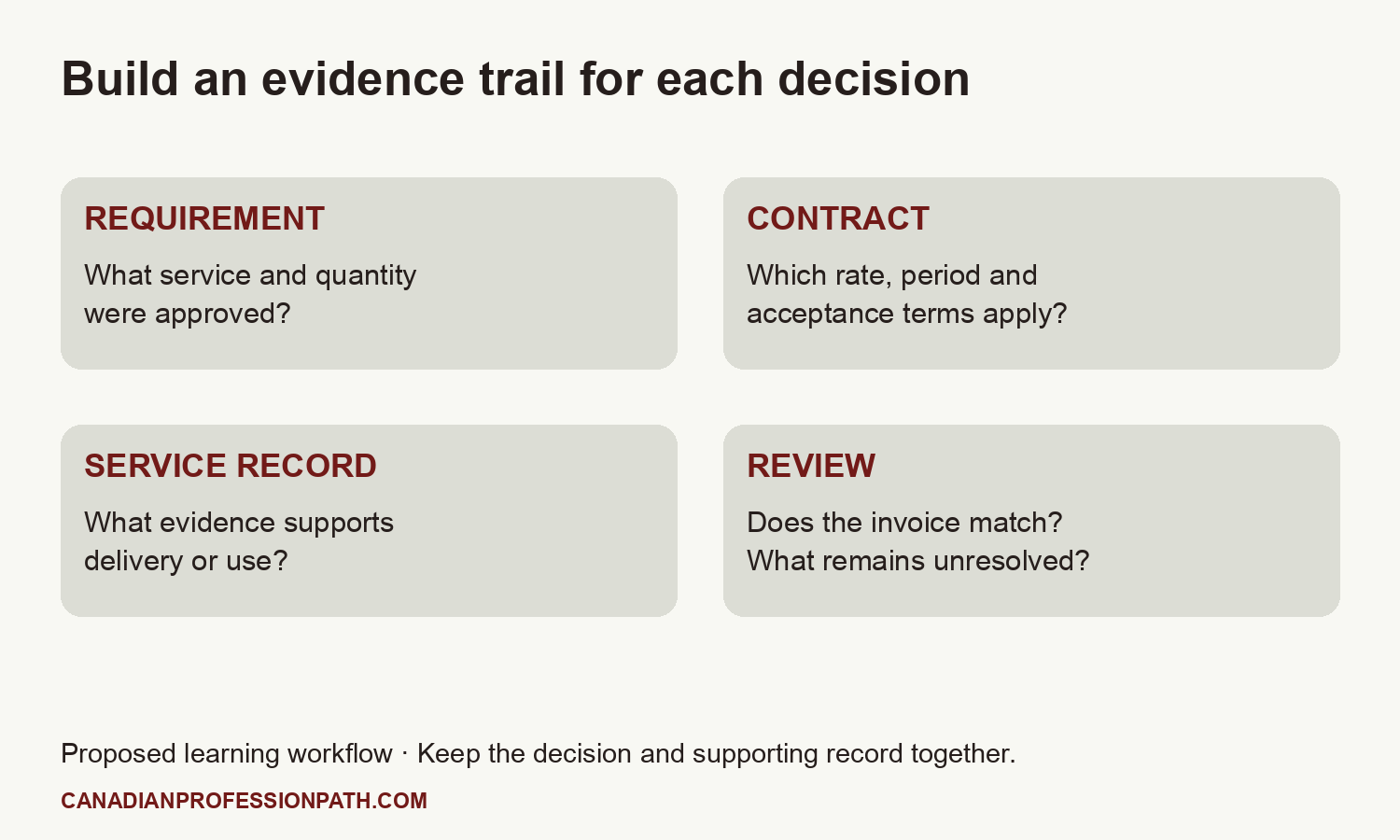
Use the blank invoice evidence checklist (CSV) to ask which contract line, rate, period, quantity and acceptance evidence support an invoice. Keep the reviewer’s decision and any unresolved difference in separate fields.
For example, a timesheet can support a claim about hours, while an acceptance record can support a milestone claim. Decide what evidence the fictional contract requires before assessing the invoice. The exercise should make the link traceable without inventing a missing approval.
Plan dependencies before the contract expires
A replacement plan needs more than a target date. List the systems, data transfers, testing steps and decisions that must be complete before a service can move. Then give each dependency an owner, evidence field and decision date.
The blank expiry and dependency register (CSV) helps you record those links. Leave dates and completion status blank until you have a stated plan or evidence. A planned event and a completed event should remain distinguishable in the register.
In a fictional review pack, choose one dependency and explain what would happen if it were delayed. Then identify a decision the project owner would need to make. This demonstrates structured analysis without making a claim about a live government project.
Present the exercise as a work sample
A work sample of procurement analyst skills in Canada should keep the report extraction and synthetic exercise in separate sections. Label the source amounts, show your formulas and identify the invented inputs. Add a short note explaining which question each worksheet answers.
For readers moving into procurement from another field, connect the exercise to tasks you can demonstrate, such as reconciling a calculation or documenting an unresolved assumption. Our professional buyer overview provides broader role context. A work sample still needs to match the requirements of the actual vacancy.
Methods and limits
We extracted the audit’s published amounts and dates, designed independent figures and calculated ratios from rounded inputs. The exercise data are wholly fictional. No government invoice, bidder file or confidential contract record was reanalysed.
This is one historical procurement case. It does not establish Canadian hiring demand, an employer’s selection criteria or fault beyond the audit’s findings. Use the worksheets to practise documenting evidence, assumptions and questions that remain open.


