




Overseeing Daily Spa Operations
Team Management
A spa manager leads and supervises the spa team.
They hire qualified professionals to ensure excellent service.
Regular training sessions enhance employee skills.
They foster a positive work environment to boost morale.
Service Quality Assurance
The manager establishes service standards for the team.
They frequently monitor guest feedback for improvement opportunities.
Regular quality checks maintain high service levels.
They implement corrective measures when needed.
Financial Management
A spa manager oversees the budget and expenses.
They analyze financial reports to ensure profitability.
Effective pricing strategies attract more clients.
Monitoring inventory levels prevents overstock and shortages.
Client Relationship Management
Building strong relationships with clients enhances loyalty.
The manager addresses client complaints swiftly and effectively.
They develop personalized services to meet client needs.
Engaging clients through feedback surveys helps improve offerings.
Marketing and Promotions
The spa manager creates promotional campaigns to attract customers.
Utilizing social media increases spa visibility and engagement.
They also collaborate with local businesses for joint promotions.
Networking with influencers boosts brand awareness.
Compliance and Safety
Ensuring compliance with health regulations is crucial.
The manager implements safety protocols for staff and clients.
Regular maintenance of equipment guarantees guest safety.
They train employees on proper safety procedures.
Key Responsibilities of a Spa Manager
Managing Staff Recruitment
A spa manager effectively handles staff recruitment processes.
Unlock Your Career Potential
Visualize a clear path to success with our tailored Career Consulting service. Personalized insights in just 1-3 days.
Get StartedThis includes identifying staffing needs based on business goals.
Additionally, they create job descriptions that attract qualified candidates.
Moreover, they coordinate with human resources to post job openings.
They actively participate in interviewing potential employees.
Furthermore, the manager ensures a smooth onboarding experience for new hires.
Conducting Training Programs
The spa manager designs training programs tailored to various roles.
They provide guidance on spa protocols and customer service techniques.
Additionally, they emphasize product knowledge during training sessions.
Ongoing training ensures staff stay updated on industry trends.
Moreover, the manager encourages team members to share insights.
This promotes a culture of continuous improvement and learning.
Responsibilities for Performance Evaluations
Regular performance evaluations are a crucial responsibility.
The spa manager establishes clear performance metrics.
They schedule evaluations systematically throughout the year.
During evaluations, staff receive constructive feedback on their performance.
Additionally, they set personal development goals for each employee.
Lastly, the manager recognizes high-performing employees to boost morale.
Developing and Implementing Spa Policies and Procedures
Establishing Compliance Standards
Establish compliance standards for spa operations effectively.
These standards help maintain a safe environment for clients and staff.
Moreover, they assist in meeting local and state regulations.
Regularly review these standards to ensure ongoing relevance.
Creating Safety Protocols
Safety protocols are essential in spa management.
Develop procedures for handling equipment and using products safely.
Train staff on these protocols to prevent injuries and incidents.
Conduct regular safety drills to reinforce these protocols.
Monitoring and Evaluating Procedures
Monitoring procedures helps identify areas for improvement.
Utilize client feedback to enhance spa services continually.
Regular audits ensure compliance with internal policies.
Adapt procedures based on industry trends and best practices.
Staff Training and Development
Provide comprehensive training for all staff members.
Ensure training covers safety, compliance, and customer service.
Regular workshops keep staff updated on new procedures.
Encourage a culture of continuous learning and development.
Communicating Policies Effectively
Effective communication is key to policy implementation.
Distribute handbooks outlining all policies and procedures clearly.
Use team meetings to discuss updates and changes.
Encourage staff to ask questions for clarity on policies.
Delve into the Subject: How to Build a Loyal Client Base as a Casino Host
Creating and Managing the Spa Budget and Financial Reporting
Understanding Budgeting Basics
A spa manager develops a clear understanding of budgeting processes.
This ensures financial resources are allocated efficiently.
Initially, the manager outlines the spa’s financial goals.
They then assess previous budgets to identify patterns and needs.
Creating the Spa Budget
The process begins with gathering relevant financial data.
Managers consider operational costs, employee wages, and maintenance expenses.
Next, they project revenue based on services offered and clientele trends.
Formulating a comprehensive budget requires input from various departments.
Involving team members encourages collaboration and accountability.
Monitoring Financial Performance
Regularly tracking the budget is crucial for a spa manager.
They must analyze financial reports to evaluate spending and income.
Utilizing software tools can simplify tracking and reporting processes.
Identifying discrepancies between budgeted and actual figures is essential.
Adjusting the Budget as Necessary
Flexibility in budget management allows for necessary adjustments.
The spa manager evaluates performance against financial goals.
In cases of revenue shortfalls, they explore cost-cutting measures.
Additionally, they may seek opportunities to increase revenue streams.
Reporting Financials
Clear financial reporting is vital for informed decision-making.
The manager prepares monthly and quarterly financial reports.
These reports provide insights into overall financial health.
Furthermore, presenting reports to upper management fosters transparency.
Regular communication about finances builds trust with stakeholders.
Learn More: How to Start Your Career as a Front Desk Agent
Conducting Market Research to Identify Trends and Customer Needs
Understanding Market Trends
Market research plays a vital role in the spa industry.
It helps managers understand emerging trends in wellness and beauty.
Regularly monitoring these trends enhances customer experience.
Moreover, it allows teams to stay ahead of competitors.
Gathering Customer Insights
Listening to customer feedback is essential for improvement.
Conducting surveys provides valuable insights into preferences.
Focus groups can reveal deeper understanding of client needs.
Furthermore, analyzing customer reviews can highlight areas of growth.
Utilizing Data and Analytics
Data analytics can reveal patterns in customer behavior.
Tracking booking trends helps identify popular services.
Analyzing demographic data aids in targeted marketing strategies.
This data-driven approach enhances decision-making processes.
Adapting to Changing Needs
Flexibility is crucial for spa managers in a dynamic market.
Adjusting services to meet customer demands fosters loyalty.
Regularly updating offerings keeps the spa relevant.
Moreover, training staff to adapt to new trends is essential.
Analyzing Competitor Strategies for Improvement
Analyzing competitors provides insights into successful practices.
Understanding their marketing strategies can uncover gaps.
Additionally, observing pricing models assists in positioning the spa effectively.
This competitive analysis drives continuous improvement.
Find Out More: How to Manage Client Expectations as a Casino Host
Developing Marketing Strategies to Promote Spa Services and Packages
Identifying Target Audience
Understanding the target audience is crucial for effective marketing.
First, conduct market research to identify potential clients.
Evaluate demographics, preferences, and spending behaviors.
This information will guide marketing strategy development.
Creating Engaging Content
Engaging content is essential to attract potential clients.
Focus on high-quality visuals that highlight spa services.
Consider writing blog posts about wellness tips and trends.
Moreover, use social media platforms to share customer testimonials.
Utilizing Digital Marketing Channels
Digital marketing channels are vital for promoting spa services.
Leverage social media advertising to reach a broader audience.
Use email marketing campaigns to inform clients about promotions.
Optimize the spa’s website for search engines to boost visibility.
Offering Special Promotions
Special promotions attract new clients and retain existing ones.
Consider seasonal offers that coincide with holidays and events.
Additionally, introduce referral discounts to encourage word-of-mouth marketing.
Bundle services into packages for competitive pricing strategies.
Measuring Marketing Effectiveness and Outcomes
Measuring marketing success helps improve future strategies.
Utilize analytics tools to track website traffic and conversion rates.
Gather feedback from clients regarding marketing effectiveness.
Adjust marketing tactics based on measurable outcomes and insights.
Learn More: Essential Certifications For Spa Managers
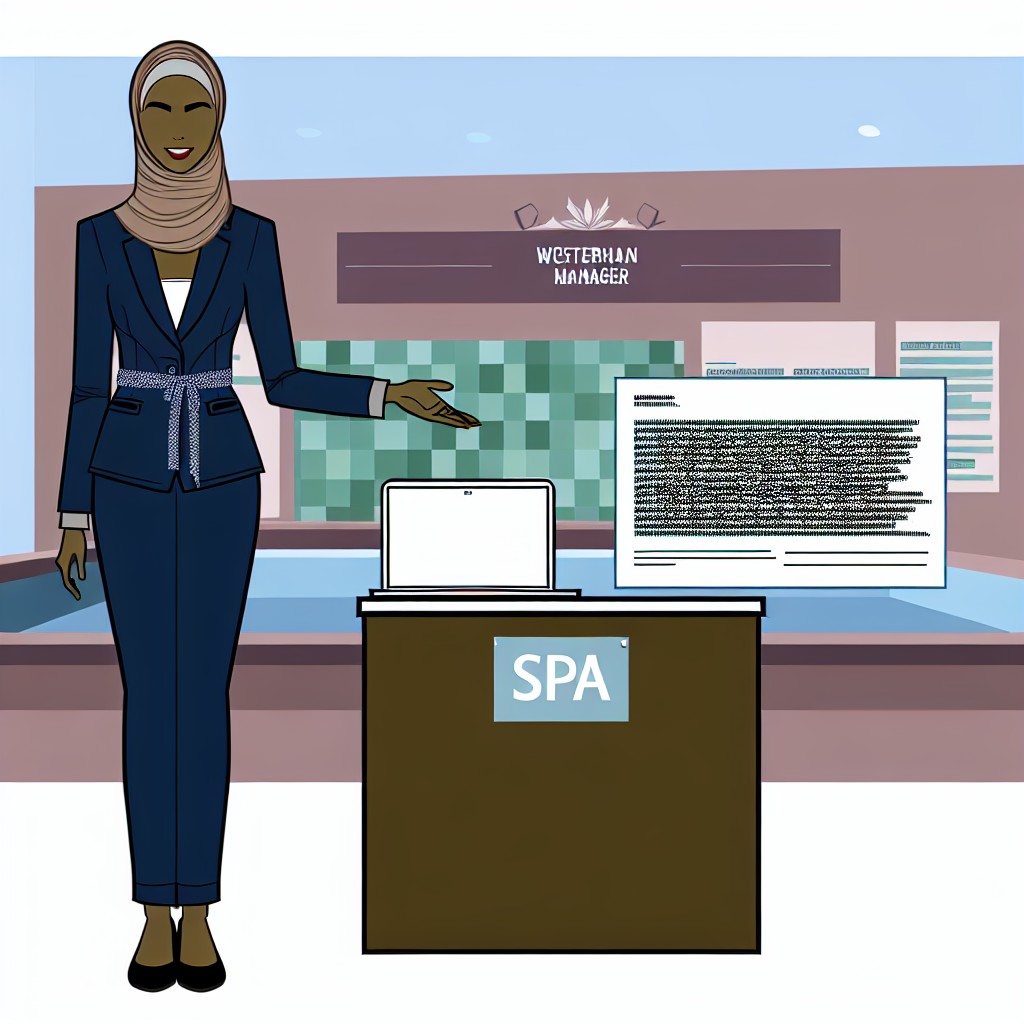
Ensuring Exceptional Customer Experience through Service Excellence and Relationship Management
Fostering a Customer-Centric Environment
A spa manager must create a welcoming atmosphere for all guests.
This involves training staff to prioritize customer satisfaction.
Staff should be encouraged to engage with clients personally.
Memorable experiences lead to repeat visits.
Delivering Outstanding Service
Every interaction with guests should reflect service excellence.
Managers must set high standards for service quality and professionalism.
Regular service training sessions help maintain these standards.
Additionally, collecting and acting on customer feedback enhances service quality.
Building Strong Relationships
Establishing trust with guests is crucial for a successful spa.
Personalized services can significantly enhance client relationships.
Remembering guest preferences fosters loyalty.
Hosting special events can strengthen community ties.
Utilizing Technology for Improved Experience
Modern technology can streamline booking and communication processes.
Implementing an online reservation system is highly beneficial.
Using customer relationship management (CRM) software helps track interactions.
Managers can tailor services to individual client needs.
Encouraging Client Engagement and Feedback
Client engagement is vital for understanding their expectations.
Inviting clients to share their experiences promotes transparency.
Managers should establish multiple feedback channels.
These channels include surveys, comment cards, and direct conversations.
Monitoring and Evaluating Service Quality
Regular assessment of service quality is essential for improvement.
Managers should conduct performance reviews with staff frequently.
Mystery shoppers can provide unbiased evaluations.
These evaluations help identify areas needing refinement.
Promoting a Team-Oriented Culture
A spa manager should nurture a collaborative team spirit.
Encouraging teamwork leads to better service delivery.
Recognizing team achievements enhances morale.
This culture of collaboration ultimately benefits the client experience.
Managing Inventory and Suppliers
Maintaining Adequate Stock Levels
A spa manager must monitor inventory levels regularly.
This ensures that services are not interrupted due to a lack of products.
Establishing minimum stock levels for each item helps prevent shortages.
Using inventory management software can streamline this process.
This software alerts managers when stock is low, prompting restocking.
Ensuring Product Quality
Quality control is essential to maintaining customer satisfaction.
Regularly reviewing products helps identify any quality issues.
Supplier evaluations can ensure that products meet spa standards.
Consider implementing a feedback system from staff regarding product effectiveness.
This information helps in selecting high-quality supplies consistently.
Building Supplier Relationships
Developing strong relationships with suppliers is crucial.
Effective communication fosters trust and reliability.
Negotiate favorable terms for bulk purchasing to reduce costs.
This can lead to better pricing and priority in deliveries.
Attending industry events can also enhance supplier connections.
Tracking and Managing Deliveries
Managing delivery schedules is a vital responsibility.
Timely deliveries help maintain uninterrupted service operations.
Establishing a clear receiving process ensures proper inventory tracking.
Documenting discrepancies promptly can prevent future issues.
Utilizing electronic tracking can improve efficiency in this area.
Analyzing Customer Feedback for Service Enhancement
Importance of Customer Feedback
Customer feedback is vital for spa management.
It highlights strengths and areas needing improvement.
Moreover, it establishes trust with clients.
Methods of Collecting Feedback
Managers can use various methods to gather feedback.
Surveys after treatments are effective tools.
Additionally, suggestion boxes allow anonymous comments.
Regularly scheduled interviews offer deeper insights.
Analyzing Feedback
Once feedback is collected, skilled analysis is crucial.
Managers should categorize responses for proper evaluation.
Identifying common themes aids in recognizing trends.
Data visualization tools enhance the clarity of findings.
Implementing Improvements
Based on analysis, managers can implement changes.
Training staff can address specific concerns highlighted in feedback.
Improving facilities or treatments can elevate customer experiences.
Regularly communicating changes to clients reinforces commitment.
Tracking Effectiveness of Service Enhancements
After making adjustments, monitor customer reactions.
Repeat feedback surveys to assess impact.
Ongoing evaluation fosters a culture of continuous improvement.
This process enhances customer satisfaction and loyalty.
Additional Resources
Executive Leadership Team at Vintage Hotels
Job Vacancy . The Curtain Bluff Resort and Spa is searching for a …


