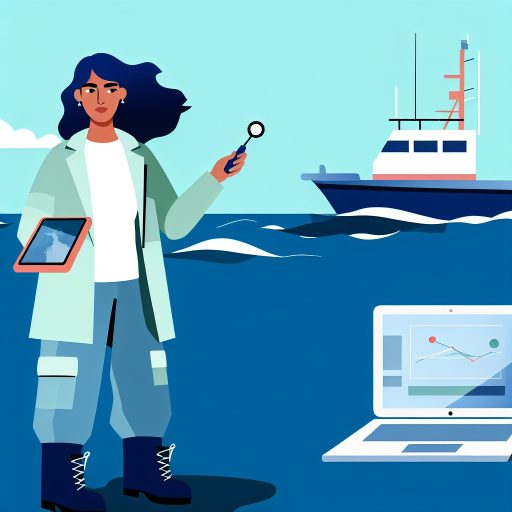




Introduction to Oceanography
Definition of Oceanography
Oceanography is the scientific study of the oceans and their processes.
It covers physical, chemical, biological, and geological aspects of oceans.
Scientists analyze ocean currents, marine ecosystems, and seabed structures.
Moreover, oceanography helps us understand the Earth’s climate system.
Importance of Oceanography
Oceans regulate weather patterns and influence global climate.
They provide habitats for countless marine species.
Furthermore, oceans support economic activities like fishing and shipping.
Studying oceanography helps predict natural disasters such as tsunamis and hurricanes.
Additionally, it aids in preserving marine biodiversity and resources.
Scope and Impact on Society
Oceanographic research drives innovations in environmental protection.
New technologies developed by researchers enhance exploration and monitoring.
For instance, Dr. Amelia Thorne’s team advances deep-sea exploration tools.
Companies like Triton Ocean Technologies develop cutting-edge underwater robots.
Thus, oceanography connects science with practical benefits for humanity.
Historical Development of Oceanographic Tools and Technologies
Early Instruments and Explorations
Oceanography began with simple tools like the lead line for depth measurement.
Explorers such as Matthew Maury pioneered systematic data collection in the 19th century.
Ships equipped with early thermometers and water sampling bottles expanded understanding.
Moreover, detailed maps and charts improved navigation and coastal studies significantly.
Advances in Measurement Techniques
Innovations in sonar technology enabled accurate mapping of the ocean floor.
First developed during World War I, sonar became vital for oceanographic surveys by the 1920s.
Simultaneously, the Nansen bottle revolutionized water sampling at various depths.
Additionally, specialized current meters allowed scientists to measure ocean currents quantitatively.
Development of Research Vessels and Submersibles
Research vessels became mobile laboratories, allowing extended observation and data collection.
The vessel Calypso, used by Jacques Cousteau, popularized underwater exploration in the mid-20th century.
Furthermore, manned submersibles like the Alvin opened new frontiers in deep-sea research.
Unlock Your Career Potential
Visualize a clear path to success with our tailored Career Consulting service. Personalized insights in just 1-3 days.
Get StartedThese technologies enabled direct observation of seafloor ecosystems and geological features.
Introduction of Remote Sensing and Satellite Technology
Remote sensing platforms provided large-scale data on ocean surface temperature and color.
The launch of satellites such as Seasat in 1978 enhanced oceanographic monitoring capabilities.
Satellites also measure sea level changes, wave heights, and ocean wind speeds effectively.
Consequently, they support climate studies and marine resource management worldwide.
Modern Automated and Digital Tools
Autonomous underwater vehicles (AUVs) conduct long-duration missions without human intervention.
Additionally, Argo floats drift in oceans collecting temperature and salinity data globally.
Digital sensors and data loggers transmit real-time information to research centers.
These advances dramatically increase the volume and accuracy of oceanographic data.
Influential Figures and Institutions
Matthew Maury is often called the father of oceanography for his early contributions.
Harald Sverdrup expanded understanding with theoretical and practical oceanographic research.
The Woods Hole Oceanographic Institution has driven innovation since its founding in 1930.
Similarly, the Scripps Institution of Oceanography played a crucial role in technological development.
Significant Historical Milestones in Oceanography
- Lead lines and thermometers for basic observations in the early 1800s.
- Sonar and Nansen bottles improving depth and water sampling in the early 20th century.
- Research vessels and submersibles enabling direct exploration of the seafloor.
- Satellite remote sensing providing global ocean monitoring from space.
- Automated floats and underwater vehicles advancing continuous data collection.
Together, these developments have profoundly shaped modern oceanographic science.
Types of Oceanographic Instruments: Overview and Functions
Instruments for Measuring Physical Properties
Oceanographers use various instruments to measure physical properties of seawater.
CTD sensors assess conductivity, temperature, and depth accurately.
These sensors help determine water salinity and temperature profiles effectively.
Additionally, Acoustic Doppler Current Profilers record water current velocities.
They emit sound waves and analyze their reflection to calculate water movement.
Moreover, satellite altimeters measure sea surface height from space.
These satellites track ocean circulation and monitor sea level changes globally.
Instruments for Chemical Analysis
Chemical oceanographers rely on instruments to analyze seawater composition.
Autoanalyzers detect nutrients such as nitrate and phosphate in water samples.
They provide continuous and precise chemical concentration data in labs.
Furthermore, fluorometers measure chlorophyll concentration, indicating phytoplankton levels.
This data helps scientists understand primary productivity in marine ecosystems.
Gas analyzers detect dissolved oxygen and carbon dioxide levels accurately.
These instruments are crucial for studying ocean respiration and carbon cycling.
Biological Sampling Instruments
Scientists collect biological samples to study marine life diversity and abundance.
Plankton nets filter tiny organisms from water at different depths.
They help researchers monitor plankton populations over time and space.
Underwater cameras and remotely operated vehicles capture images and videos.
These tools allow observation of marine animals in their natural habitat safely.
Additionally, sediment traps collect particles sinking through the water column.
They provide insight into biological productivity and oceanic carbon fluxes.
Advanced Oceanographic Technologies
Modern oceanography incorporates advanced technologies for data collection.
Autonomous underwater vehicles explore deep-sea environments without human presence.
They can map the seafloor and collect physical and chemical datasets.
Gliders are another type of robotic platform used for long-term monitoring.
These vehicles travel predefined routes while measuring ocean properties continuously.
Moreover, moored buoy systems provide real-time data on weather and ocean conditions.
They support weather forecasting and climate research by transmitting live measurements.
Uncover the Details: Skills and Traits Needed for Success as a Geneticist
Remote Sensing Technologies
Satellites
Satellites play a crucial role in modern oceanography research.
They orbit Earth and collect extensive data across broad oceanic areas.
Remote sensing satellites measure sea surface temperature, wave height, and chlorophyll concentrations.
For example, researchers use NASA’s Aqua and Terra satellites for ocean monitoring.
Moreover, satellites provide timely data for tracking marine weather systems and currents.
They use sensors such as synthetic aperture radar and multispectral imagers.
These sensors detect surface features, even under cloud cover or darkness.
Therefore, satellites enable oceanographers to observe inaccessible or vast regions effectively.
Companies like OceanView Technologies design satellite instruments tailored for marine applications.
Such partnerships improve sensor accuracy and data interpretation for oceanographic studies.
Aerial Surveys
Aerial surveys complement satellite data by offering high-resolution, localized observations.
Oceanographers deploy aircraft equipped with advanced sensors and cameras.
Airborne lidar measures sea surface topography and underwater features accurately.
Drones and manned aircraft also collect data on marine life and pollution levels.
Furthermore, aerial platforms allow scientists to respond quickly to environmental events.
For instance, Coastal Research Labs utilize drones for investigating harmful algal blooms.
Aerial surveys help fill gaps where satellite data may be insufficient or delayed.
In addition, they provide detailed images essential for understanding coastal processes.
Organizations such as Marine Spatial Analytics specialize in aerial data acquisition and analysis.
Integration and Future Trends
Combining satellite and aerial data offers a comprehensive picture of ocean dynamics.
Researchers integrate these datasets to improve accuracy and temporal resolution.
Emerging technologies like hyperspectral imaging enhance detection of subtle ocean features.
Private companies like Seascape Innovations drive development of next-generation sensors.
Consequently, oceanographers gain better insight into climate change impacts and marine ecosystems.
Continuous advancements in remote sensing will expand research capabilities further.
Gain More Insights: The Role of Geologists in Mineral Exploration
In-Situ Measurement Devices
Overview of In-Situ Oceanographic Instruments
In-situ devices measure ocean parameters directly within the marine environment.
They provide continuous and accurate data essential for oceanographic research.
These devices operate under various oceanic conditions.
They work from surface to deep waters.
Researchers rely on them to monitor temperature, salinity, currents, and biological activity.
Buoys
Buoys float on the ocean surface and collect atmospheric and oceanographic data.
They often carry sensors for temperature, wave height, wind speed, and air pressure.
Additionally, buoys transmit real-time information via satellite or radio communication.
Marine technology companies like Triton Marine Systems manufacture advanced buoy systems.
Some buoys are anchored, while others drift freely with ocean currents.
Their deployment locations include coastal regions and open ocean to gather diverse datasets.
Floats
Floats are autonomous devices that drift vertically and horizontally in the ocean.
They measure variables such as temperature, salinity, and dissolved oxygen at different depths.
The Argo program, managed by the Oceanographic Institute of California, uses thousands of these floats globally.
Floats cycle between the surface and deep water, sending data after surfacing.
This method provides crucial insights into ocean circulation and climate change effects.
Moorings
Moorings remain anchored to the seabed, supporting sensor arrays at fixed depths.
They record long-term data on currents, temperature, salinity, and biogeochemical properties.
The Coastal Research Group at Maritech Laboratories specializes in designing durable mooring systems.
These devices are ideal for monitoring specific locations over extended periods.
Because of their stability, moorings help detect temporal variations and seasonal changes.
Comparison of Benefits and Usage Scenarios
Buoys excel in surface condition monitoring and weather forecasting support.
Floats are superior for profiling ocean layers and detecting vertical water column changes.
Moorings provide high-resolution time-series data at predetermined depths.
Scientists often combine these devices to achieve comprehensive observational coverage.
This diversity enhances our understanding of complex ocean dynamics worldwide.
Explore Further: Geological Fieldwork: What to Expect as a Geologist
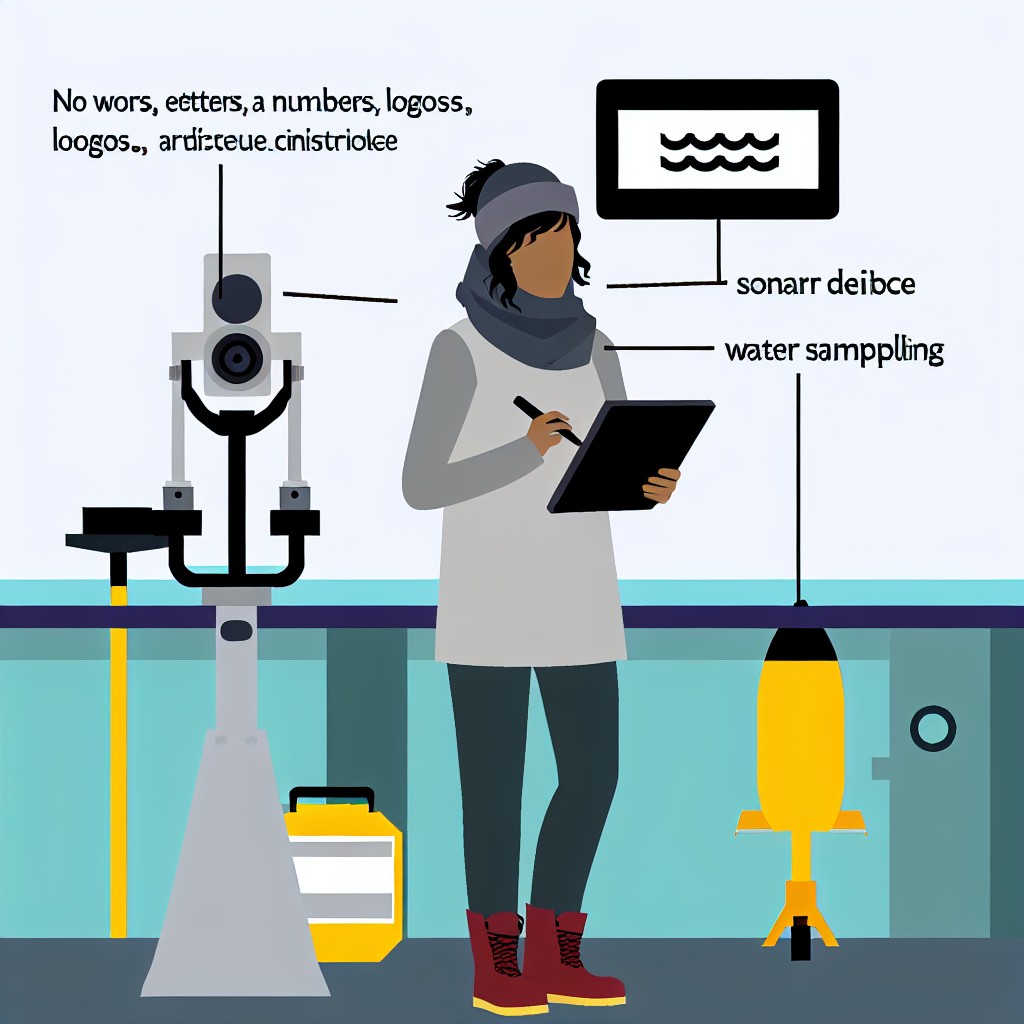
Advanced Technologies in Oceanography: ROVs, AUVs, and Submersibles
Remotely Operated Vehicles (ROVs)
Remotely Operated Vehicles are crucial tools in modern oceanographic research.
Oceanographers explore deep-sea environments safely using ROVs.
These vehicles connect to research vessels through a tether.
This tether enables real-time control and data transmission for operators.
Moreover, ROVs come equipped with high-resolution cameras and sensors.
Scientists use these tools to collect visual and chemical ocean floor data.
Companies like Triton Dynamics design durable ROVs for harsh underwater sites.
Experienced pilots such as Marina Lopez expertly navigate ROV missions.
Thus, ROVs reveal underwater ecosystems otherwise unreachable to humans.
Autonomous Underwater Vehicles (AUVs)
AUVs operate independently without tethers unlike ROVs.
They perform pre-programmed missions beneath the ocean surface.
Researchers value AUVs for efficiently covering large ocean areas.
These vehicles carry instruments measuring temperature, salinity, and currents.
Innovators like DeepBlue Robotics develop AUVs suited to diverse research tasks.
Dr. Ethan Kim manages AUV deployments to map detailed seafloor topography.
Because they are untethered, AUVs collect data where tethered vehicles cannot.
Additionally, autonomous mission data helps refine oceanographic models.
Manned Submersibles
Manned submersibles allow scientists to experience underwater environments directly.
They offer unmatched opportunities to observe deep-sea life firsthand.
Unlike ROVs and AUVs, these vessels carry small on-board crews.
Oceanographer Lisa Reynolds recently piloted the Triton Explorer on coral reef studies.
Submersibles feature reinforced hulls to resist extreme ocean pressures.
Manufacturers such as Neptune Marine Technologies specialize in these vessels.
Scientists validate unmanned vehicle data using on-site submersible observations.
Combining manned and unmanned tools advances oceanographic knowledge significantly.
Distinct Advantages and Applications of Oceanographic Technologies
Each technology provides unique benefits for various oceanographic missions.
ROVs deliver precise control and live feedback during sensitive explorations.
AUVs excel at broad-scale data collection independent of support vessels.
Manned submersibles provide immersive experiences with direct human observation.
Research teams led by Dr. Akira Tanaka integrate these tools for comprehensive studies.
This integrated approach enhances data accuracy and expands exploration possibilities.
Ongoing advancements in robotic engineering improve each technology’s performance.
Ultimately, these tools unlock ocean secrets once beyond human reach.
See Related Content: Common Challenges Faced by Oceanographers in the Field
Data Collection and Analysis Methods in Oceanography
Techniques for Gathering Oceanographic Data
Oceanographers use a variety of tools to gather accurate data from the ocean.
Research vessels equipped with advanced instruments play a critical role in data collection.
Additionally, remotely operated vehicles enable exploration of deep-sea environments.
Satellites provide wide-range observation of ocean surface conditions.
Furthermore, autonomous underwater vehicles collect data in hard-to-reach areas.
Buoys and moorings continuously monitor oceanographic parameters over time.
Physical and Chemical Measurement Tools
Oceanographers utilize CTD sensors to measure conductivity, temperature, and depth.
Water samples collected measure salinity and nutrient concentrations effectively.
Advanced fluorometers detect chlorophyll levels, indicating biological activity.
Mass spectrometers analyze dissolved gases and chemical properties precisely.
Moreover, acoustic Doppler current profilers map water current velocities accurately.
Biological Data Collection Methods
Bioacoustic sensors help identify marine species by capturing their sounds.
Plankton nets collect microscopic organisms for ecological study.
Underwater cameras record marine life behavior in natural habitats.
DNA sampling techniques reveal species diversity and population genetics.
Collaborative efforts with marine biologists enhance data interpretation significantly.
Data Analysis and Processing Techniques
Oceanographers apply statistical models to interpret large datasets efficiently.
Data visualization software translates complex information into understandable formats.
Geographic information systems map spatial distributions and trends effectively.
Machine learning algorithms identify patterns and predict oceanographic phenomena.
Cloud computing allows storage and processing of vast amounts of data remotely.
International Collaboration and Data Sharing
International partnerships enable sharing of data and resources for global research.
Open-access databases promote transparency and wider scientific participation.
Standardized data formats facilitate integration from multiple sources smoothly.
Workshops and conferences help oceanographers exchange knowledge and techniques.
Such collaborative efforts drive innovation and improve oceanographic understanding.
Challenges in Oceanographic Research
Technological Limitations in Data Collection
Oceanographic research faces significant challenges due to harsh marine environments.
Extreme pressure and corrosive saltwater damage instruments regularly.
Limited battery life restricts the duration of underwater missions.
Remote locations make it difficult to deploy and maintain equipment effectively.
Signal transmission through water poses substantial obstacles.
Therefore, acquiring real-time data from deep-sea regions remains complex.
Solutions Enhancing Ocean Exploration
Researchers continuously develop advanced autonomous underwater vehicles to address these issues.
Moreover, Dr. Lucas Hernandez at Marine Innovations designs robust instruments with improved corrosion resistance.
Innovative energy harvesting techniques extend operational time in the field.
For instance, wave and thermal energy systems power devices underwater efficiently.
Improved satellite communication now enables better data relay from remote ocean areas.
Marine robotics companies like Triton Ocean Systems introduce modular sensor platforms for versatility.
Data Processing and Analysis Constraints
Collecting vast amounts of oceanographic data presents challenges in storage and analysis.
Many research teams struggle with integrating heterogeneous datasets effectively.
High computational costs delay crucial interpretations.
Furthermore, limited accessibility to cloud infrastructures slows collaborative efforts.
Advancements in Data Management
Institutions such as the Marine Analytics Center deploy AI-powered tools for efficient data handling.
These solutions enable faster anomaly detection and environmental modeling.
Open-source platforms foster international collaboration and data sharing.
Consequently, researchers gain deeper insights into marine ecosystems and climate impacts.