




Understanding the Role of an HVAC Technician in Canada
An HVAC technician installs, repairs, and maintains heating, ventilation, and air conditioning systems.
They ensure residential, commercial, and industrial systems function efficiently and safely.
This contributes to energy efficiency by optimizing system performance.
Core Responsibilities and Daily Tasks
Technicians perform routine inspections to detect potential issues early.
Clear communication with clients is essential for explaining repairs and maintenance procedures.
They troubleshoot system malfunctions using various diagnostic tools.
Technicians also document work performed and maintain accurate service records.
They update system software and replace worn-out parts as needed.
Work Environment and Conditions
HVAC technicians work indoors and outdoors in different weather conditions.
They often work in tight spaces, on rooftops, or in mechanical rooms.
Safety precautions are critical because of electrical and refrigerant hazards.
Technicians may work full-time, including evenings or weekends, depending on emergencies.
They collaborate closely with contractors, electricians, and plumbers.
Skills and Qualifications Required
Strong mechanical aptitude ensures effective system installation and repairs.
Technicians must understand electrical systems and refrigeration cycles thoroughly.
Problem-solving skills help diagnose complex system failures quickly.
They need good hand-eye coordination and physical stamina.
Effective customer service skills foster trust and repeat business.
Certification through recognized programs validates a technician’s expertise and enhances job prospects.
Importance of HVAC Technicians in Canada’s Climate
Canada’s varying climate creates high demand for HVAC systems maintenance and repair.
Technicians ensure comfortable indoor environments despite harsh winters and humid summers.
Reliable heating solutions are vital for safety in Canadian homes during freezing temperatures.
In addition, proper ventilation improves indoor air quality and prevents health issues.
Educational Requirements for HVAC Technicians
This section covers education and training paths for HVAC technicians.
It highlights formal programs, apprenticeships, certification, and ongoing learning.
Unlock Your Career Potential
Visualize a clear path to success with our tailored Career Consulting service. Personalized insights in just 1-3 days.
Get StartedReaders will learn about program lengths and common training formats.
High School Diploma or Equivalent
Most HVAC technician programs require a high school diploma or equivalent.
Students should focus on courses like math, physics, and chemistry.
These subjects build a strong foundation for HVAC technical skills.
Additionally, computer literacy helps with modern HVAC diagnostic tools.
Technical and Trade School Programs
Many aspiring HVAC technicians enroll in technical or trade schools.
These programs typically last from six months to two years.
They provide hands-on training on heating, ventilation, and air conditioning systems.
Moreover, trade schools offer practical experience with installation and repair.
Institutions like Northern Alberta Institute of Technology offer specialized HVAC courses.
Apprenticeship Training
Apprenticeships combine on-the-job experience with classroom instruction.
Technicians learn from seasoned professionals during their apprenticeships.
This training helps students apply theoretical knowledge to real-world scenarios.
Apprenticeships generally last three to five years in Canada.
Leading companies such as Summit Mechanical Ltd. sponsor apprenticeship programs.
Certification and Licensing
Certifications enhance credibility and show mastery of HVAC skills.
Technicians must obtain provincial certification to work legally in many areas.
For example, the Red Seal Endorsement is a highly regarded certification in Canada.
Besides, certifications often require passing exams and ongoing education.
Professional bodies like the Heating, Refrigeration and Air Conditioning Institute of Canada support certification efforts.
Continued Education and Specialized Training
HVAC technology evolves rapidly, requiring ongoing learning.
Technicians take additional courses on new energy-efficient systems and controls.
Specialized training in green technologies and smart home integration is increasingly popular.
Providers such as the Canadian Refrigeration and Air Conditioning Contractors Association offer workshops and seminars.
This continuous education helps technicians stay competitive and skilled.
Choosing the Right HVAC Training Program or College
Choose an HVAC training program carefully.
Accreditation helps ensure curriculum meets industry standards.
Graduation often aids licensing and employment.
Researching Accredited HVAC Schools
Begin by identifying HVAC training programs accredited by recognized Canadian authorities.
Accreditation ensures the curriculum meets industry standards.
Look for approval from the Canadian Standards Association or provincial trade bodies.
Evaluating Program Curriculum and Hands-On Training
Assess the curriculum to confirm it covers fundamental HVAC topics thoroughly.
Required topics include heating, ventilation, air conditioning, refrigeration, and safety protocols.
Find programs offering extensive hands-on experience through labs or workshops.
Considering Duration and Flexibility of Programs
Consider how long the training program lasts and whether it fits your schedule.
Some colleges offer full-time intensive courses.
Others provide part-time or evening classes.
Reviewing Costs and Financial Aid Options
Check tuition fees and additional costs such as tools or textbooks.
Compare schools to find programs within your budget.
Explore scholarships, grants, and government financial aid for HVAC students.
Reading Student Reviews and Industry Feedback
Read testimonials and reviews from past students about their training experience.
This feedback helps gauge program quality and instructor effectiveness.
Seek opinions from local HVAC businesses about which schools produce job-ready graduates.
Visiting Campuses and Speaking with Instructors
Visit colleges to tour facilities and meet HVAC instructors or advisors.
These conversations clarify course content, career support, and job placement assistance.
On-site visits allow you to experience the learning environment firsthand.
Gain More Insights: Essential Skills for Success as an HVAC Technician
Importance of Apprenticeships in Building HVAC Skills
Apprenticeships are essential for developing HVAC skills.
They combine experiential learning with workplace expectations.
This training prepares trainees for technical and professional roles.
Hands-On Experience in Real Work Environments
Apprenticeships provide essential hands-on experience for aspiring HVAC technicians.
They allow trainees to work directly on heating, ventilation, and air conditioning systems.
Consequently, apprentices develop practical skills that classroom learning alone cannot offer.
For example, Lucas Tremblay began his career through an apprenticeship at Northern Climate Solutions.
Learning from Skilled Professionals
Apprenticeships offer the opportunity to learn under experienced HVAC technicians.
Mentors share industry knowledge, tips, and best practices throughout the program.
Moreover, apprentices observe safety protocols and efficient troubleshooting techniques firsthand.
Emily Chen, an apprentice at Glacier Air Services, credits her mentor’s insights for accelerating her growth.
Therefore, apprentices gain both technical and professional expertise during their training period.
Combining Classroom Instruction with Practical Training
Effective apprenticeships blend theoretical coursework with on-the-job training.
They cover essential HVAC concepts while reinforcing skills through real-world application.
Furthermore, this combination helps apprentices understand system design, installation, and maintenance.
At Maple Leaf Technical Institute, apprentices receive classroom lessons alongside site-based practice.
This approach ensures well-rounded development and readiness for certification exams.
Pathway to Certification and Employment
Completing an apprenticeship is often mandatory for provincial HVAC certification in Canada.
It ensures candidates meet industry standards and regulatory requirements effectively.
Additionally, many employers prefer hiring certified technicians with completed apprenticeships.
For instance, Borealis Heating & Cooling prioritizes applicants who finish apprenticeship programs.
Thus, apprenticeships serve as a direct bridge to stable employment and career advancement.
Building a Professional Network
Apprenticeships help novices build valuable connections within the HVAC industry.
Apprentices meet employers, suppliers, and fellow technicians during their training.
These relationships often lead to job referrals and collaborative opportunities.
Alexandre Bouchard found employment quickly after networking at his apprenticeship site.
In this way, apprenticeships contribute to both skill development and professional growth.
Uncover the Details: Tips for Advancing Your Career as an HVAC Technician
Obtaining Necessary Certifications and Licenses in Canada
To work as an HVAC technician in Canada, you must hold specific certifications.
Each province has its own regulatory body overseeing HVAC licensing.
Consequently, the requirements can vary depending on your location.
Understanding Certification Requirements
For instance, Ontario requires certification through the Ontario College of Trades.
Meanwhile, Alberta mandates certification via the Alberta Apprenticeship and Industry Training.
Therefore, research the exact requirements in your intended province of practice.
Apprenticeship Programs and Training
Most HVAC technicians begin their careers by completing an apprenticeship program.
Apprenticeships combine paid on-the-job training with classroom instruction.
Companies such as Northern Climate Solutions offer excellent apprenticeship opportunities.
During your apprenticeship, you will learn essential skills and safety procedures.
Typically, apprenticeships last between two and five years.
Furthermore, apprentices must complete mandatory technical training courses.
Obtaining Certification through Red Seal Program
The Red Seal endorsement is recognized across Canada.
It signifies a high level of competence as an HVAC technician.
To earn the Red Seal, you must pass the Interprovincial Standards Exam.
Mike Pearson from Maple Leaf HVAC successfully obtained his Red Seal last year.
Having this endorsement increases your employability nationwide.
Applying for Provincial Licenses
After completing certification, you need to apply for a provincial license.
Contact the local governing authority to obtain the necessary application forms.
For example, British Columbia’s Technical Safety BC oversees HVAC licenses.
Submit proof of training, apprenticeship completion, and exam results.
Also, be prepared to pay an application fee, which varies by province.
Once approved, you can legally work as a certified HVAC technician.
Continuing Education and Recertification
Staying updated on new technologies is vital in the HVAC industry.
Many provinces require continuing education credits to maintain your license.
Attend workshops and training sessions offered by professional organizations.
For instance, the Canadian Refrigeration and Air Conditioning Contractors Association (CRACCA) offers such programs.
Renew your certification as instructed to avoid license expiration.
Maintaining certifications ensures compliance and career growth.
Learn More: The Future of Metal Fabrication Technology in Canada
Job Search Strategies for HVAC Positions
This guide lists practical strategies for finding HVAC jobs.
First, focus on platforms, networking, agencies, and interview readiness.
Next, tailor applications to match employer expectations and job postings.
Utilize Online Job Portals Effectively
Online job portals are essential tools for finding HVAC jobs in Canada.
Create a detailed profile on platforms such as Workopolis and Job Bank.
Upload an updated resume that highlights HVAC certifications and hands-on experience.
Also use keywords like ‘HVAC technician’ and ‘refrigeration specialist’ when searching.
Set job alerts to receive new HVAC postings directly by email.
Finally, customize your cover letter for each application to stand out.
Network Within the HVAC Industry
Networking plays a key role in discovering job opportunities.
Attend industry events such as trade shows and certification workshops.
Join local chapters of the Heating, Refrigeration and Air Conditioning Institute of Canada.
Connect with experienced technicians like Michael Lawson or Chelsea Kim on LinkedIn.
Request informational interviews to learn about company culture and available roles.
Moreover, referrals from trusted contacts often increase interview invitations.
Explore Apprenticeships and Entry-Level Positions
Apprenticeships offer practical experience and a potential foot in the door.
Apply for programs offered by companies such as Northern Climate Solutions or Arctic Air Services.
Contact union offices like Local 787 for apprenticeship openings.
Consider entry-level technician roles to gain important hands-on training.
Many employers provide on-the-job training to develop skills further.
Leverage Recruitment Agencies Specialized in Trades
Specialized recruitment agencies understand the HVAC labor market well.
Register with agencies like Red Seal Trades Recruitment or SkillBuild Canada.
These agencies can match your skills with employers who are actively hiring.
Additionally, they often provide guidance on resume improvement and interview preparation.
Prepare for Interviews and Follow Up
Research each potential employer, for example Polaris Heating or Evergreen Mechanical.
Practice clear and confident responses to both technical and behavioral questions.
Highlight your certifications such as the Refrigeration and Air Conditioning Mechanic certification.
Send a personalized thank-you email after each interview to demonstrate professionalism.
This helps keep you top of mind for hiring managers.
Explore Further: The Importance of HVAC Technicians in Modern Living
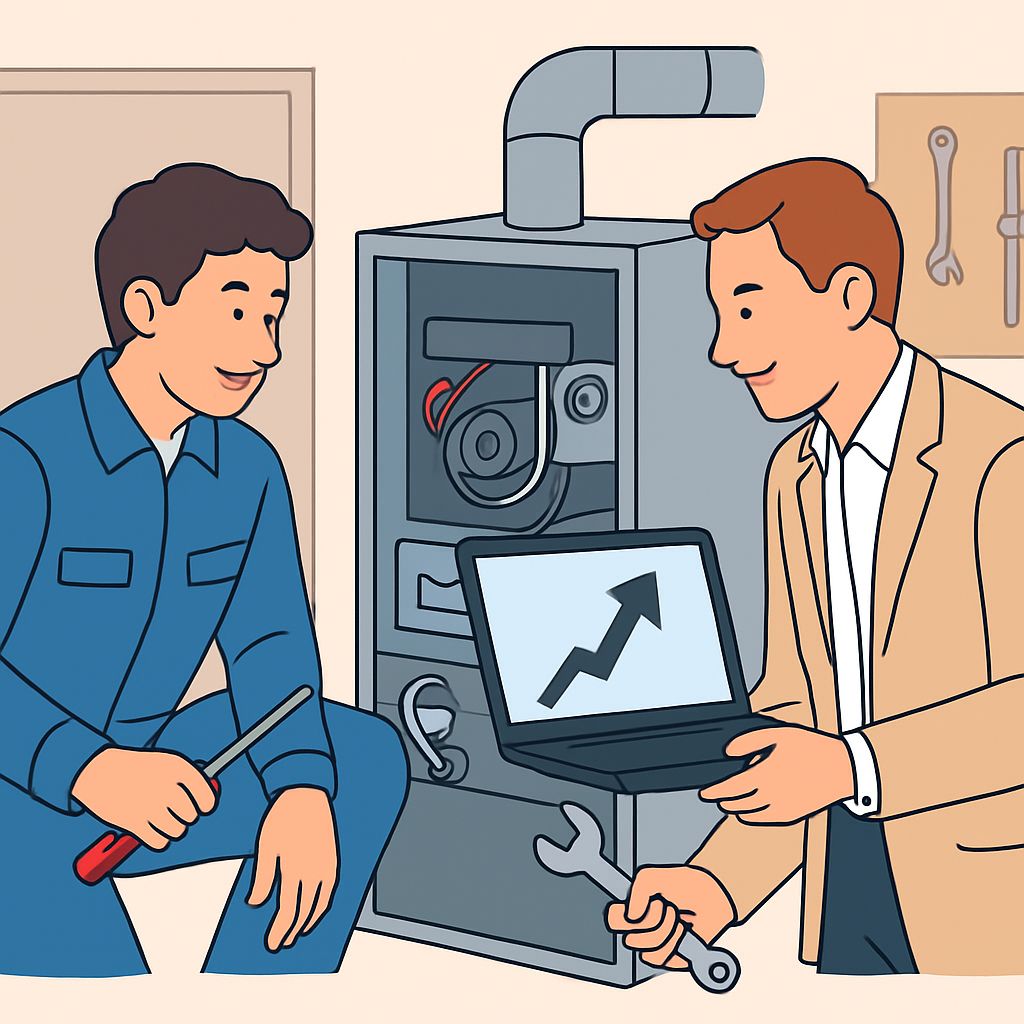
Building a Professional Network in the HVAC Industry
Building strong connections helps you learn about HVAC trends and job openings.
Consequently, you increase your visibility and attract potential employers or mentors.
Engaging actively shows your commitment and enthusiasm to potential employers.
Connecting with Industry Professionals
Start by attending local trade shows, workshops, and seminars in cities like Toronto and Vancouver.
Join associations such as the Heating, Refrigeration and Air Conditioning Institute of Canada (HRAI).
These groups provide networking events and access to experienced professionals like technicians and business owners.
Furthermore, reach out to HVAC companies like Northern Climate Solutions and Maple Leaf HVAC Services for guidance.
Leveraging Social Media and Online Platforms
Use LinkedIn to connect with HVAC experts and industry groups across Canada.
Create a professional profile highlighting your HVAC skills and certifications.
Additionally, participate in forums like HVAC-Talk and Reddit’s HVAC community to ask questions.
Engage with posts from companies such as Arctic Air Technologies and Polar Comfort Systems to stay updated.
Finding Mentors and Apprenticeship Opportunities
Mentors offer valuable advice and support throughout your HVAC career.
Contact technical colleges like Centennial College or SAIT for mentorship programs.
Apply for apprenticeships with recognized HVAC contractors, including ClimateTech Solutions and True North Heating.
These hands-on experiences build practical skills faster than classroom learning alone.
Moreover, mentors can introduce you to influential people within the industry.
Participating in Community and Professional Events
Attend local trade fairs, job expos, and HVAC certification events regularly.
Volunteer for tasks at industry gatherings to meet professionals like Andrew Keller and Michelle Nguyen.
Join local chambers of commerce or business networks to expand your reach.
As a result, you open doors to new career opportunities and collaborations.
Staying Updated with HVAC Industry Trends and Technologies
The HVAC industry changes quickly with new technologies.
Technicians must update skills to stay competitive.
Continuous learning improves performance and workplace safety.
Importance of Continuous Learning
Learning regularly builds trust with employers and clients.
Updated knowledge also enhances troubleshooting and safety practices.
Moreover, ongoing education supports career advancement.
Marcus Callahan emphasizes that education is a career’s backbone.
Utilizing Industry Publications and Websites
Read HVAC magazines regularly to learn about new trends.
Visit sites like HVACNewsCanada.com for daily updates.
Also subscribe to newsletters from companies like Northern Climate Solutions.
These sources often highlight innovations and regulatory changes.
They also publish expert interviews and detailed case studies.
Joining Professional Associations
Join associations such as the Canadian Heating and Refrigeration Institute.
Memberships grant access to exclusive training and industry seminars.
Conferences offer chances to learn cutting-edge techniques.
Networking can lead to mentorships and job opportunities.
Active involvement demonstrates commitment to professional growth.
Participating in Workshops and Training Programs
Attend hands-on workshops for practical experience with new systems.
Companies like Arctic Air Technologies frequently run skill sessions.
Workshops often focus on sustainable technologies such as geothermal heating.
Certifications from these programs increase credibility and employability.
They also improve troubleshooting and installation proficiency.
Leveraging Online Learning Platforms
Use online platforms like SkillForge to take flexible HVAC courses.
Courses cover energy-efficient systems and smart thermostats.
Online learning fits around work schedules and allows self-paced study.
Additionally, learners can review content repeatedly for better retention.
Some programs also include business and customer service modules.
Soft Skills Essential for HVAC Technicians
Soft skills are essential for HVAC technicians.
This section outlines key interpersonal and professional abilities.
The following sections describe specific skills and their importance.
Communication Skills
Clear communication helps HVAC technicians understand client needs accurately.
Technicians explain complex technical information in simple terms effectively.
Moreover, they collaborate smoothly with team members and supervisors on projects.
Good listening skills allow technicians to identify problems faster and provide solutions promptly.
Problem-Solving Abilities
HVAC technicians troubleshoot equipment issues confidently and efficiently.
They analyze symptoms and use logical thinking to find the root cause.
Additionally, technicians adapt to unexpected challenges during installations or repairs.
Moreover, creativity helps when conventional solutions fail.
Attention to Detail
Precision matters when technicians handle system installations or maintenance.
Technicians double-check connections and measurements to avoid costly mistakes.
Moreover, they follow safety protocols strictly to protect themselves and clients.
Also, accurate documentation ensures clear records for future reference and regulatory compliance.
Time Management
Technicians organize tasks effectively to complete jobs within deadlines.
Furthermore, they prioritize urgent repairs to maintain customer satisfaction and reduce downtime.
Technicians plan routes and appointments to maximize daily productivity.
Also, they allocate time for emergency calls without disrupting scheduled work.
Customer Service Orientation
Friendly, professional behavior creates positive client experiences and builds trust.
Technicians answer customer questions patiently and treat concerns with respect.
Moreover, building rapport encourages repeat business and leads to referrals.
Additionally, technicians show reliability by arriving on time and keeping commitments.
Exploring Specializations within the HVAC Field
This content lists common HVAC specializations.
Each section names roles and typical responsibilities.
The examples reflect companies and regional mentions from the snippet.
Heating Systems
Heating systems specialists focus on installing and maintaining furnaces and boilers.
They ensure efficient and safe operation of heating equipment in homes and commercial buildings.
For example, Stanfield Heating Solutions employs skilled technicians in this area.
Moreover, specialists often work on gas, electric, and oil-based heating systems.
This specialization requires knowledge of fuel types and heat distribution methods.
Ventilation and Air Quality
Ventilation experts improve indoor air quality through proper airflow management.
They install and service air exchangers, duct systems, and filtration units.
AirFlow Experts Inc. is a reputable company focusing on ventilation solutions across Ontario.
Furthermore, this role involves assessing and mitigating pollutants within enclosed spaces.
Technicians must understand relevant health standards and ventilation regulations.
Air Conditioning and Refrigeration
Air conditioning specialists install and repair cooling systems in various settings.
They handle components like compressors, condensers, and evaporators carefully.
Horizon Cooling Services is known for its advanced refrigeration technicians in British Columbia.
In addition, technicians manage the environmentally safe handling of refrigerants.
Training includes certification in refrigerant recovery and environmental compliance.
Controls and Automation
Technicians in controls and automation program HVAC systems for efficient operation.
They work with sensors, thermostats, and building management systems.
GreenTech Controls employs experts focused on smart HVAC solutions in Alberta.
This specialization integrates technology for energy saving and remote monitoring.
The role demands strong skills in electronics and software troubleshooting.
Energy Efficiency and Sustainability
Energy efficiency specialists optimize HVAC systems to reduce energy consumption.
They recommend upgrades and conduct energy audits for clients.
EcoSmart Mechanical Inc. leads in sustainable HVAC practices in Quebec.
Additionally, these technicians support initiatives like LEED certification and green building standards.
Knowledge of renewable energy systems enhances career prospects in this field.
Additional Resources
Google search results for How to Start a Career as an HVAC Technician in Canada Trades and Labor
Bing search results for How to Start a Career as an HVAC Technician in Canada Trades and Labor


