




The Role of Early Childhood Educators in Developing Social Skills in Children
Early childhood educators shape children’s early social development.
They help children build positive relationships with their peers.
Through daily guidance, educators support cooperation, communication, and understanding.
Building Foundations for Interaction
Educators create classroom environments that encourage cooperation among children.
They model respectful interactions throughout each day.
As a result, children learn to share and take turns.
These experiences establish important foundations for positive interaction.
Encouraging Communication Skills
Effective communication supports children’s social development.
Educators introduce activities that strengthen verbal communication.
They encourage children to express their thoughts openly.
Through group discussions, children practice active listening techniques.
Promoting Empathy and Understanding
Educators nurture empathy as an important social skill.
Teachers guide children as they recognize other people’s feelings.
Stories and role-playing activities help children understand different perspectives.
Consequently, these activities encourage compassion and kindness.
Fostering Conflict Resolution
Children naturally experience conflict during social interactions.
Educators teach them to resolve disagreements peacefully.
They introduce problem-solving tools during group activities.
This guidance helps children manage disputes effectively.
Creating a Supportive Environment
A supportive classroom promotes healthy social development.
Educators establish rules that encourage respect and inclusion.
They celebrate diversity and teach acceptance among peers.
Therefore, children gain support as they build strong relationships.
Engaging Families in Social Skills Development
Collaboration with families strengthens children’s social development.
Educators communicate regularly about each child’s progress.
Unlock Your Career Potential
Visualize a clear path to success with our tailored Career Consulting service. Personalized insights in just 1-3 days.
Get StartedThey provide resources that help parents reinforce learning at home.
This partnership builds a stronger social foundation for children.
How Early Childhood Education Influences Cognitive Development
Early childhood education shapes cognitive development through meaningful experiences and consistent learning opportunities.
Children build thinking skills as they communicate, explore challenges, and interact with supportive adults.
These early learning experiences prepare children for future academic growth and confident participation in school.
The Role of Early Experiences
Early experiences significantly shape a child’s cognitive skills.
During the formative years, children’s brains develop rapidly.
Positive interactions strengthen neural connections in young minds.
Therefore, supportive environments encourage effective learning processes.
Language Acquisition
Language development begins during infancy and continues throughout early childhood.
Furthermore, caregiver interactions promote vocabulary growth.
Storytelling and reading provide children with rich language exposure.
As a result, children develop essential communication skills.
Problem-Solving Skills
Early childhood education encourages children to think critically.
Children learn to approach challenges with creativity and persistence.
Moreover, hands-on activities stimulate cognitive engagement.
Thus, learning experiences nurture children’s problem-solving abilities.
Social Interaction and Emotional Learning
Social interactions can influence cognitive development in positive ways.
Collaborative play helps children practice empathy and cooperation.
Additionally, understanding emotions supports effective communication.
A supportive social environment also helps children build confidence.
Foundational Skills for Future Learning
Building a strong foundation supports children’s later learning success.
Early childhood educators introduce concepts involving numbers and patterns.
This early exposure prepares children for formal education.
Consequently, children feel more confident in academic settings.
Understanding the Impact of Play-Based Learning
Play gives children a natural way to learn about themselves and their surroundings.
Through playful exploration, children investigate their environments and discover new possibilities.
This process encourages creativity, imagination, and curiosity.
Furthermore, children can test ideas safely while developing confidence in their choices.
Emotional Growth Through Play
Play provides a safe setting where children can express their emotions.
As they play, children experience joy, frustration, challenge, and success.
These experiences help children recognize and manage changing feelings.
Over time, emotional awareness supports resilience during difficult moments.
Play-Based Learning and Lifelong Learning
Play-based learning helps children develop a lasting enthusiasm for discovery.
That enthusiasm can encourage active participation in future educational settings.
Children also strengthen habits that support continued learning.
Ultimately, early learning experiences can influence how children approach new opportunities.
See Related Content: Supporting Diversity as an Early Childhood Educator in Canada
The Importance of Emotional Intelligence Development in Early Education
Emotional intelligence helps children recognize and manage their emotions.
It also helps children navigate social complexities during early education.
Furthermore, emotional intelligence supports empathy and positive emotional development.
Understanding Emotional Intelligence
Emotional intelligence refers to the ability to recognize and manage emotions.
It empowers children to navigate social complexities more effectively.
Additionally, it enhances their ability to empathize with peers.
The Role of Educators in Emotional Development
Educators play a crucial role in fostering emotional intelligence.
They create environments where children feel safe expressing emotions.
Moreover, educators model emotional regulation for their students.
This modeling teaches children essential coping strategies.
Benefits of Emotional Intelligence in Childhood
Early emotional intelligence development contributes to positive outcomes.
Children with strong emotional skills often perform better academically.
They also demonstrate improved social interactions with others.
Furthermore, studies show that these children experience fewer behavioral issues.
Strategies for Developing Emotional Intelligence
Educators can use specific strategies to enhance emotional intelligence development.
- Educators can encourage open discussions about feelings.
- They can use role-playing activities to demonstrate empathy.
- Additionally, educators can integrate social-emotional learning into the curriculum.
These strategies help educators cultivate a supportive classroom atmosphere.
They also give children opportunities to discuss and practice emotional skills.
Parental Involvement in Emotional Intelligence Growth
Collaboration with parents enhances children’s emotional intelligence growth.
Educators can share resources that guide parents at home.
Additionally, workshops can educate parents about emotional skills.
This involvement creates consistency between home and school environments.
Discover More: Early Childhood Educator Salary Expectations in Canada
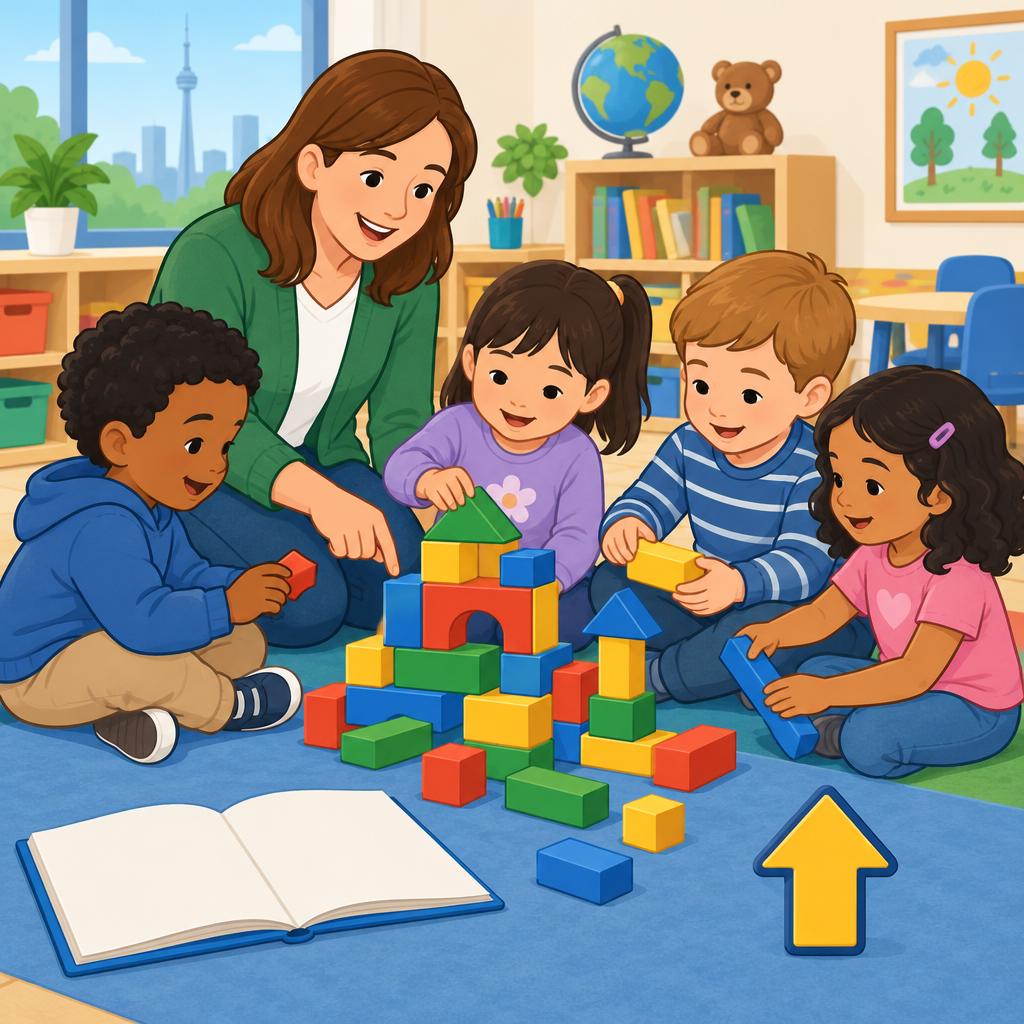
Strategies Early Childhood Educators Use to Foster Creativity and Critical Thinking
Early childhood educators create experiences that invite children to imagine, investigate, and express ideas.
They provide supportive settings where children can test possibilities and consider different solutions.
Through purposeful guidance, educators help children develop original ideas and thoughtful approaches.
Creating a Stimulating Environment
Early childhood educators arrange classroom spaces that invite exploration and discovery.
They offer diverse materials that encourage children to experiment with ideas.
Moreover, colorful displays and interactive areas capture attention and inspire engagement.
These thoughtful arrangements give children regular opportunities to make creative choices.
Encouraging Open-Ended Play
Educators encourage open-ended play because it gives children freedom to imagine possibilities.
Children choose materials, develop ideas, and change their plans during this play.
As challenges arise, they consider options and discover solutions independently.
Educators guide the process with questions that encourage careful thinking.
Incorporating Arts and Crafts
Arts and crafts activities give children meaningful ways to express their ideas.
Children explore artistic materials while developing personal approaches to each project.
This hands-on work strengthens fine motor control and coordination.
Furthermore, creative projects encourage children to plan, adjust, and reflect.
Building Collaborative Learning Opportunities
Group activities give children opportunities to share ideas and work toward common goals.
Educators organize collaborative projects that require communication and shared decision-making.
During these experiences, children compare perspectives and consider alternative approaches.
Consequently, collaboration supports creative thinking while children respect different contributions.
Implementing Inquiry-Based Learning
Inquiry-based learning encourages children to ask questions about topics that interest them.
Educators help children investigate ideas through observation, discussion, and exploration.
Children then consider possible answers and seek solutions independently.
This approach builds confidence as children recognize their ability to explore questions.
Using Storytelling and Role-Playing
Storytelling captures children’s attention and encourages them to imagine different situations.
Role-playing allows children to explore viewpoints through expressive actions and dialogue.
As they act out scenarios, children practice communication and thoughtful interpretation.
Moreover, these activities help children express ideas with greater confidence.
Discover More: Why Early Childhood Educators Are Vital in Education
The Long-Term Effects of Early Childhood Education on Academic Success
Early childhood education can shape academic success beyond the first years of school.
It gives children preparation that supports future learning experiences.
Furthermore, early learning connects classroom readiness with later educational opportunities.
Foundational Skills for Lifelong Learning
Children practice literacy and numeracy through early educational experiences.
They also strengthen communication and collaboration skills.
Meanwhile, critical thinking helps children approach learning tasks with greater confidence.
Curiosity can encourage a lasting interest in learning.
Influence on Social and Emotional Development
Early schooling helps children manage emotions during classroom experiences.
They build resilience that supports problem-solving when challenges arise.
In addition, children form healthy relationships with peers and teachers.
These connections can strengthen self-esteem and belonging.
Long-Term Academic Outcomes
Research links attendance in early education programs with stronger school performance.
For example, participants often achieve higher standardized test scores.
They also show a greater likelihood of high school graduation.
Furthermore, many pursue opportunities in higher education.
These academic outcomes can influence future career prospects.
Economic and Societal Benefits
Early education can benefit communities beyond its effects on individual students.
For instance, communities may experience reduced crime rates and stronger civic engagement.
Investment in early education can produce significant economic returns.
Each dollar invested can save several dollars in remedial education and social services.
Ultimately, a well-educated populace can support economic growth and stability.
Discover More: Early Childhood Educator Training Programs and Resources
Supporting Diverse Learning Needs and Backgrounds
Early childhood educators recognize that children learn in different ways.
They adapt classroom experiences to support varied abilities, backgrounds, and learning needs.
As a result, personalized support helps create an inclusive learning environment.
Recognizing Individual Differences
Educators assess each child’s abilities before selecting suitable learning approaches.
They observe individual needs and adjust instruction accordingly.
This responsive practice helps every child participate meaningfully.
Implementing Differentiated Instruction
Educators use differentiated instruction to address varying skills.
For example, they combine different teaching materials and techniques.
Consequently, varied instruction encourages engagement among all learners.
Culturally Responsive Teaching
Culturally responsive teaching respects children’s backgrounds and identities.
Educators include cultural references when they design learning experiences.
This approach validates children’s identities and supports their self-esteem.
Encouraging Social-Emotional Development
Early childhood educators support children’s social-emotional development.
They guide children as they recognize their emotions and understand others.
Meanwhile, positive relationships help educators build a supportive classroom community.
Collaborating with Families
Educators collaborate with families to support diverse learners.
They maintain open communication to understand each family’s background.
This partnership helps educators tailor learning experiences to individual needs.
Utilizing Inclusive Teaching Strategies
Inclusive teaching strategies help every child feel valued.
Educators use cooperative learning and peer mentoring to encourage participation.
Additionally, these strategies promote collaboration among classmates.
Continuing Professional Development
Early childhood educators pursue ongoing professional development.
They learn about current practices for supporting diverse learners.
Therefore, continuous learning strengthens their ability to meet individual needs.
Collaboration between Educators and Families
Educator-family collaboration supports each child’s learning and well-being.
Educators and families contribute different insights about the child.
Together, they create consistent support across school and home.
Building Trust and Communication
Trust forms the foundation of strong educator-family relationships.
Educators should contact families regularly and share relevant updates.
For example, they can use emails, phone calls, and newsletters.
Regular meetings also create opportunities for meaningful communication.
Each conversation should welcome questions, concerns, and constructive feedback.
As a result, these interactions build a supportive community around each child.
Shared Goals for Child Development
Educators and families both support children’s academic progress.
They also value emotional well-being and developing social skills.
Therefore, shared goals help both groups coordinate their efforts.
Discussing a child’s strengths can encourage mutual understanding.
Additionally, identifying challenges helps them develop collaborative solutions.
Involving Families in the Education Process
Families can contribute valuable support to the school’s learning environment.
Inviting parents to classroom activities encourages active participation.
Furthermore, educators can offer workshops that address child development.
These workshops give parents opportunities to discuss educational concerns.
Resource sharing also strengthens cooperation between families and educators.
Recognizing Diverse Perspectives
Every family brings unique experiences, values, and cultural perspectives.
Educators should welcome this diversity within their classrooms.
Listening to parents can enrich educational practices and decisions.
Moreover, incorporating cultural events can connect learning with family experiences.
These efforts promote inclusivity and respect for different backgrounds.
Supporting Transitions and Milestones
Transitions between grades can create uncertainty for children.
Involving families during these periods can ease the adjustment.
Educators can provide resources that help families prepare.
Additionally, orientation sessions can clarify expectations and available support.
Consequently, children may feel more secure during important changes.


