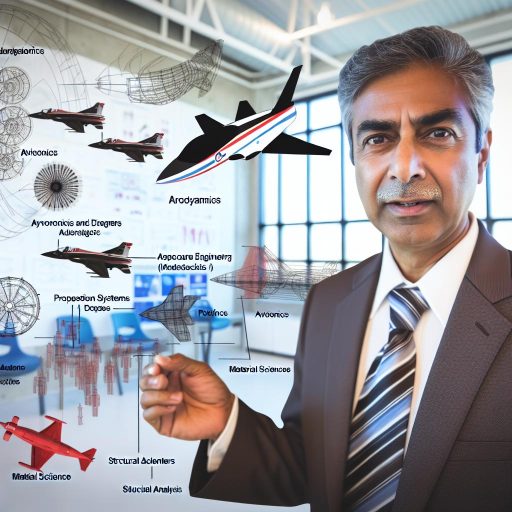




Overview of the Aerospace Engineering Field
Scope and Importance
Aerospace engineering focuses on designing and developing aircraft and spacecraft.
It plays a critical role in transportation, defense, and space exploration.
The field involves combining innovation with practical problem-solving skills.
Therefore, aerospace engineers contribute significantly to technological advancements.
They work on improving safety, efficiency, and performance of flying vehicles.
Main Disciplines Within Aerospace Engineering
The field subdivides into two main disciplines: aeronautical engineering and astronautical engineering.
Aeronautical engineering deals primarily with aircraft that operate within Earth’s atmosphere.
In contrast, astronautical engineering focuses on spacecraft and systems beyond the atmosphere.
Thus, professionals often specialize in one of these areas depending on their interests.
Both disciplines require strong foundations in physics, mathematics, and materials science.
Work Environments and Industries
Aerospace engineers typically work in diverse environments including corporate offices and research labs.
Leading companies like Lockheed Martin, Northrop Grumman, and SpaceX hire many aerospace engineers.
Additionally, government agencies such as NASA and the European Space Agency offer numerous opportunities.
Engineers may also collaborate with universities or defense contractors on advanced projects.
This variety of work settings allows for dynamic career paths within the field.
Key Skills and Technologies
Aerospace engineers use computer-aided design (CAD) software to create detailed models.
Moreover, simulation tools help them analyze aerodynamics and structural integrity.
They must have strong analytical thinking and effective communication skills.
Collaboration often occurs between multidisciplinary teams, requiring adaptability.
Constant learning keeps engineers updated on innovations like electric propulsion and AI integration.
Societal Impact and Future Developments in Aerospace
The aerospace industry drives economic growth and global connectivity.
It advances environmental sustainability through the development of greener aircraft.
Engineers are now exploring reusable rockets and commercial space travel.
Consequently, aerospace engineering remains a rapidly evolving and exciting career choice.
Typical Daily Tasks of an Aerospace Engineer
Designing and Developing Aerospace Components
An aerospace engineer spends a significant part of the day designing aircraft and spacecraft systems.
Unlock Your Career Potential
Visualize a clear path to success with our tailored Career Consulting service. Personalized insights in just 1-3 days.
Get StartedThey use specialized computer-aided design (CAD) software to create detailed models.
For example, Emma Chen at Stellar Aerospace works on refining wing structures for better aerodynamics.
She collaborates with the manufacturing team to ensure designs meet production capabilities.
Moreover, engineers must validate designs through simulations that test structural integrity and performance.
Conducting Tests and Analyzing Results
Testing is crucial for aerospace engineers like Carlos Ramirez at Orion Space Systems.
Carlos oversees wind tunnel experiments and flight simulations to assess prototypes.
He carefully records data to identify any deviations from expected results.
Subsequently, he analyzes the findings to recommend design adjustments.
This cycle ensures safety and compliance with industry standards.
Collaborating with Multidisciplinary Teams
Throughout the day, aerospace engineers interact with various experts.
Heather Powell coordinates with electrical engineers and materials scientists at Nova AeroTech.
They hold meetings to discuss integration of avionics systems into airframes.
Effective communication is key to solving complex engineering challenges efficiently.
Furthermore, engineers contribute to project timelines and update management on progress.
Preparing Technical Documentation and Reports
Engineers like Liam O’Donnell document their work meticulously daily.
Liam creates technical reports detailing design choices, test procedures, and outcomes.
He ensures all documentation complies with regulatory requirements at Aerodyne Innovations.
Additionally, he prepares presentations to explain project status to stakeholders.
Clear records support knowledge transfer and future project success.
Staying Updated with Industry Advances
Lastly, aerospace engineers dedicate time to learning about new technologies.
Sophia Ahmed reads technical journals and attends webinars related to propulsion systems.
She implements new methods that could improve efficiency and reduce costs.
Continuous education helps engineers remain competitive in this dynamic field.
Therefore, professional development is an essential part of their daily routine.
Collaboration with Multi-Disciplinary Teams
Working with Diverse Engineering Experts
An aerospace engineer collaborates daily with experts from various engineering fields.
They regularly communicate with mechanical engineers.
They also work closely with electrical engineers.
They communicate frequently with software engineers as well.
This collaboration ensures all system components integrate effectively.
Moreover, it helps identify potential design conflicts early in the process.
For example, Emily Chen often coordinates with structural specialists.
She also collaborates closely with propulsion experts.
Her daily meetings facilitate problem-solving within the project team.
They also promote innovation across disciplines.
Engaging with Manufacturing and Quality Assurance Teams
An aerospace engineer works closely with manufacturing teams to guide production.
They review manufacturing processes to confirm design feasibility.
Additionally, quality assurance staff provide feedback to maintain high safety standards.
Jonathan Ramirez frequently meets with shop floor supervisors to discuss assembly challenges.
These interactions streamline production and reduce costly errors.
Therefore, engineers adjust designs to optimize manufacturability.
They also modify designs to improve reliability.
Coordinating with Project Managers and Stakeholders
An aerospace engineer regularly updates project managers on technical progress.
They collaborate with stakeholders to align goals and expectations.
This communication keeps projects on schedule.
It also ensures that projects stay within budget.
Sarah Patel participates in weekly briefings to present testing results.
She also discusses schedule adjustments during these meetings.
Her input helps managers make informed decisions.
It also supports effective resource allocation.
Consequently, the team remains agile and responsive to changing requirements.
Utilizing Collaboration Tools and Technologies
Modern aerospace engineers use advanced software to collaborate remotely with their teams.
They employ tools like CAD platforms to design and share concepts.
They also use video conferencing for live discussions.
Project management apps help coordinate tasks efficiently.
These technologies enhance communication across departments.
They also enable seamless document sharing.
For instance, Michael Kim uses integrated simulation software to share results instantly.
This approach saves time and fosters continuous team engagement.
Ultimately, efficient collaboration tools improve overall engineering productivity.
Discover More: Benefits of Becoming an Aerospace Engineer
Project Management and Scheduling Activities
Organizing Project Timelines
Aerospace engineers coordinate detailed project timelines every day.
They work closely with teams to set realistic deadlines.
This planning ensures all aerospace components progress smoothly.
Moreover, engineers adjust schedules when unexpected challenges arise.
For instance, Rachel Donovan at Stratus Aerospace revises timelines frequently.
She communicates updates clearly with engineers and suppliers.
Coordinating with Multidisciplinary Teams
They collaborate with design, testing, and manufacturing experts regularly.
This cooperation guarantees alignment across all project stages.
Additionally, aerospace engineers lead meetings to track progress efficiently.
James Patel of Horizon Flight Systems prioritizes clear communication among departments.
He also resolves conflicts to keep schedules on track.
Utilizing Project Management Tools
Engineers rely on software like Microsoft Project and Primavera daily.
These tools help visualize progress and identify potential bottlenecks.
They create Gantt charts and assign tasks with precision.
Furthermore, tools allow tracking resource allocation to optimize workflows.
At AeroTech Dynamics, lead engineer Samantha Lee monitors critical milestones using these platforms.
Risk Assessment and Contingency Planning
Aerospace engineers assess risks affecting project timelines proactively.
They identify possible delays due to technical, supplier, or regulatory issues.
Then, they develop contingency plans to mitigate negative impacts.
For example, Miguel Hernandez anticipates supply chain disruptions in his schedules.
Consequently, he incorporates buffer times and alternative sourcing strategies.
Reporting and Documentation for Transparency
Accurate documentation supports transparency in aerospace projects.
Engineers prepare progress reports for stakeholders regularly.
These reports highlight completed milestones and upcoming deadlines.
Emily Zhang from Stellar Aerospace compiles weekly updates.
Her reports ensure leadership remains informed of schedule adherence.
Delve into the Subject: Path to Becoming a Successful Petroleum Engineer
Design and Simulation Work in Software Tools
Creating Detailed Aerospace Component Designs
Aerospace engineers use software to create precise component models.
They focus on parts like wings, fuselage sections, and engine components.
Designing involves applying principles of aerodynamics and material strength.
Software such as CATIA and SolidWorks helps engineers render 3D models accurately.
These tools allow modification and optimization to meet performance goals.
Furthermore, engineers collaborate with specialists to align design requirements.
Running Simulations to Test Performance
Engineers simulate real-world conditions to validate their designs.
Computational Fluid Dynamics (CFD) software tests airflow around aircraft parts.
Additionally, finite element analysis (FEA) evaluates structural integrity under stress.
Simulations reveal weaknesses early, preventing costly physical prototypes.
They also enable iteration to improve safety and efficiency.
For instance, AeroLogic Systems recently improved wing designs using CFD simulations.
Analyzing Data and Refining Designs
After simulations, engineers analyze vast amounts of data meticulously.
They identify areas needing improvement based on simulation outcomes.
Matters like drag reduction or weight savings become design priorities.
Engineers use specialized software like ANSYS and MATLAB to process results.
Next, they update designs accordingly and rerun simulations for verification.
This iterative process ensures aerospace products meet strict regulatory standards.
Collaboration through Design Software
Modern design platforms support team collaboration across various locations.
Engineers share models and simulation results with colleagues seamlessly.
Cloud-based tools allow real-time feedback and joint problem solving.
For example, engineers at Stratus Aero often coordinate using Siemens NX software.
This boost in communication accelerates project timelines and reduces errors.
Documentation and Compliance Checks in Aerospace Engineering
Aerospace engineers document design changes and simulation findings carefully.
They ensure all modifications comply with aviation safety regulations.
Software tools help generate reports that satisfy certification authorities.
Moreover, these records support future troubleshooting and maintenance efforts.
Engineers like Maya Chen prioritize thorough documentation to uphold quality standards.
See Related Content: Canadian Universities Offering Metallurgical Engineering

Testing and Evaluation of Aerospace Systems
Purpose of Testing Aerospace Systems
Aerospace engineers verify the safety and performance of aircraft and spacecraft through rigorous testing.
They ensure components meet design specifications before final production.
Moreover, testing reveals potential issues that need corrections.
This process helps prevent catastrophic failures during actual operations.
Consequently, testing is a critical step in aerospace development cycles.
Types of Tests Conducted
Aerospace engineers conduct various tests to validate system integrity and functionality.
First, they perform ground tests on engines, avionics, and structural components.
Additionally, wind tunnel testing evaluates aerodynamic properties under controlled conditions.
Flight testing follows, assessing system behavior in real flight environments.
Engineers also carry out software verification to ensure control systems function correctly.
Test Planning and Coordination
Before testing, engineers develop detailed plans outlining objectives and procedures.
They coordinate with cross-functional teams including technicians and quality inspectors.
Michael Hayes, a project lead at Orion Aeronautics, oversees such coordination efforts.
Moreover, engineers adhere to strict regulatory standards during test execution.
This collaboration ensures efficient and safe test operations.
Data Collection and Analysis
During tests, engineers collect extensive data using sensors and monitoring devices.
They analyze results immediately to identify abnormalities or deviations.
For instance, Dr. Emily Russo reviews flight data to assess control surface responses.
Subsequently, engineers iterate designs based on these findings to improve system reliability.
Advanced analytics software supports the rapid interpretation of complex test data.
Documentation and Reporting
Engineers document all testing methodologies, procedures, and outcomes in formal reports.
They include detailed observations and any anomalies discovered during tests.
Robert Linfield, a senior aerospace engineer, compiles comprehensive performance summaries.
These records provide traceability and support certification processes.
Ultimately, thorough documentation facilitates knowledge transfer across project teams.
Advancements Driven by Testing and Evaluation
Testing results inform continuous improvements in design and manufacturing techniques.
Engineers integrate feedback loops to enhance system robustness and efficiency.
For example, successful evaluation of prototype rockets leads to better propulsion systems.
Furthermore, lessons learned reduce risks in future aerospace projects.
Therefore, testing is fundamental to advancing aerospace engineering innovations.
Delve into the Subject: Understanding Aerospace Engineering Job Roles
Problem-Solving and Innovation in Daily Work
Identifying Technical Challenges
Aerospace engineers constantly face complex technical challenges in their projects.
They start the day by reviewing design specifications and test results carefully.
Identifying potential issues early helps prevent costly delays later on.
For example, Maria Jennings at Skylark Aerospace analyzes airflow data to improve wing designs.
Additionally, she coordinates with the propulsion team to address engine integration problems.
Developing Creative Solutions
Once a problem is identified, engineers brainstorm innovative solutions actively.
They use computer simulations and prototype models to test new ideas quickly.
For instance, engineer Nolan Reed develops lightweight composite materials to enhance performance.
Moreover, collaboration with multidisciplinary teams sparks fresh approaches to challenges.
These efforts lead to breakthroughs that improve aircraft safety and efficiency.
Implementing and Testing Innovations
After designing solutions, engineers implement them through rigorous testing procedures.
They document test outcomes meticulously to ensure compliance with aviation standards.
At AeroNova Technologies, project lead Teresa Kim oversees wind tunnel experiments for new fuselage shapes.
She monitors data closely to refine designs based on test feedback.
Iterative testing allows the team to optimize innovations before production begins.
Continuous Learning and Adaptation
Aerospace engineers stay updated on the latest industry advancements and regulations.
They attend workshops and technical seminars regularly to enhance their skills.
Furthermore, engineers like Samuel Ortiz apply new software tools to increase design accuracy.
This commitment to learning fuels ongoing problem-solving and innovation efforts.
Consequently, aerospace projects benefit from cutting-edge technology and best practices.
Staying Updated with Industry Standards and Technology
Continuous Learning and Professional Development
Aerospace engineers actively pursue continuous learning to stay informed.
They attend industry conferences such as the AeroTech Symposium in Seattle.
Moreover, they participate in specialized workshops hosted by companies like Stellar Aerospace.
Online courses and certifications also help engineers keep skills current.
For example, engineers often enroll in courses on advanced composite materials.
They regularly read journals such as the Journal of Aerospace Engineering.
This habit ensures they remain knowledgeable about emerging technologies.
Monitoring Regulatory Changes and Standards
Engineers closely monitor updates from organizations like the FAA and EASA.
They review new safety protocols to ensure compliance in designs and testing.
Furthermore, they track environmental regulations affecting aerospace manufacturing.
For instance, new emissions standards often require design adaptations.
The team at Orion Aerospace integrates these updates into internal guidelines immediately.
They also communicate changes during weekly engineering meetings for team alignment.
Utilizing Cutting-Edge Tools and Software
In addition, aerospace engineers stay proficient with the latest design software.
They use tools like ANSYS for simulations and CATIA for 3D modeling.
New algorithmic techniques in software increase accuracy and efficiency.
Therefore, engineers frequently update their software skills through vendor training.
Project lead Maya Chen ensures the team adopts upgraded versions promptly.
This practice helps avoid compatibility issues and supports innovation.
Collaborating with Industry Experts and Teams
Engineers actively network with peers and specialists across aerospace sectors.
They join professional groups like the American Institute of Aeronautics and Astronautics.
Such collaboration sparks knowledge exchange about best practices and trends.
Additionally, multidisciplinary teams within companies share insights on new developments.
For example, the propulsion group and avionics engineers collaborate regularly.
This teamwork fosters holistic understanding and improvement in projects.
Additional Resources
What do Aerospace Engineers do? Roles, Challenges, and Career …
As an aerospace engineer, what does a normal workday look like …